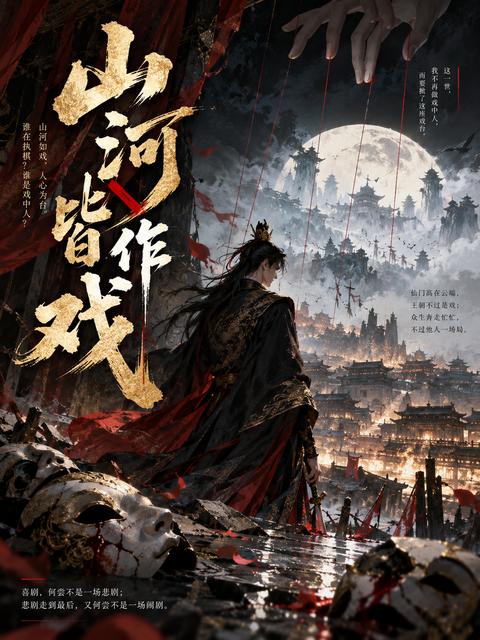
What is comedy, if not a tragedy? And when a tragedy reaches its end, what is it, if not a farce?
Gu Xingzhou was born the most doted-on prince. His father adored him, an immortal master taught him cultivation, and by his side was a girl who was always arguing with him.
He preferred going out of the palace to see plays, investigating strange and unusual cases, and figuring out how to get out of practicing his sword so many times, all far more than he cared about the throne.
He always thought this was probably all life had in store for him.
Until a Heaven-Worshipping Ceremony left the imperial capital in ruins, took the lives of those he knew, and buried even him beneath the rubble.
Everyone thought the Third Prince, Gu Xingzhou, was dead.
But days later, someone who should have been dead opened his eyes beneath a city full of corpses.
It was only from that day on that Gu Xingzhou gradually understood:
Imperial power was not necessarily power, immortal sects were not necessarily immortal, and good and evil were not always clearly divided.
Everyone in the world seemed to be making their moves, but when all was said and done, who could know whether they were the one holding the pieces, or merely a player in the drama?
The land is a play, and all living beings take the stage.

The plot logic is generally okay.