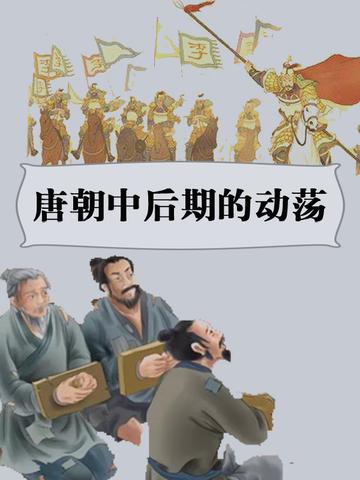
On the occasion of the new king's accession to the throne, he granted a general amnesty to the whole country and granted many ministers titles. Out of selfish motives and "fearing that the thieves would be favored and weakened", Pugu Huai'en, who had high achievements and high esteem, reported to the imperial court to enfeoff Shi Siming and several old generals who had surrendered, hoping to rely on them to support the party in the future. The upper echelons of the Tang Dynasty were "tired of the hardships of the military revolution and wanted nothing to do, so they granted him the title." They issued an edict to appoint Tian Chengsi as the defense envoy to the five prefectures of Wei, Bo, De, Cang, and Ying, and Xue Hao as the military governor of the six prefectures of Xiangwei, Xing, Ming, Bei, and Ci. Huaixian was the military governor of Youzhou and Lulong, and Li Baochen was the military governor of Chengde, which was the four towns in Hebei Province. Later, Xue Hao died early, and the subordinate lands were gradually annexed by Tian Chengsi. There were three towns in total, which became the infamous "Three Towns in Hebei Province" in the future.
Reader comments
This book gave me a deeper understanding of the history of the middle and late Tang Dynasty. I particularly like the description of Li Zhongchen in the book. Although he had the experience of surrendering to Shi Siming, he eventually returned to the Tang army, showing loyalty and bravery. His story made me feel the complexity and change of people during that turbulent period. This book is well worth reading!
This book gave me a deeper understanding of the history of the middle and late Tang Dynasty. I particularly like the description of Li Zhongchen in the book. Although he had the experience of surrendering to Shi Siming, he eventually returned to the Tang army, showing loyalty and bravery. His story made me feel the complexity and change of people during that turbulent period. This book is well worth reading!
This is a good listening book! ! ! !