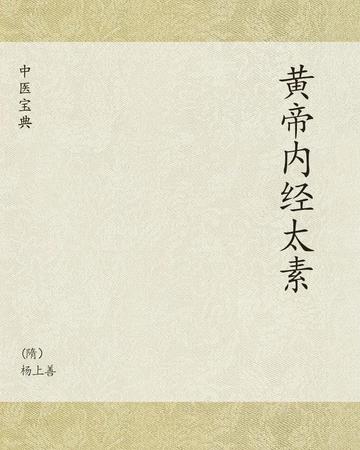
[Famous Medical Works by Yang Shangshan, Master of Traditional Chinese Medicine in the Sui Dynasty]
This book is a Chinese work handed down from the Sui Dynasty that was brought back to the motherland from Japan in the late Qing Dynasty by Yang Shoujing, a master of traditional Chinese medicine. It has many versions including the Japanese Tenbao period manuscript and has made a huge contribution to Japan becoming a powerful country in traditional Chinese medicine.
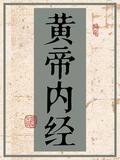
"Huangdi Neijing Taisu" is one of the early copies of "Huangdi Neijing"; it comprehensively expounds the basic content of the theoretical system of traditional Chinese medicine and reflects the theoretical principles and academic thoughts of traditional Chinese medicine. The establishment of this theoretical system laid the foundation for the development of traditional Chinese medicine. Famous physicians and medical schools in the history of traditional Chinese medicine all developed on the basis of the theoretical system of the Nei Jing, so the Emperor's Nei Jing is the ancestor of medicine. The whole book is reorganized and annotated into 19 categories including health preservation, yin and yang, human integration, viscera, meridians, acupoints, Yingwei qi, body, diagnosis, syndromes, prescriptions, nine needles, tonifying diarrhea, typhoid, cold and heat, evil theory, wind theory, qi theory, and miscellaneous diseases. This book discusses very rich contents, including yin and yang and the five elements, viscera, qi and blood, acupuncture points, causes and pathogenesis, diagnosis and syndrome, treatment principles and methods, medical ethics and health preservation, luck theory, etc. It discusses the relevant contents of human physiology, pathology, diagnosis and treatment in more detail. It highlights ancient philosophical thoughts and emphasizes the overall concept of the unity of the inside and outside of the human body, thus becoming the source of the basic theory of traditional Chinese medicine.
Reader comments
The writing style of this book is very rigorous, rich in content, and fluent in writing. It is like a senior Chinese medicine teacher imparting the knowledge of Huangdi Neijing to readers in a simple and profound way. It reminds me of the "Compendium of Materia Medica", both of which are classics of traditional Chinese medicine. Moreover, this book has very detailed annotations, making it a very valuable reference book for those who study Chinese medicine. Just like when I am learning, having such a book to guide me will give me more confidence and motivation.
The writing style of this book is very rigorous, rich in content, and fluent in writing. It is like a senior Chinese medicine teacher imparting the knowledge of Huangdi Neijing to readers in a simple and profound way. It reminds me of the "Compendium of Materia Medica", both of which are classics of traditional Chinese medicine. Moreover, this book has very detailed annotations, making it a very valuable reference book for those who study Chinese medicine. Just like when I am learning, having such a book to guide me will give me more confidence and motivation.