In 1644, Li Zicheng enters Beijing. The Chongzhen Emperor vows to resist to the death and sends Zhu Cilang, the Xianming Emperor, to Nanjing to continue building the Ming dynasty.
In 1645, Li Zicheng confiscates the wealth of the Eight Great Shanxi Merchant Families, acquiring over a hundred million taels of silver.
In September 1645, the Qing army defeats Li Zicheng and faces off against the Southern Ming regime.
In 1650, the Qing and Ming sign a treaty in Beijing, dividing their realms along the Yangtze River.
After the division, Zhu Cilang governs with diligence and restores the economy of the Ming Empire’s Second Era.
His descendants devote themselves to governing, turning the Nanyang region into a group of vassal states and giving it great importance.
Zhu Cilang opens the coast to trade with Western nations and exchanges knowledge, learning a range of industrial technologies. This period becomes known as the Xianming Restoration.
In 1790, Zhu Yuancan launches a northern campaign.
In 1793, Zhu Yuancan completely annexes the Great Qing, moves the capital to Beijing, and establishes the Ming Empire’s Third Era.
In 1803, Zhu Huanye establishes a governor-general system, creating the Governor-General’s Offices of Korea, Japan, Southern Yue, and Nanyang.
By 1860, Britain and France in Europe are eyeing the Ming governor-general territories, while Prussia struggles to claim leadership of the German states. To the north, the Russian Empire seeks to seize Ming territory in the north and Japan.
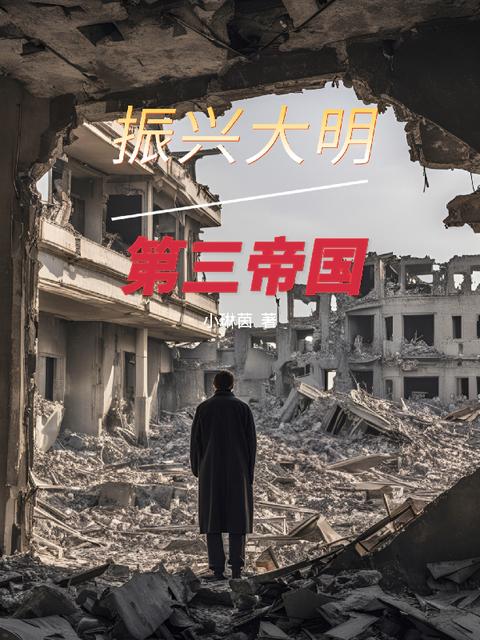
How will the Ming’s twenty-sixth emperor lead the empire to greatness once more and take it to the pinnacle of the world?


It's obvious this is the author's first time writing a book 🤦 The setting must have been thought out for a long time and was very well-developed, but it shouldn't have been laid out like a history book in a single line. That really makes readers want to give up, but at least the initial setting was reasonably well-organized ❤️ 😄
I'll be the first one 🤔