


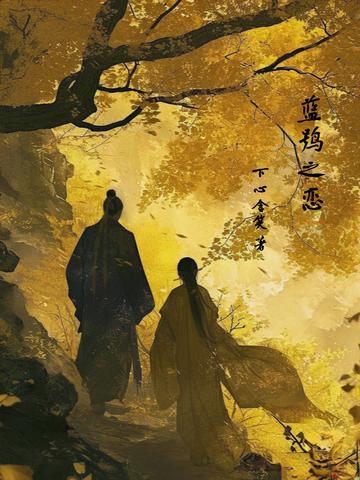
Love of the Blue Owl
蓝鸮之恋
- Status
- Completed
- Length
- 624k Words
- Genre
- Historical
- Subgenre
- Historical High-Concept
- Updated
- 3mo ago
- Source
- Fanqie
Stats
Tags
Synopsis
More by this author
In booklists 139
Explore more →
🌟🌟🌟 A Masterpiece You Can Read Hundreds of Times and Still Not Get Enough Of
Every book here is a gem, carefully handpicked, and good enough to read over and over again.
The Best Historical Novels From Every Dynasty
Preferably a book rated above 9.

Show Me the Worst Novels You Can Find. Let's See How Amazing They Are
The worse, the better. I want to see what kind of amazing nonsense people can write 😏

Has Anyone Read This Novel?
Are there any stories where the protagonist is really weak at first, then one day meets an expert who takes him away? Before leaving, he writes a farewell letter, so the school beauty and his parents think he’s dead. When he returns, he’s at Potential Lock Stage 4.


Looking for High-Quality Transmigration Stories
Transmigration stories.
I've Been Reading Novels for Over Ten Years, but Now I Can't Get Into Most of Them
I’ve been reading novels for over a decade, and these days I can barely get through most of them. Please recommend something fresh and unusual.
Historical Novels
A big collection of historical novels.
Looking for High-Quality Alternate-History Novels
For example, the Qin and Tang dynasties.

Tomato Novel Has Had so Many Great New Releases Lately, but the Word Counts...
Lately, Tomato Books keeps recommending stories that update constantly, then after a while there's another new book with only a hundred-odd thousand words, but plenty of readers. They all seem pretty good, too, but just when you get really interested, the story ends…

Completed Masterpieces Rated 9 or Above




Looking for Clear Logic, Strong Writing, and Vivid Characters
Thanks! You handsome and beautiful folks, please recommend more!
Brothers, These Historical What-If Novels Are Guaranteed to Be a Blast
To help everyone get their fill of history, I'm recommending a few satisfying historical novels. My friends all say they're amazing! I picked every one of these myself, so give them a try!
Looking for Historical Fiction with a Wild Premise, Set in Another World
Looking for Historical Novels, Preferably Feel-Good System Stories with Wild Premises
The protagonist is reborn in ancient times and uses the System to show off, rising rapidly all the way. The protagonist must not be an emperor.
Meticulously Researched Historical Fiction
A twisting, suspenseful plot, a protagonist who's not an idiot, and something I can learn from while reading. Ideally, it should be close to real history.
Any Sensible Alternate-History Novels? No Brain-Dead Plots, Just Solid Logic
I don’t want books about Chinese history. I want something made up.
Looking for Historical or Alternate-History Novels With Good Prose and a Smart Protagonist
Historically Accurate, Without Making Things Up
Historical fiction has more room for worldbuilding, with vivid characters and no distortion of history. I want a satisfying read that covers dynasties, major and minor events, wars, and loyal civil and military officials, all presented in a historical setting.

Please Recommend Transmigration Stories That Aren’t Clichéd!
I've been reading on and off for five or six years. Transmigration is one of the few genres I really like. I have plenty on my bookshelf, but some feel formulaic. Other people have asked for recommendations like this too, but when I click through, I can't find anything to my taste... Any subject is fine!

The Pinnacle of Post-Apocalyptic Fiction
Doomsday dominion

Those Overlooked Masterpieces
Looking for books like First-Rate! (First-Rate). Good books shouldn't be buried!


Any Historical Romance Novels About a Peerless Beauty Who Transmigrates?
Novels about a beautiful woman who transmigrates to ancient times, catches a prince's eye, and becomes his princess consort.

Please Recommend High-Quality Stories About Transmigrating into a Book
I want something lighthearted. Lately I can't find anything I'm happy with 😭😭😭 Nothing with particularly exhausting drama. I'm usually fine with anything, sweet or angsty. Please help me out 😭😭😭😭😭😭😭😭😭😭😭😭😭
Three-Year Veteran Audiobook Binger
I've been listening to novels for three years: supernatural mysteries, farming, legitimate daughters, clans, and cultivation. These days, everything I listen to feels a little bland. But life is boring and my heart feels empty, so I can only seek comfort in an imaginary world. Where can I find more good audiobooks?
Reader comments 50
Google Translate
This is a novel that combines historical and fantasy elements. It uses a unique narrative style and rich imagination to present us a wonderful journey through the Western Han Dynasty. This novel not only has an ups and downs plot, but also cleverly incorporates many mythological elements, making it full of mystery, like a colorful mythological scroll. In the novel, mythological elements are closely intertwined with the main storyline, adding depth and fantasy to the entire narrative. From the Xiongnu legend of "Sacrifice to the Heavenly Golden Man" at the beginning, to the mysterious elements such as the Heavenly Dragon Clan and the City without Tears throughout, they all attract our curiosity. These mythological elements do not exist in isolation, but are closely connected with the fate of the characters and the development of history. For example, Liu He's exploration of the Dragon Clan in Heaven was not only to satisfy his thirst for knowledge, but was also closely related to the future of the New Xia Dynasty. This method of combining myth with reality (the historical background in the novel) allows us to feel the weight of history while also being immersed in the fantasy world of myth. Among the many mythological elements, the legend of dragons is particularly prominent. The book mentions concepts such as the Yellow Emperor Dragon Clan and the Heavenly Dragon Clan, and provides rich imagination and expansion of the origin, types and abilities of dragons. The dragon is not only a mysterious creature, but also closely connected with the destiny of mankind. For example, the five dragons in Liu He's dream were crying, implying some mysterious destiny arrangement, adding a mysterious atmosphere to the story. At the same time, the novel also connects the dragon with human history and culture, such as the record of the Yellow Emperor riding a dragon to heaven, as well as the relationship between the dragon and the Qiang people and the Xia people, making the image of the dragon more three-dimensional and giving us a new understanding of the dragon in traditional Chinese mythology. In addition, the setting of City without Tears is full of mystery. This city hidden in the fog of history is inextricably linked to the Heavenly Dragon Clan. Liu He and others' exploration of the City Without Tears was full of challenges and surprises. During their search, they constantly discovered new clues and puzzles, such as mysterious rock paintings, strange symbols, etc. These elements not only increase the suspense of the story, but also fill us with yearning and imagination for the City Without Tears. In addition to its rich mythological elements, the novel is also quite ingenious in its character creation and plot design. The characters such as Liu He and Duoyan are vivid, and their love story is even more touching against the mythological background. As a descendant of the Xiongnu royal family, Duoyan's love with Liu He transcended the boundaries of ethnicity and identity, and was rendered more romantic and legendary by the elements of mythology. The plots of war and intrigue in the novel also echo each other with mythological elements, making the story more exciting and exciting. "The Love of the Blue Owl" cleverly blends history and mythology, presenting us with a world full of fantasy in the Western Han Dynasty. For readers who like history, mythology and fantasy elements, this novel is undoubtedly a wonderful journey not to be missed. In the intertwining of history and fantasy, the novel's insights into life are also thought-provoking. The characters in the book show different life attitudes and values when facing the choice of fate, the test of love, and the responsibilities of family and country. Liu He constantly faces various challenges and difficulties on the road to pursuing power and realizing his ideals, but he always sticks to his beliefs and strives to find a way out in complex situations. This persistent pursuit of beliefs makes us understand that the road to life may be full of ups and downs, but as long as we strengthen our beliefs, we can move forward courageously. The love between Duoyan and Liu He crosses the boundaries of nationality and identity, and becomes stronger after going through hardships. Their love story makes us feel the power of true love, and also makes us understand that in life, love is a beautiful emotion that can overcome all difficulties.
This is a historical time-travel novel, with the historical line as the main line, the emotional line as the auxiliary line, and the character curve as the inner line. It tells the reincarnation of Liu He, the only emperor, king, marquis, and citizen in Chinese history, and the story of a time-traveler who used his life to defeat historical plunder, rewrite the falsified history of the Western Han Dynasty, correct his name, and restore his innocence. The novel takes history, love, and philosophy as its themes, and uses the surreal time and space in which mythical stories change hands in the human world. It uses history and archeology to cross the boat, and through the author's natural writing style, delicate and affectionate writing style, and film and literary story creation techniques with a strong sense of picture and substitution. It restores the possible historical truth for us, and shows the unique image of "Di He" who is as gentle as jade and loves the people like a son, as well as his lifelong pursuit of the ideal of social harmony. The "story core" involves historical truth, love choices and inner growth. The whole play uses montage techniques to show the intersection of multiple parallel time and spaces, such as the "Dream of Red Mansions" in the encyclopedia, showing the excellent traditional culture of the Chinese nation, and tracing the historical and cultural matrix of the Chinese nation through the process of national migration and integration from the perspective of the Qiang people's epic. This book strives to prove that the cultural relics unearthed from the tomb of Haihunhou are of extremely important historical value for studying the politics, economy, society, culture, and all aspects of people's lives in the Western Han Dynasty! If the novel's palace fighting drama "The Incident of the Golden Horse Gate", the beautiful romance "Lugu Lake Love", the Qiang people's epic "The World of the Qiang Flute" were made into film and television dramas, they would be huge hits! The author also composed the lyrics and music for the movie theme song "May and Enron" and the song "Daisy Little Flower" in the film. This is a great work that combines historical depth with realistic breadth and is full of literature! Please read in depth! And please share it with more good friends! [Love][love][love]
The author has profound historical knowledge, clear mission description and exquisite writing style.
The opening chapter begins with the poetic statement "Warmth gives life such deep feelings, is it for the endless longing after life?" It sets the lingering emotional tone and introduces readers into an atmosphere full of emotions. The description of the rain scene is even more exquisite, "The sound of rain is like a hollow guqin, like long practice breaking through the sky... Water-like tenderness", using rich metaphors to show a unique artistic conception. The story part has a compact plot and vivid characters. Duoyan shoulders a heavy responsibility, and the firmness and determination in her eyes are vivid on the page. Her emphasis on the task and her desire to restore the glory of the royal family are clearly portrayed. The description of the grassland scenery is majestic, "the color of the earth is green, so beautiful, so quiet, and so vast", which makes the magnificence and tranquility of the grassland directly strike people's hearts, and also highlights the changes in Duoyan's mood. The whole chapter contains both the gentleness of the love between children and the heroism of a fierce warrior. The weight of history and the delicate emotions are intertwined, making readers immersed in it and feel the era full of passion and dreams. Forced recommendation [snickering] [smirking] The value of "Blue Owl Love" far exceeds the scope of ordinary online novels. With history as its bones, philosophy as its soul, and love as its blood, it constructs a modern apocalypse about the origins of civilization and the awakening of the soul. When the blue owl spreads its wings in the rift of time and space, what we see is not only a fantasy plot, but also a contemporary response to the philosophical proposition of Zhuang Zhou's dream of a butterfly; when Liu He shuttles between dreams and reality, what we witness is not only the rebirth of an emperor, but also the creative transformation of the genes of Chinese civilization. This work is like a blue owl in the night sky, illuminating the subtle parts of history with the light of wisdom, allowing each reader to hear the echoes of his "hometown" and "distant place" in his heart amidst the sound of horse hooves. Add one to the positive review, like it😍[The God of Bird Food][The God of Bird Food][The God of Bird Food][The God of Bird Food]
The rock paintings on Helan Mountain still contain chisel marks from three thousand years ago. A blue owl passing by connects the wind of the Western Han Dynasty with the dreams of this world. "The Love of the Blue Owl" starts from the original intention of "restoring Liu He", but it goes beyond salvaging history - it makes the vague "Deposed Emperor of the Han Dynasty" in the history books become a practitioner with the ideal of "internal saint and external king"; Jeanna's love in red continues to be written as a footnote of the mission in the fireworks of the Mingtang. The story is like an unfolding scroll of rock paintings, the secret of offering sacrifices to the Golden Man is hidden in the tears of Xiongnu Juci, and the prophecies of the city without tears are carved in the loess of Shuidonggou. The five time and space are intertwined: the realistic dream hides unfinished thoughts, the narrative of the Western Han Dynasty anchors archaeological evidence, and the surrealism of myth and the quasi-metaverse illuminated by fireflies allow the past and the future to collide gently in the seams. Duoyan's grassland sincerity, Yan Han's blue owl guard's hidden line, and the hoofbeats of Yu and Qiang's cavalry, every detail is a fingertip that asks time - when the teeth of Haihunhou's tomb are not the end, when the Qi family ancient country in the rock paintings meets the dim light of the Yuan Universe, the author is no longer "writing history", but is using the wings of the blue owl to resonate with the ideals of two thousand years ago and the pursuit of the present. When I closed the book, I could still see the sun patterns in the rock paintings shining brightly, and the shadow of the blue owl falling on the pages. This is not the imagination of a time-travel drama, it is clearly a whisper of history and the present, allowing everyone who reads the story to touch the warmth of civilization between the lines.
"The Love of the Blue Owl", as the sequel to "May and Enron", directly brings us into a world of the Western Han Dynasty full of fantasy and rich history. The story revolves around Liu He, the deposed emperor of Han Dynasty, who transformed into the new king of Xia and shouldered the important task of reviving his family and establishing a new dynasty. In this process, love and power are intertwined, history and reality collide fiercely, and mystery and legend are perfectly integrated, making readers immersed in it and unable to stop at all. Duoyan, the second princess of the Xiongnu royal family, is brave and intelligent. From the time she met Liu He, worked together on missions, and then their relationship warmed up, their sweet time in Daqingshan was interspersed with the discovery of the coal field, cleverly linking love with the development of the New Xia Dynasty. The construction and development of the New Xia Dynasty are important clues. Liu He implemented national policies such as the "remigration and farmland contracting system", showing excellent governance wisdom and laying the foundation for the prosperity of the New Xia Dynasty. Militaryly, he formed the Yu Qiang Dragon Army, carefully reorganized and trained it, and fully demonstrated his military talents. The game with various forces is full of tension in the power struggle, vividly showing the complex political situation of the Western Han Dynasty. "The Love of the Blue Owl" is definitely a masterpiece worth reading over and over again. History fans and love story lovers should not miss it!
After reading the book for several days, it seems that history is reappearing in front of my eyes. The author has really integrated history into the novel. It can be seen that the author has put his heart into it. The characters in the book are flesh and blood, and the love is also enviable. I have gained a lot of knowledge. I hope the author can update it more. I believe this book will become more and more popular! In the wind and sand of the Western Han Dynasty and the light and shadow of modern times, the author weaves a sleeping history and ignites the flame of culture with imagination. The book restores the image of an emperor with inner saints and outer kings, as well as the interweaving of geography and mythology. The golden man worshiping heaven in the Yinshan rock paintings echoes the totems of the Qijia ancient country... This book is constantly exciting. It is a rare fine literary work. It is completely different from the popular Shuangwen today. It should be a spiritual work that more people need to see!
Helan snow falls and the blue owl sings, please savor the innocent heart in the storm of the Western Han Dynasty in "The Love of the Blue Owl" The snow from Helan Mountain falls on the rammed earth of Beidian City, and the wind from two thousand years ago wraps up the sound of the blue owl's wings and crashes into the dreamland of the traveler—— The heart-warming "The Love of the Blue Owl" uses autobiography as its bones and time-travel drama as its soul, weaving a soul-stirring epic in the war smoke of the Western Han Dynasty. Reading it is like drinking old wine. The first taste is the harshness of the iron-blooded wind and sand, and the second taste is the softness of the love between children. The aftertaste is full of the sweetness of the historical fog being lifted. The best thing about this book is the interweaving of "three dimensions". The main line is based on archaeological and historical data, reshaping the image of Liu He, the deposed emperor of the Han Dynasty - he is no longer a fool in the historical data, but a gentleman with the ambition of "inner saint and outer king". He planned the New Summer in the cracks between the Xiongnu and the Han army. "It is your heart that can set my heart free" makes the iron-blooded epic ripple with tenderness; the inside story is hidden in the flesh and blood of the characters, including Liu He's transformation from emperor to entrepreneur, and Duoyan's growth from a Huns second-ranking figure to a heroine general. Each step steps on the thorns of the times, but always moves towards the light. Five time-space frames add fantasy and depth. The whispers of realistic dreams, the vividness of the wars of the Western Han Dynasty, the strangeness of mythical transcendence, and the vividness of the co-creation of the metaverse are all nested layer by layer like Russian matryoshka dolls, but without any clutter. When Duoyan stops in front of the rock paintings in Helan Mountain, and when Liu He gazes at Populus euphratica in Wuliangsuhai, the barriers between reality and ancient times quietly melt away, and readers also travel through and touch the temperature of history - it turns out that the so-called "past" is never cold words, but a life with breathing and heartbeat. The details in the book are the most touching: the location of Beidian City, with mountains on its back and rivers on its side, hides the wisdom of governing the country, the national policy of "relocating people to farm" is wrapped in people-oriented sentiments, the secret symbol of the Blue Owl Guards is condensed with loyalty, and even the pair of blue owls who shed blood to recognize their kin have become witnesses of love and mission. The suspense surrounding the "three teeth" in the tomb of Marquis Haihun adds an extra layer of suspenseful charm to history - isn't Liu He's escape plan a rebellion against fate?
When the wings of the blue owl pass through the war smoke of the Western Han Dynasty, when the dream of time-travel knocks on the door of history, "The Love of the Blue Owl" with a smile on its face, with a magnificent length of more than 300,000 words, weaves a long and beautiful scroll with both historical thickness and humanistic warmth between the warp and weft of autobiography and time-travel drama. The work takes the fate of Liu He and Na Jun, the deposed emperors of the Han Dynasty, as the main axis. By means of the nesting of five layers of time and space and the interweaving of three clues, it not only deconstructs the stereotyped label of "mediocre" in historical materials, but also illuminates the glimmer of civilization that transcends the times in the interplay of fiction and reality. The most enlightening social significance of the work lies in the disenchantment and reconstruction of "historical truth". It tears through the layers of fog in historical records and restores Liu He to an idealist who is "a saint within and a king outside." This humanized writing of historical figures breaks the cognitive stereotype of "black and white" and inspires the present to examine the past from a more inclusive perspective - every name nailed to the pages of history may hide unspoken missions and struggles. This innovation in the historical outlook is the most profound practice of "taking history as a mirror". The blueprint for the construction of the New Xia Dynasty also coincides with the eternal questioning of an ideal society. The people-oriented background of the "relocation contract system", the integration wisdom of "the military and civilians are one family", and the ecological vision of "building water conservancy and planting trees for all people" are three national policies that directly point to the governance essence of "practical practices in warehouses and etiquette". In particular, the equal treatment of Xiongnu tribes and Han immigrants, and the empowerment of female characters (such as Duoyan's military talent and Najie's intelligence and intelligence) have eliminated national and gender barriers and provided a classical mirror for the governance of today's pluralistic society. The pioneering nature of the work also lies in the construction of a "creative community". The fifth level, "quasi-metaverse time and space," invites readers to participate in co-creation, sublimating historical writing from individual narratives to the construction of collective memory. When readers and characters participate in a dialogue that spans thousands of years, history is no longer dust in the pile of old papers, but becomes a fluid and participatory living civilization.
"The Love of the Blue Owl" is like a piece of silk intertwined with historical smoke and fantasy imagination, unfolding the code of civilization in the folds of time. When the footprints of Liu He, the deposed emperor of the Western Han Dynasty, traverse the Helan Mountain rock paintings, and when the aura of the Qiang people's glazed staff shines on the Mayan agaves, this work uses archaeological and delicate brushstrokes to weave the Huns' sacrifice to the Golden Man and the pottery patterns of the ancient Qi family into a narrative maze. The most touching thing in the book is that cultural symbols are scattered between the lines like stars. The dancing dance score hides the codes of shamanic rituals of the Xia, Shang and Zhou dynasties, the blue owl's pottery feathers shine with the jade luster of the Hongshan culture, and the underground river in the City without Tears carries the cosmology of "the deep spring" in the "Book of Mountains and Seas". The author lets Zhuangzi's "Xuan Ye theory" and the modern Big Bang theory of the universe dialogue in a dream. When Mr. Hu Wenyuan's blue lightning splits space and time, the Taoist "Qi theory" and the uncertainty principle of quantum mechanics actually reach a wonderful reconciliation in the gap of the narrative. The most amazing thing about this work is that it turns intangible cultural heritage elements into a narrative vein. The owl ladder in the rock paintings connects the branches of the Sanxingdui sacred tree, and the blood-dropping ritual on the painted pottery echoes the soul-calling flags in Chudi silk paintings. When Timur's powerful horse steps across the volcanic lake, what rises under the horse's hooves is not only the wind and sand of the Western Han Dynasty, but also the metaphor of life in the Mayan calendar that "the flowering of agave means death." This kind of cultural archaeological narrative allows historical fragments to sprout in the fictional soil and grow into literary plants that are both ancient and cutting-edge.