This is an era when everyone is a journalist, and the pressure of public opinion is unprecedentedly strong.
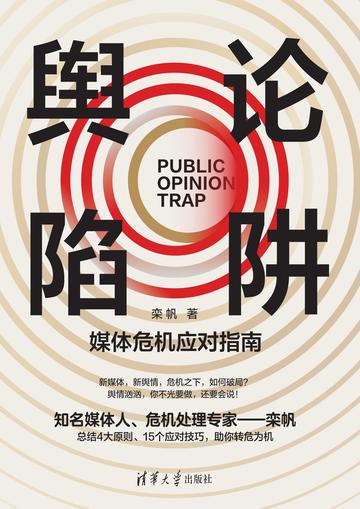
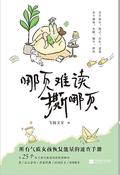
The author of this book is based on his professional background as a journalist for many years, combined with his many years of teaching on public opinion guidance and crisis response courses in the new media era at Tsinghua University, Peking University and other universities. By analyzing fresh, popular, and typical crisis incident cases, he summarizes the specific principles and methods for guiding public opinion and handling crisis events in the new media era, and explains It describes what scientific public opinion guidance is, how to resolve negative news, how to release information well, and how to respond to reporters' interviews... It not only raises questions, but also comes up with solutions, striving to be reasonable, informative and useful, to help managers in governments, enterprises, schools, hospitals and other walks of life manage public opinion well, resolve negative news, and escape from public opinion traps.
Reader comments
Some lessons! But I feel like the person who wrote the book is a bit extreme! Being low-income/low-educated does not last forever. It does not mean that you are knowledgeable and have good character, nor does it mean that you will always be at this level. Also, you are good at taking the blame.
The cases in the book are very vivid and the methods given are also very specific. I think it is especially helpful for housewives like us who often share our lives online. For example, how to publish information and how to deal with reporters, you can learn a lot from it. It feels like a knowledgeable friend is giving me advice!
That's right. I finally know what it's like to argue around on the Internet. In most cases, it's the same group of people. They can't provide evidence and only know what I think. Or I've seen it. There's no scientific basis, only pure subjectivity, no judgment, only conjecture.
Summary: Be more truthful, give timely feedback, be humanistic, turn passivity into initiative, let the media work for me, stay firm on core goals, and not be affected.

Some lessons! But I feel like the person who wrote the book is a bit extreme! Being low-income/low-educated does not last forever. It does not mean that you are knowledgeable and have good character, nor does it mean that you will always be at this level. Also, you are good at taking the blame.
The cases in the book are very vivid and the methods given are also very specific. I think it is especially helpful for housewives like us who often share our lives online. For example, how to publish information and how to deal with reporters, you can learn a lot from it. It feels like a knowledgeable friend is giving me advice!
That's right. I finally know what it's like to argue around on the Internet. In most cases, it's the same group of people. They can't provide evidence and only know what I think. Or I've seen it. There's no scientific basis, only pure subjectivity, no judgment, only conjecture.
Summary: Be more truthful, give timely feedback, be humanistic, turn passivity into initiative, let the media work for me, stay firm on core goals, and not be affected.
Very speculative! Recommended, worth learning