Professor Zeng Shiqiang began to promote Chinese-style management in the 1980s. Over the years, wherever there are Chinese people, the more people with practical management experience, the more enthusiastic they respond to the Chinese-style management he teaches.
Reader comments
In the past, I scoffed🙅🏻, but now I learn every word🤡
Chinese culture has a long history, and Chinese management culture has completely different characteristics from the West.
Chinese management is not only about things, but also care and guidance for people.
Domestic society pays more attention to the harmony of interpersonal relationships and emphasizes the integration of emotion, reason and law rather than pure laws and regulations.
Chinese-style management is based on Chinese culture and traditional wisdom and values flexibility and flexibility to cope with complex and changing environments.
The cultivation and virtue of a leader are very important. Leaders must set an example and lead the team with kindness.
The essence of Chinese management lies in better understanding the Chinese people's thinking and behavioral habits, so as to achieve a more efficient and harmonious situation in management.
[Three core questions]
1. What are the core characteristics of Chinese-style management?
: Emphasis on people-oriented, pay attention to the coordination and balance of interpersonal relationships, and pursue reasonable management methods.
2. How to achieve effective communication in Chinese-style management?
: Be good at listening, understand the other party's position, and express your own opinions in a tactful and implicit way.
3. How to balance human relationships and systems in Chinese-style management?
: The system is the foundation, and human feelings are the auxiliary. It must be flexibly grasped according to the specific situation, and human feelings must not be allowed to destroy the seriousness of the system.
Content Sharing
1. "The basic philosophy of the Chinese people is quite simple to say, but not easy to implement. Because the difference between the pros and cons is very subtle, and if you don't pay attention, you will be 'a slight difference, a thousand miles wrong', and embark on the path of deviation."
2. "Management is the process of cultivating oneself and putting others at ease. Before a person can manage others, he must first manage himself well."
3. "Chinese people's management experience must be sorted out in time to avoid being lost over time."
4. "Chinese-style management advocates starting from personal self-cultivation. Everyone must manage themselves well first and become a useful person in the organization, and then they are qualified to engage in management."
5. "Chinese people attach great importance to perfection, which means trying to think about problems from a standpoint without contradictions and finding unified solutions among contradictions."
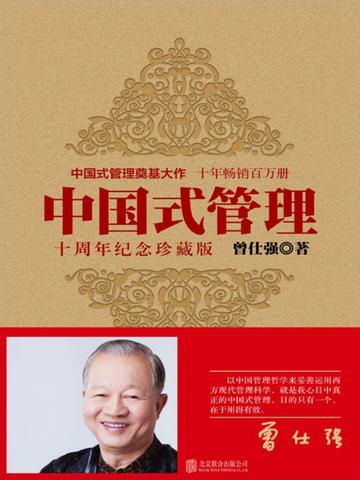


In the past, I scoffed🙅🏻, but now I learn every word🤡 Chinese culture has a long history, and Chinese management culture has completely different characteristics from the West. Chinese management is not only about things, but also care and guidance for people. Domestic society pays more attention to the harmony of interpersonal relationships and emphasizes the integration of emotion, reason and law rather than pure laws and regulations. Chinese-style management is based on Chinese culture and traditional wisdom and values flexibility and flexibility to cope with complex and changing environments. The cultivation and virtue of a leader are very important. Leaders must set an example and lead the team with kindness. The essence of Chinese management lies in better understanding the Chinese people's thinking and behavioral habits, so as to achieve a more efficient and harmonious situation in management. [Three core questions] 1. What are the core characteristics of Chinese-style management? : Emphasis on people-oriented, pay attention to the coordination and balance of interpersonal relationships, and pursue reasonable management methods. 2. How to achieve effective communication in Chinese-style management? : Be good at listening, understand the other party's position, and express your own opinions in a tactful and implicit way. 3. How to balance human relationships and systems in Chinese-style management? : The system is the foundation, and human feelings are the auxiliary. It must be flexibly grasped according to the specific situation, and human feelings must not be allowed to destroy the seriousness of the system. Content Sharing 1. "The basic philosophy of the Chinese people is quite simple to say, but not easy to implement. Because the difference between the pros and cons is very subtle, and if you don't pay attention, you will be 'a slight difference, a thousand miles wrong', and embark on the path of deviation." 2. "Management is the process of cultivating oneself and putting others at ease. Before a person can manage others, he must first manage himself well." 3. "Chinese people's management experience must be sorted out in time to avoid being lost over time." 4. "Chinese-style management advocates starting from personal self-cultivation. Everyone must manage themselves well first and become a useful person in the organization, and then they are qualified to engage in management." 5. "Chinese people attach great importance to perfection, which means trying to think about problems from a standpoint without contradictions and finding unified solutions among contradictions."