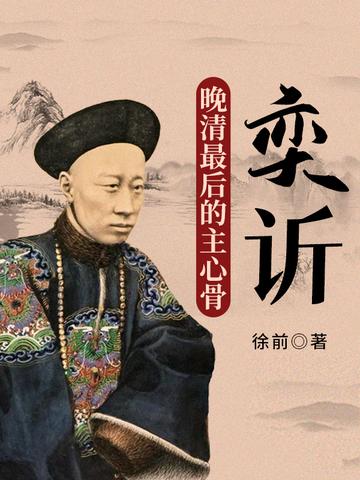
Yi Xin, one of the leaders of the Westernization Movement in the late Qing Dynasty. The sixth son of Emperor Daoguang, he was named Prince Gong in the first year of Xianfeng. In October 1860, the British and French invaders captured Beijing. Emperor Xianfeng fled to Jehol. He stayed in the city to negotiate, and signed the Treaty of Beijing as a plenipotentiary minister with Britain and France, which was humiliating and humiliating the country. The following year Emperor Tongzhi ascended the throne, and together with the Empress Dowager Cixi, with the support of foreign invaders, launched the "Qixiang Coup", he was appointed as the political king and chief military minister. He was in charge of the Prime Minister's Affairs Office and the Shenji Camp, integrating internal affairs, diplomacy, and military power, and became prominent for a while.
He actively supported the "Westernization activities" of Zeng Guofan, Li Hongzhang, and Zuo Zongtang, adopted Western science and technology to manufacture guns, ships, and trained the army, and became the central figure in charge of Westernization in the Qing court. In the end, because of his excessive power, Empress Dowager Cixi was suspicious of him. In the fourth year of Tongzhi, he dismissed the political king and all other positions, and reinstated the military minister, the prime minister, and the Yamen minister...
Reader comments
The writing style of this book is very vivid and the plot is very attractive. I really like the plot of Yi Xin being reactivated after being deposed, which showed me his tenacity and wisdom. Moreover, the author's writing style is very good, especially when describing palace scenes and character dialogues, it is very delicate and gives an immersive feeling. I think this book is worth reading and can give us a deeper understanding of the history of the late Qing Dynasty.



The writing style of this book is very vivid and the plot is very attractive. I really like the plot of Yi Xin being reactivated after being deposed, which showed me his tenacity and wisdom. Moreover, the author's writing style is very good, especially when describing palace scenes and character dialogues, it is very delicate and gives an immersive feeling. I think this book is worth reading and can give us a deeper understanding of the history of the late Qing Dynasty.