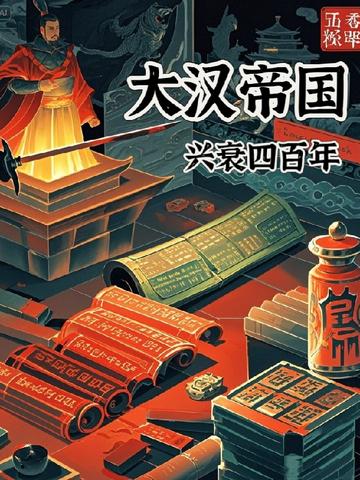
The Rise and Fall of the Han Empire: Four Hundred Years lifts the curtain on the chaos at the end of the Qin with the point of a sword. Liu Bang, the headman of Sishui Pavilion, rose after slaying a white serpent, turning the bold spirit of a commoner into the backbone of Weiyang Palace. Lü Zhi hid frost in her sleeves as she wove webs of political intrigue through the bloodstained court. Emperor Wu of Han’s horses trampled the Xiongnu royal encampments, while the edges of bronze swords gathered the frost of the northern deserts. Across four centuries, Confucian scholars knocked on the gates of destiny with bamboo scrolls, wandering knights measured the borders of the realm with long swords, and silk, borne by the sound of camel bells, carried Chang’an’s moonlight westward. Wang Mang used apocryphal prophecies as a blade to cut into the dynasty’s lifeline. Guangwu rallied the Twenty-Eight Generals of the Cloud Terrace to restore the realm, yet could not escape the rising tides of imperial relatives and eunuchs. When Dong Zhuo’s iron cavalry crushed Luoyang’s palaces, the era that had once borne the name “Han” left behind, in the vast twilight, a legacy woven from the flames of the Yellow Turban Rebellion, debates over salt and iron, and the long songs of the Yuefu. With blood and the written word, it carved the first complete imperial cycle into the history of China.