


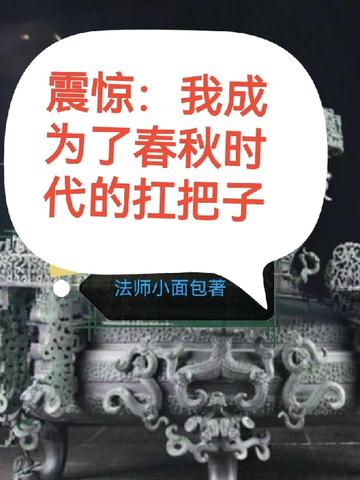
I Am the King of Chu in the Spring and Autumn Period
我在春秋当楚王
- Status
- Completed
- Length
- 2.5M Words
- Genre
- Historical
- Subgenre
- Historical & Ancient
- Updated
- 11mo ago
- Source
- Fanqie
Stats
Tags
Synopsis
More by this author
In booklists 275
Explore more →
Historical Fiction Set in an Imaginary Ancient World, No System
No System, no System, no System. Thanks, everyone.
High-IQ Alternate-History Novels
I want something with intelligent characters. No stories that rub my nose in how stupid I am, even if I’m not exactly a genius.
Historical and Ancient Imagination/loyal Ministers and Famous Generals/the Mountains and Rivers of Chang'an Are Eternal in the World
A body of seven feet has been promised to the country, and it is difficult to give it to the minister. The harem retreats! Retreat! Retreat! Retreat!
Looking for Historical Novels. I Prefer Stories with a Strong Historical Focus
Looking for books like *I Possessed Someone in the Spring and Autumn Period and Became a Lord (A Little Lord of the Spring and Autumn Period)*. Does anyone know any realistic novels like *Life in the Middle Ages*, *A Little Lord of the Spring and Autumn Period*, and *Anxi Army Diary*, with a focus on history, politics, economics, war, and farming?
Looking for High-Quality Historical War Novels
What’s the Hottest Historical Novel on Tomato Novel?
I’m in a reading slump.
Set in the Qin Dynasty, No Other Dynasties
There have been so many emperors throughout history, but Qin Shi Huang, Ying Zheng, is the one I love above all. So, please, daddies, recommend some novels about Qin Shi Huang achieving immortality to your good son.
Any Novels with Massive Armies Clashing in War?
The Pinnacle of Historical Fiction
Looking for books similar to *Tang Dynasty: Defying the Imperial Decree Is the Only Way to Get Stronger*. This book makes me cry every time I read it. I've read it five or six times, and I still cry. I just can't believe anything else is better. It's the strongest historical novel in my book! An 8.9 rating is way too low. I'd give it a 9.
Historical Fiction That Feels Realistic
No System, and nothing about The Legend of Qin. Just straight historical fiction.

I’m in a Reading Slump. I’ll Trade You My Favorites
Looking for books like *Eternal Life: Laying Low as a Prison Guard in the Heavenly Prison*. Something that feels realistic, with believable human interactions.
Good Historical Fiction
Looking for High-Quality Alternate-History Novels
For example, the Qin and Tang dynasties.
High-IQ Historical Alternate-World Novels Without a System, Tang, Song, or Ming Are All Fine
Top-Rated Historical Alternate-History Novels with Careful, Rigorous Writing
Historical fiction like The Grand Councilor, with rigorous writing.
Historical Novels You Absolutely Can't Miss!!!
What? He gets to be a dad after being reborn? A soft, adorable little girl keeps chasing him and calling him Daddy? What? Qin Shi Huang, who's lived for two hundred years, keeps chasing after him, desperate to take him as his apprentice and learn the art of immortality? From the Great Xia Kingdom's top soldier to the Prince of Changyi!
High-IQ Historical Transmigration, Rich Historical Atmosphere, and Fixing Historical Regrets
Looking for books similar to *I, the Ming Dynasty Immortal, Lived Through Sixteen Emperors (The Immortal Guest of the Ming Dynasty)*.
Any Novels Set During the Eastern Jin and Northern and Southern Dynasties?
Looking for Novels Set During the Five Dynasties and Ten Kingdoms, the Jin Dynasty, or the Northern and Southern Dynasties
I’ve read so many stories set in the Tang, Song, and Ming dynasties that I’m tired of them. I’d like to try some less common historical periods. Preferably completed. Please recommend some~~~
Pure Military Fiction: Battles Between Ancient Armies and Legions
Military and war
Historical Novels About a Male Lead Born into an Aristocratic Clan Who Eventually Unifies the Realm
A decisive, cool-headed protagonist with a high IQ.
High-Quality Historical Novels With Political Intrigue
Looking for books like *My Father Is Emperor Wu of Han!* Nothing rated below 9.0, please. I'm in a serious reading slump.
Looking for Historical Fiction About Rival Nations
System-based summoning novels.
Looking for Historical Novels About Transmigrating to the Past, the Kind You Can't Help Rereading Again and Again
Reader comments 50
Google Translate
Well written! It is about how the author should play strategy and horse-and-blade games, so there is a lot of lack of military common sense. First of all, no matter which ancient dynasty at home or abroad will use a single branch of the army as a national army, the author must be a fan of Modao but does not know how to use the Modao army. The configuration of the army is too simple. Even the Wei warriors in the Warring States period were better than heavy infantry. The Modao Army is much more functional. Let's first talk about the equipment configuration of the Wei Wuzu (equipped with a long Ge, large shield, dagger, heavy crossbow and heavy armor) and the Modao Army (equipped with the Modao Javelin and heavy armor). It can be clearly seen that the two are qualitatively different. The Wei Wuzu was established as an elite basic unit of a country, while the Modao Army was established as a special unit to restrain the prairie cavalry, which requires the cooperation of multiple arms! Therefore, the peak of the Wei soldiers was 100,000, and the peak of the Mo Dao Army was 10,000. The Mo Dao Army, which was the elite of the Tang Dynasty in the Battle of Jixiang Temple, was only 10,000. Moreover, the Mo Dao Army fought to resist the enemy's elite heavy infantry and cavalry. During the fight for most of the day, the crossbowmen of both sides continued to shoot at each other. In the end, Li Siye took off his armor and fought, scaring the rebels' line to move back, causing the formation to be uneven and revealing flaws. Guo Ziyi took the opportunity to send the Huigu cavalry to break through the formation, and then they won! If according to what the author writes, there are only Modao soldiers and they are not even equipped with javelins, they will die if they encounter a chariot! The chariot must have at least two horses. The speed of the horses plus the impact force and the weight of the horse and the chariot are at least 6,000 kilograms. No matter how many rows you have, even if you kill one horse, the remaining impact force can kill and cripple at least 4 to 5 people! The real Mo Dao army requires the cooperation of multiple arms. Generally, the crossbowmen first cover and shoot the slowing cavalry or reduce the enemy's morale, reducing the impact and breaking up the enemy's formation. Then the Mo Dao men throw spears, killing and wounding the horses and tearing open larger rifts. Then the Mo Dao army advances like a wall, waiting for the enemy soldiers to attack. After Mo Dao's troops are entangled together, they can send out heavy cavalry to attack the enemy's flag or attack the entangled enemy soldiers, putting pressure on the enemy soldiers like peeling an apple to make them collapse. At the same time, they can send out light soldiers to attack in a roundabout way on both sides. When the enemy retreats, they can send out light cavalry to chase after them, trying to kill or capture as many prisoners as possible! A country's regular army generally consists of cavalry (heavy cavalry, light cavalry, chariots), light soldiers (light infantry), heavy armor (usually elites such as Wei Wuzu, Modao Army), crossbowmen, heavy baggage troops, and engineer battalions (or craftsman battalions)! For example, when I play cavalry and slashing, I usually form 6 arms, one is a gun shield (with a long spear, a shield, a short sword, a javelin, and heavy armor), one is a heavy infantry (with a sword, javelin, and heavy armor), one is a crossbowman (with a heavy crossbow, short sword, and shield), one is a heavy cavalry (with a long spear, shield, javelin, heavy armor, and short sword), one is a cavalry archer (with a long spear, a bow, a short sword, and a sword), and one is an elephant. Soldiers (equipped with long-pinned spears, more like cavalry, equipped with riding bows, daggers, shields, and rhinoceros leather armor). If I were the king of Chu, I would also add an engineering battalion, a medical battalion (not necessarily women) and a heavy supply battalion (equipped with Wugang chariots and heavy crossbows on the carts, which can both transport food and defend against the enemy. The Wugang chariot formation can be used either to wait for reinforcements or to use the carts as a wall to slow down)! In fact, you still need slaves. For example, you can use slaves to develop undeveloped areas in the south. You only need to promote those who have made meritorious services to become managers of slaves. Those who have made great achievements will be given the status of a citizen and a certain title. There is a way to rise. After five years of use, the slaves will be given the status of a citizen. They can establish a Jiaofang Division and a restaurant. They can renovate the restaurant and the Jiaofang Division and use metal pipes for monitoring. This can not only make money but also collect information and monitor the ministers! It's not like others are rebelling and they don't even have a letter!
This is a Spring and Autumn and Warring States novel worth reading.
It's great, I love reading it, it's equal, the author will update it soon. From what I can see so far, the image of the male protagonist as a monarch has been very good and three-dimensional. The male protagonist accepts advice humbly, uses his talents to serve in officials, and has the ambition and strength to dominate the world. He uses the knowledge before time travel to guide Chu State to vigorously develop, reform and innovate, making Chu State's culture, military, and economy develop rapidly, and is currently at the point of conquering Bashu and Bashu. However, at this point, I personally feel that this is a sign of a coward: the male protagonist, King Chu, paid a private visit incognito, and fell in love with a woman at first sight on the street. However, the identity and background of this woman was not very good, and there was a precedent in her family for disturbing many men with her beauty. If the courtiers knew about the woman's background, they would not agree to the male protagonist's inclusion in the harem. So before many people knew about the special background of the heroine, the hero suppressed relevant insiders, wanted to kill the rumors about the woman, and then promoted the woman's relatives. In the future, women may be included in the harem, but it is currently stuck here. I think it is unwise to suppress the insider, and it is a sign of a coward. If the ministers know about this, it will destroy the image of the hero who has worked hard. I will see what the author writes next.
It's a very good novel, with very detailed characterization of the characters, but too little is known about this period of history, and not many people read it.
It's okay. It's a Spring and Autumn and Warring States novel worth reading. It doesn't have any major flaws, but there are constant minor flaws. Many small problems are too ideal and illogical. But overall it's good
There is some literary background, but it is mixed with too much style that does not belong to that era, and the historical span is too big. "Chinese people's trust in Dachu Bank will increase, and more people will choose to deposit money in the bank." But there was no soil for cultivating banks in that era. How to deposit bank certificates, whether the certificates can be faked, many problems with anti-counterfeiting, and the credit system is also difficult and labor-intensive. In fact, if it is the history of Dihua Historians who prefer entertainment may not need to pay so much attention to it, but I think the author's writing background is still there. He should be a literature major or an editor. The writing also has a sense of seriousness and the pictures he depicts are geographically sophisticated. He probably wants to write a more serious and rigorous historical article, so I would like to make some suggestions. Managing a big country is like cooking small fresh food. Don't rush too much. Some modern things do not necessarily have a positive effect. I hope the author can write better and better. Give me some pressure. King Chu has brought so many advanced things, such as institutional control, thought and law. Other countries are really indifferent. They will also change laws to survive. Write about other countries to describe some pressure. The good thing about this book is that the Chu State is surrounded by pressure from other countries in the early chapters. The main line is clear. It is really good-looking. After becoming invincible, it starts to fail. If you want to maintain the pace, remember to write about other countries. , Put some pressure on it, and then write it from a bottom-up perspective to make the plot more exciting. If you look at the changes brought about by the time traveler from the perspective of a small person in that era, you can write it. Historical writing is not very realistic and has no results. The wonderful thing about historical writing is the diplomatic offensive. With the development of Chu State, other countries will also learn to put pressure. Only in this way can the rhythm be tense and not boring. Coupled with your writing skills, it will also become a rare historical writing.
A good spring and autumn novel, I will keep it first
I forgot to rate it, but I really like this book. The writing is good, and the plot is not bad. The best thing is that it is about the Spring and Autumn Period and the Warring States Period. No matter which platform, there are very few novels about this part, because there are too few specific historical materials, and many things can only rely on the author's performance. For historical novels, the closer the timeline is to the present, the better it is. However, in modern times, there was a suppression by the God of Harmony, and the Qing Dynasty was not popular.
Wonderful! Rising from the twilight years, he reversed the decline of Chu State, carried out reforms, established schools, organized and trained new armies, and printed currency... With just a few counties, he became one of the overlords of the Spring and Autumn and Warring States periods. After destroying the Wu Kingdom, conquering the Three Yues, splitting the Qi Kingdom, swallowing Ba, Shu... Weakening the Qin Kingdom, attacking the Jin Kingdom, developing naval forces, gunpowder... And then swallowing up the world, the protagonist has the ambition to conquer the universe and swallow up the world. It's so cool!
It's very interesting, and the time was chosen just right. The Jin and Qi states were chosen to be in a state that was unable to restrict the Chu state, and it didn't develop a lot of things all at once. It developed slowly, which is great, but can the protagonist unify it in his lifetime? If unified, at least the protagonist would be over 60 years old. Can the protagonist survive until then?