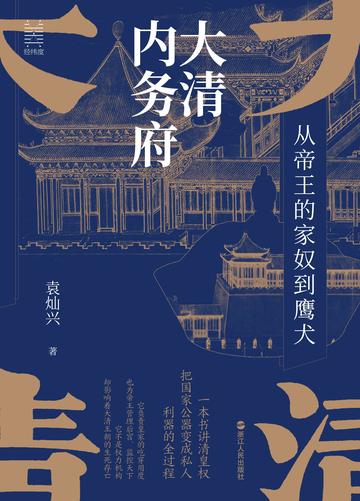
The Qing Imperial Household Department: From the Emperor's House Slaves to His Hounds
大清内务府:从帝王的家奴到鹰犬
- Status
- Completed
- Length
- 204k Words
- Genre
- Historical
- Subgenre
- Unknown
- Updated
- 2y ago
- Source
- Fanqie
Stats
13Chapters
38Reads
8.1Score
6Listens
24.8kReads · all time
Tags
Synopsis
More by this author
 Military Aircraft Division. Part 1
 Qianlong's Money Bag (Instructions on Political and Business Relations)
 Taking Care of Things Around the King: the Ministry of Internal Affairs of the Qing Dynasty
 Bicentenary of the Military Aircraft Department
 The Campaign for Mount Qi: Zhuge Liang’s Northern Expeditions, Their Triumphs and Failures (Latitude and Longitude Series)
 Tribute, War, and Trade: Ming China in the Age of Exploration
In booklists 2



Another Batch of Hidden Gems for Veteran Readers
Looking for books like Phantom Realm Patch. Fresh, thought-provoking ideas and an expansive world! A well-crafted, brain-teasing story that combines fantasy, horror, technology, and transmigration, with airtight logic.
1.1kBooks2.6MViews14hUpdated
Any Illustrated Reference Books with All Kinds of Entries?!!!!!
Looking for books similar to *Illustrated Guide to 209 Common Flowers and Plants*.
433Books878.7kViews2dUpdated
Reader comments 3
Google Translate
The writing style of this book is easy to understand and the writing style is smooth. Reading it is like listening to the author telling a story. The Ministry of Internal Affairs mentioned in the book reminded me of some large companies in real life, with complex organizations and wide-ranging functions. And I found that history always has similarities. As the book says, the appointment of officials in the Ministry of Internal Affairs often relies on connections, which is also similar to modern society. However, by understanding these histories, we can better understand the development of human nature and society.
It is true, objective, and rich in content. It describes the internal affairs of the late Qing Dynasty court in a detailed and comprehensive way, without omitting anything, making it immersive. In the three hundred years of the Qing Dynasty, twelve generations of emperors danced on the pavilion and sang on the stage, and their romance was always beaten by the rain and late. Looking at the virtuous countries and families in the past, their successes were due to diligence and frugality, but to luxury. This book fully proves this truth.
It's a pretty good book, a small look at the sunset of the Qing Empire.