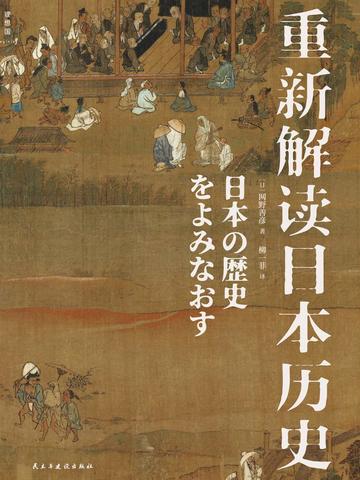
Yoshihiko Amino was one of the most original historians in Japan in the 20th century, and he single-handedly created a new situation in the study of Japanese medieval history. In this book, he shows the changes in Japan's country and society before modern times from many aspects such as the popularization of writing, currency circulation, class and discrimination, women's social status, the origin of the emperor and Japan's national title, and the differences in culture and life in different regions. He breaks the existing common sense and rethinks and interprets Japanese history. In his writings, medieval Japan was not an isolated island country, and its residents were not just farmers who worked on the land, nor were they just warriors with strong armor, nobles vying for power, and emperors of the eternal line. In sharp contrast is the dynamic Japanese history driven by trade, circulation, and competition. A large number of non-agricultural populations are active on these stages: mountain people and sea people who rely on mountains and seas to live, various craftsmen who form guilds, various sects of New Buddhism that are deeply involved in social changes, women who enjoy certain freedoms and actively participate in social activities, and fully participate in social activities. Merchants who make use of the land and sea transportation network, geishas, beggars, and witches who run around begging for a living, all kinds of "non-humans" with "filth" on their hands, lords and bureaucrats who work hard to run their estates and territories... Together with the farmers, they constantly adapt and transform the environment in order to survive and develop, and create an economy, politics, society and culture with their own characteristics.
Reader comments
The content of this book is really rich and gave me a new understanding of Japanese history. It broke many stereotypes and allowed me to understand a more realistic and dynamic medieval Japan. The book also mentions characters from various social classes, such as craftsmen, women, businessmen, etc., Which reminded me of "The Tale of Genji", which also depicts the lives of various characters of that era. I think both books are worth reading and can give us a more comprehensive understanding of Japanese history and culture.


The content of this book is really rich and gave me a new understanding of Japanese history. It broke many stereotypes and allowed me to understand a more realistic and dynamic medieval Japan. The book also mentions characters from various social classes, such as craftsmen, women, businessmen, etc., Which reminded me of "The Tale of Genji", which also depicts the lives of various characters of that era. I think both books are worth reading and can give us a more comprehensive understanding of Japanese history and culture.