Collection of Ci, 1 volume, written by Li Jing, the central master of the Southern Tang Dynasty, and Li Yu, the later master of the Southern Tang Dynasty. Compiled by Anonymous Song Dynasty. Collected four poems by Li Jing and 33 poems by Li Yu. There are Ming Tan'erjin edition, Ming Luyuan edition, Jiguge edition, Qinghou Wencan edition, etc., All of which seem to be from the Song Dynasty. In 1957, the People's Literature Publishing House published "Edited Poems of the Second Master of the Southern Tang Dynasty", which was revised based on Lu's version. The appendix contains the words written by other books titled "Two Masters", the original order and textual research of each book, as well as the comments about the words "Two Masters" scattered in each book. Li Jing and Li Yu were both feudal emperors. They could not rule the country as kings, but they were outstanding in the world of poetry through the ages. Li Yu, in particular, succeeded his father Li Jing as the lord of the Southern Tang Dynasty. He reigned for 15 years but did not improve his political affairs. After the fall of the country, he was captured by the Song Dynasty and made a disobedient marquis. He lived a humiliating life like a prisoner for three years. According to legend, he was poisoned to death by Zhao Guangyi, Emperor Taizong of the Song Dynasty. In terms of literature and art, he has a wonderful understanding of music, can calligraphy and painting, and is especially good at ci. The early works only reflected the debauched and decadent life of the emperor, while the lyrics after the fall of the country turned into sentimental and sad sounds. His contribution and influence on Ci is that he reformed Huajian Ci to mainly write about women in content and gorgeous form. He used clear language, line drawing techniques and a high degree of artistic generalization to grasp the deepest feelings in his life, express his feelings movingly, and give people a profound Artistic feelings; created his own style, got rid of the clichés of Huajian Ci, opened up a new realm, and played an important role in promoting the development of Song Ci; its subjective thoughts and feelings are far away from the people, but the objective artistic effect can arouse strong resonance among readers. His words and phrases, such as "Asking you how much sorrow you can have, are just like a river of spring water flowing eastward", "Continuous cutting and chaos, it is the sorrow of separation", "The hatred of separation is like spring grass, it will come back to life when it travels farther", etc., Which have been widely recited in the past dynasties. Li Jing's poem has the sentence "The drizzle dreams of returning to the chicken plug far away, and the small building blows through the cold jade pipe", which is also praised by poets. Their artistic achievements are unparalleled by other poets in the Tang and Five Dynasties. At the same time, they also mark that the development of ancient Chinese Ci has entered a new stage. In particular, Li Yu's poetry has reached an unprecedented level of language art and exerted a great influence on poets of the Song Dynasty such as Li Qingzhao.
Reader comments
The poetic methods mentioned in this book are very detailed, and various poetry genres and creative techniques are commented on, which feels very practical. The book also lists taboos and precepts in poetry, which is a great reminder for us when writing poetry. I especially like the author's analysis of the characters' personalities and experiences, which gave me a deeper understanding of the poem. However, I don't like some of the more complicated theories in it, and it's a bit difficult to read. Overall, this is a book worth reading.
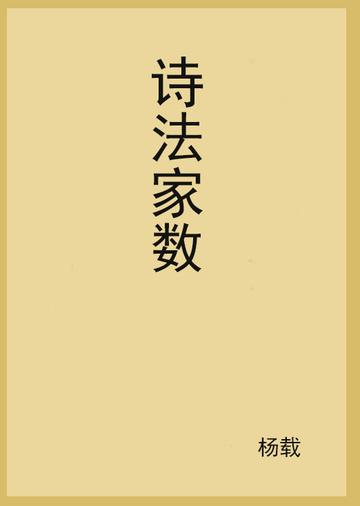
The poetic methods mentioned in this book are very detailed, and various poetry genres and creative techniques are commented on, which feels very practical. The book also lists taboos and precepts in poetry, which is a great reminder for us when writing poetry. I especially like the author's analysis of the characters' personalities and experiences, which gave me a deeper understanding of the poem. However, I don't like some of the more complicated theories in it, and it's a bit difficult to read. Overall, this is a book worth reading.