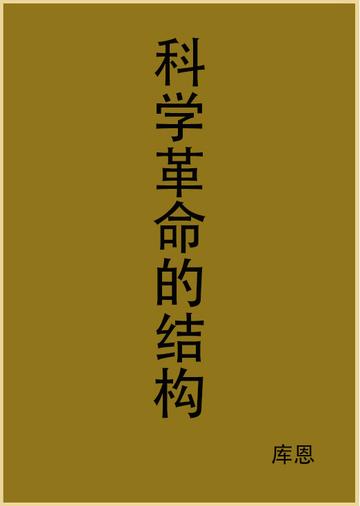
Kuhn's masterpiece on the history of science. Published in 1962, it has been translated into German, Polish, Italian, Japanese, Russian and other languages. In addition to the preface, the book has a total of 13 chapters, which formulate and express the author's views in the form of a program. In the book, Kuhn systematically expounded his own philosophical thoughts for the first time and put forward the core concept "paradigm" in his scientific outlook. Kuhn also adopted an instrumentalist perspective to explain the mechanism of scientific development, demonstrating his pragmatist views. He proposed that science has neither rules to follow nor truth requirements. It is only because the old paradigm can no longer provide an effective explanation for solving difficult problems that the paradigm needs to be replaced. Kuhn also stated that research that conforms to scientific historical facts cannot be logicist, but should be historical and psychological. Faced with the standard answers to logicist questions, Kuhn responded with the method of historical analysis instead. Kuhn also focused on analyzing the incommensurability between theories, trying to emphasize the creativity of scientific revolution and the impact of scientists' psychological characteristics on scientific activities, to show that his view of scientific knowledge growth is different from the traditional logicist view of linear accumulation. This book is a brief overview of Kuhn's views formed after 15 years of careful research. In the book, he proposed and stipulated a series of new concepts such as "paradigm", "scientific revolution", "pre-science", "normal science", "abnormality", "crisis", etc., Which have now become commonly used terms in the philosophy of science. The publication of the book caused great repercussions in the Western philosophy and social science circles at that time, creating a new direction for the study of philosophy of science. Some people listed it as one of the five major achievements of the philosophy of science in the 20th century.
Reader comments
This book is really interesting! The new concepts such as "paradigm" proposed by Kuhn in the book gave me a deeper understanding of the development of science. Just like when I first got married, I was full of expectations and ideas about married life, but in actual life I found that many things were different from what I imagined. This book made me understand that the development of science is not smooth sailing, but requires constant breakthroughs and innovations. I find Kuhn's method of historical analysis very enlightening and allows me to view the progress of science more objectively. Recommended to friends who are interested in the history and philosophy of science, you will definitely gain something!
This book breaks the misunderstanding of the linear development of the history of science, describes the formation and changes of norms, and shows that its internal changes are lively. Behind science is people exploring the world. This may also indicate that people understand the world, not simply accumulation in time, but people adapting to the world. In historical descriptions, the past connects the present like a straight line. This may be an illusion, because the present is not eternal.
This book is really interesting! The new concepts such as "paradigm" proposed by Kuhn in the book gave me a deeper understanding of the development of science. Just like when I first got married, I was full of expectations and ideas about married life, but in actual life I found that many things were different from what I imagined. This book made me understand that the development of science is not smooth sailing, but requires constant breakthroughs and innovations. I find Kuhn's method of historical analysis very enlightening and allows me to view the progress of science more objectively. Recommended to friends who are interested in the history and philosophy of science, you will definitely gain something!
This book breaks the misunderstanding of the linear development of the history of science, describes the formation and changes of norms, and shows that its internal changes are lively. Behind science is people exploring the world. This may also indicate that people understand the world, not simply accumulation in time, but people adapting to the world. In historical descriptions, the past connects the present like a straight line. This may be an illusion, because the present is not eternal.