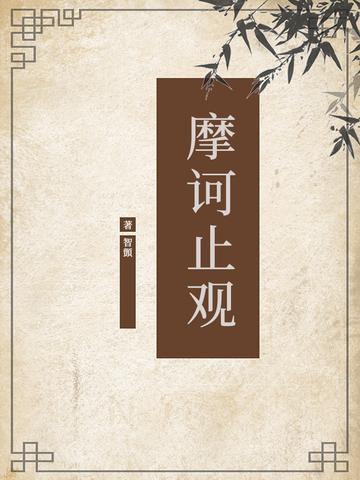
"Maha Zhi-Kuan", ten volumes (or twenty volumes), Sui Zhiyi said, "Initiation Notes" is the main work of the Tiantai Sect detailing the Yuandun Zhi-Kuan method, and is one of the three major Tiantai books. That is, Master Zhiyi, the founder of the Tiantai Sect, began to speak on April 26 in 594 (the fourteenth year of the founding of Emperor Wen of the Sui Dynasty) at Yuquan Temple in Jingzhou, morning and evening during the ninety-year period of the summer, and his disciple Zhang An recorded the initiation into a book. It was originally titled "Yuan Dun Zhi Kuan", but was later renamed "Ma He Zhi Kuan". There are three volumes before and after it, and the current edition is the re-examination of the second one (commonly known as the Guang edition). The whole book of "Maha Zamatha-Vipassana" is divided into two parts: the preface and the main part: the preface is the recorder's empowerment and briefly explains the origin of the book, and the main part is the record of Zhiyi's lecture on the perfect method of samatha-yama and vipassanā. To briefly describe the reasons, I will first describe the subject, time, place and general situation of the book, and then describe the teaching inheritance of Yuandun's Samatha-Vipassana method, which is divided into two types: Chrysostom and Jin. Chrysostomal inheritance refers to the lineage of inheritance from the Buddha, through Kassapa, Ananda, Shanna and Xiu, to Ma Ming, Nagarjuna, and Tiping, to the death of the twenty-fourth master and the end of the lineage of the Dharma. The inheritance of this master refers to Zen Master Huiwen in the Northern Qi Dynasty (550~577). According to the verses of Nagarjuna's "Great Wisdom" and "Zhonglun", he realized the principle of the three truths of emptiness, falsehood, and middle, thus forming the Zen method of one mind and three views. Later, he taught this method to Nanyue Huisi, intending to combine it with the Lotus Sutra to form his theory of reality, the two gates of Dinghui and Dinghui. Master Zhiyi was devoted to wisdom and thought, and taught three types of samatha and vipassanā: gradual, indefinite, and round and sudden. Among them, "Maha samatha and vipassanā" developed his own system of samatha and vipassana, showing the profound purpose of the round and sudden samatha and vipassanā method, which is the most essential.
Reader comments
Read more books by sages, increase your wisdom, think about the wise when you see them, and good luck will come to you.
Read more books by sages, increase your wisdom, think about the wise when you see them, and good luck will come to you.