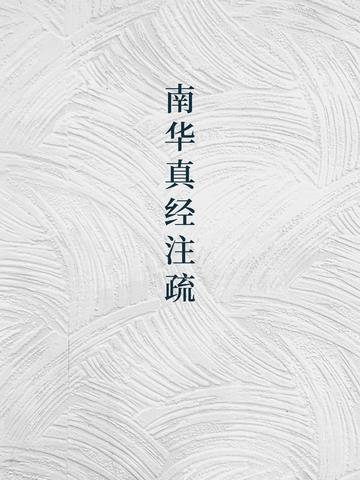
Taoism is a religion native to China and has an extremely rich collection of classics, of which the "Nanhua Sutra" is an important one. "Nanhua Zhenjing" is "Zhuangzi". The annotated edition by Guo Xiang of the Jin Dynasty paid attention to the meaning and theory, and greatly developed Zhuangzi's thoughts. It was very popular. The sparse edition written by Cheng Xuanying of the Tang Dynasty focused on the historical facts and allusions, names of people and places, and the pronunciation and meaning of words in "Zhuangzi". It also included chapters and sentences, which was more detailed than the annotated edition of Guo Xiang. "Commentaries on the Nanhua Zhenjing" collects the essence of Guo and Cheng and is indeed a rare book for interpreting the true meaning of Taoism.
Reader comments
"Nanhua Zhenjing Commentary" has detailed annotations, and combines the principles of Guo Xiang's commentary and the textual research of Cheng Xuanying's commentary, which can help us better understand "Zhuangzi". Just like the sentence in "Zhuangzi", "The most benevolent one is the ancestor, and filial piety and kindness are finally forgotten." This book allows us to understand the mysterious way of Taoism and feel the depth and breadth of Zhuangzi's thoughts.
"Nanhua Zhenjing Commentary" has detailed annotations, and combines the principles of Guo Xiang's commentary and the textual research of Cheng Xuanying's commentary, which can help us better understand "Zhuangzi". Just like the sentence in "Zhuangzi", "The most benevolent one is the ancestor, and filial piety and kindness are finally forgotten." This book allows us to understand the mysterious way of Taoism and feel the depth and breadth of Zhuangzi's thoughts.