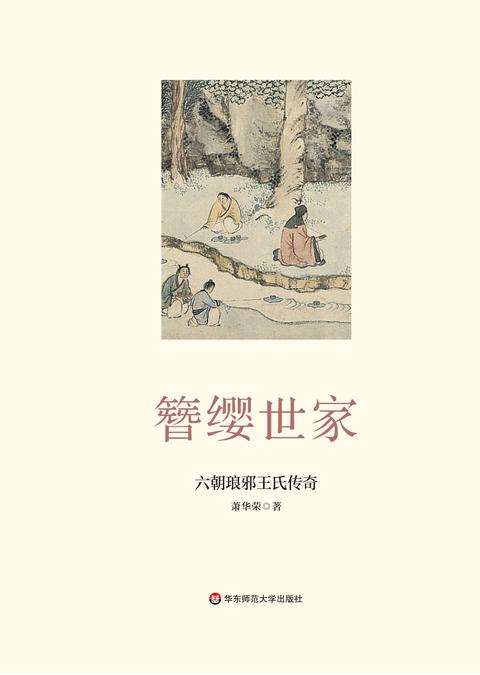
The foremost figures of the Six Dynasties, the elegance of the Wang and Xie clans, a legend for the ages.
A major work by renowned scholar Xiao Huarong, this series of essays paints a vivid picture of the rise and fall of great clans in a transformative era. Through the Wang family's adaptation to changing times and ability to move with the tide, it traces the shifts in power and intellectual currents from the Jin dynasties through the Southern Dynasties.
1. A scholar takes on the role of storyteller, describing the rise and fall of great families in an era of change. Rich in historical sources, clearly structured, and beautifully written, these stories immerse readers in the legacy and transformation of an eminent aristocratic clan.
2. “The swallows that once nested in the halls of the Wang and Xie families now fly into the homes of ordinary people.” The Wang and Xie families who once lived in Wuyi Lane, with their famous “swallows in the halls,” are the subjects of The Eminent Clan: The Legendary Wang Family of Langya in the Six Dynasties and its companion volume, The Splendid Clan: The Legendary Xie Family of Chenjun in the Six Dynasties. Aristocratic families of the Six Dynasties placed great importance on their family traditions and models of conduct, and often held up their family histories and instructions as examples. The titles' references to “eminence” and “splendor” are meant to distinguish the two families' different traditions. “Splendor” primarily alludes to the “frivolity of Laozi and Zhuangzi” denounced by people of the time. In the author's view, the Xie family was more inclined toward the teachings of Laozi and Zhuangzi, passing down an outlook shaped by those teachings and a refined family tradition. Their “splendor” was not merely material, but spiritual as well. “Eminence,” meanwhile, refers to the ceremonial headwear and insignia of high officials and nobles, symbolizing their power and status.
3. The Wang family was more ambitious and hungry for power than the Xie family, and its members wore more dazzling and imposing symbols of rank. They happened to live in an era of frequent dynastic change, and each transfer of power presented them with new opportunities. Beyond their dazzling and enduring symbols of rank, the Wang family also left behind a legacy of calligraphy through the ages, represented by Wang Xizhi, the “Sage of Calligraphy.”
“Political legitimacy” and “calligraphic legacy” became one.
The Langya Wang clan of the Six Dynasties lasted for more than ten generations and three hundred years. Compared with the other great clan of the Six Dynasties, the Xie family, the Wang family placed greater emphasis on rank and political achievement. The political power it gained made it one of China's most prominent families. Its members embodied a spirit of adapting to the times, pursuing opportunities, and responding flexibly to changing political circumstances.
The family's history is not only a record of shifting power from the Jin dynasties through the Southern Dynasties, but also a history of changing ideas. The generations of Wang calligraphers, represented by Wang Xizhi, the “Sage of Calligraphy,” embody another, more enduring aspect of the family's elegance.





This book is truly captivating! The author, in the voice of a storyteller, eloquently recounts the rise and fall of the Langya Wang clan during the Six Dynasties period, drawing upon rich historical materials and presenting a clear narrative. Moreover, the writing is fluent and engaging, making me feel as if I were immersed in that era. I particularly enjoyed the sections on power shifts and intellectual evolution; they were very inspiring. In short, this is a book well worth reading!