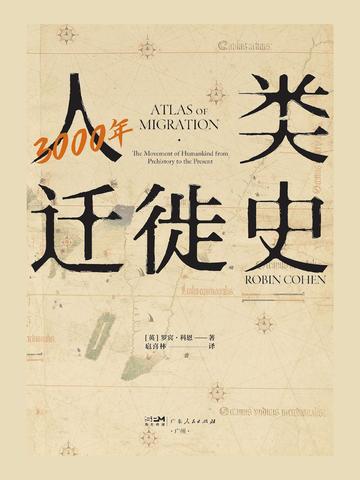
Since the first time we left the Great Rift Valley, the pace of human migration has never stopped, and the diversity of civilizations was born. Hunting, gathering, nomadism, avoiding disasters... Early humans migrated passively under the control of nature, looking for the possibility of life continuation; war, religion, colonization... In the long ancient history, political and social forces have become important reasons for human beings to travel long distances, establishing the basic appearance of the modern world; travel, work, studying abroad... In the current era of globalization, the reasons for travel have become diverse, and the cultures of various countries have continued to communicate through immigration, creating sparks.
This book is the latest work of Professor Robin Cohen, a well-known scholar in the field of migration studies. It provides a profound analysis of the huge impact of human migration on civilization. The book covers various migration types such as exploration, slave trade, transnational work, exile, and war refuge. It is equipped with more than 200 historical pictures, migration trajectory maps, and data analysis charts. It uses data visualization technology to explore the future direction of civilization in the 3,000-year migration trajectory of mankind.
Reader comments
I particularly like the pictures and maps inside, which allow me to understand human migration trajectories more intuitively. However, I kind of hate those slave owners and colonial rulers who brought misery to people in other areas. My favorite plot is about immigrants in modern society who contribute to the exchange of world cultures. All in all, this is a book worth reading!
Although some of the content is subjective, overall it is good.


I particularly like the pictures and maps inside, which allow me to understand human migration trajectories more intuitively. However, I kind of hate those slave owners and colonial rulers who brought misery to people in other areas. My favorite plot is about immigrants in modern society who contribute to the exchange of world cultures. All in all, this is a book worth reading!
Although some of the content is subjective, overall it is good.
Understand the world and increase knowledge