This book has been newly arranged based on Western Art History (Kaiming Bookstore, 1928), under the section “Another Work: Twelve Lectures on Western Painting Schools.”
More than 300 illustrations have been added and carefully arranged to greatly improve the reading experience and help today's readers better understand Feng Zikai's artistic world.
In Fortress Besieged, Qian Zhongshu once wrote: “A professor becomes a famous professor in two stages: first, lecture notes become books; then, books become lecture notes.” The same was true of Feng Zikai's teaching and creative career. From 1919 to 1943, Feng taught at several colleges and universities, including Shanghai Specialized Teachers College and Zhejiang University. His lecture notes were published as art books, including Western Art History (Kaiming Bookstore, 1928), Talks on Western Architecture (Kaiming Bookstore, 1935), and Essays on Art (Shanghai Liangyou, 1935). These works provided excellent introductions to art for young students of the time.
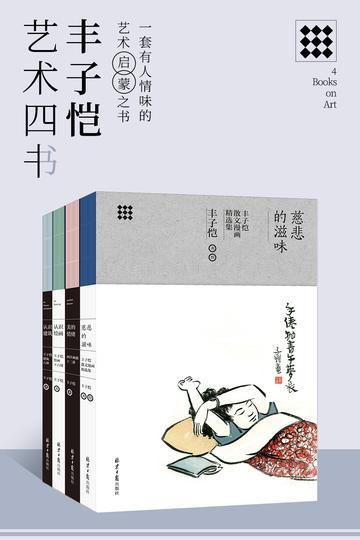
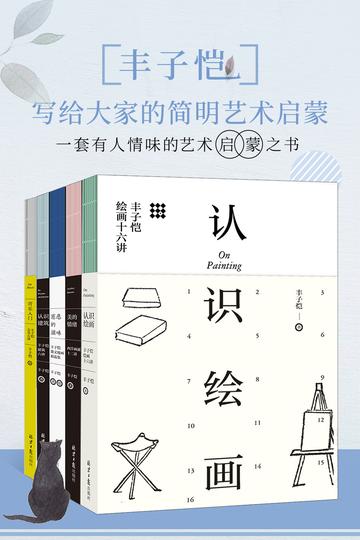
Three books in the “Feng Zikai Art Collection,” Understanding Painting, The Emotions of Beauty, and Understanding Architecture, grew out of this work. Among them:
Understanding Painting is the first collected edition of Feng Zikai's essays on painting, and an advanced guide to artistic appreciation by a master. Why does learning to draw always begin with sketching? How can you judge whether a painting is good, and is a more realistic painting necessarily better? Why is it said that Western art can be mastered through hard work, while Chinese art depends entirely on talent? You'll find answers to all these questions in the book.
In The Emotions of Beauty, Feng Zikai surveys nearly every major school of classical Western art. What seems to the uninitiated to be a bewilderingly complex history becomes clear and simple in his hands. Follow his explanations, and you too can learn to understand paintings and appreciate the emotions and spirit of beauty.
Understanding Architecture offers a comprehensive account of the development of architectural art. Why did the kings of ancient Egypt devote so much effort to building enormous, cumbersome pyramids? Why are there grooves along the columns of Greek temples? Why were early Christian churches built underground? Behind these lighthearted and fascinating questions, Feng Zikai tells a deeper story of changing hearts and historical eras.
The Taste of Compassion brings together 58 essays and 59 artworks, revealing the free-spirited yet compassionate sensibility of a great artist through three themes: “The Human World,” “Among the Mountains and Waters,” and “All Living Things.” In Feng Zikai's hands, cats fighting, ants moving house, and a lazy springtime stretch can all become subjects for art. The leisurely pleasures of everyday life, children's sleep-talk, and the paulownia tree outside the window can all become essays. As Zhu Guangqian said of him, “He is an artist from head to toe. His character, his words and actions, his smile and expression are all artistic, and all reveal the deepest affection.”
This book is really rich in content! Mr. Feng Zikai explained art very thoroughly and included many pictures so that even a person like me who does not understand art can understand it. He said in "Understanding Architecture" that "architecture is alive", which is really inspiring. After reading this book, I realized that buildings are not just houses, but also carry history and culture. I think this book is very suitable for friends who are interested in art and will gain a lot.
When Feng Zikai defined Chinese painting, he actually said that it is a painting of genius. ?