[History] [Youth] [Women] [Coming of Age] [Tragic Romance]
[Songstress Empress Wei Zifu x Emperor Wu of Han, Liu Che]
Once upon a time, there was a story in Chang'an, the capital of the Han dynasty.
On a spring night in the second year of Jianyuan, a young ruler fell in love with a singer. He looked past the crowd filling the hall and saw his beloved at a glance. The court historian recorded the story on bamboo slips. I remembered it for my whole life.
A lifetime is long enough to witness many things. A family can go from prosperity to decline, and a beauty can turn from a young girl to a white-haired woman in the blink of an eye.
The lush trees of Shanglin Park became flames in the Witchcraft Disaster of the second year of Zhenghe. Even the most passionate love and blazing desire will fade. In the end, people return to being ordinary, like a wildfire that has burned itself out, leaving everything in ashes. Gazing at one another's faces can no longer stir the slightest ripple.
I, Wei Zifu.
I am my mother's daughter. I must return to my own fate. He no longer loves the seventeen-year-old girl who cried endlessly when she left home. Nor will I ever again fall in love with the young man who briefly knew hardship. A girl and a boy meet in the night wind. The spring breeze of the Shangsi Festival has finally passed. We were always destined to lead different lives. We only meet for a fleeting moment, then drift farther and farther apart, each returning to our own path.
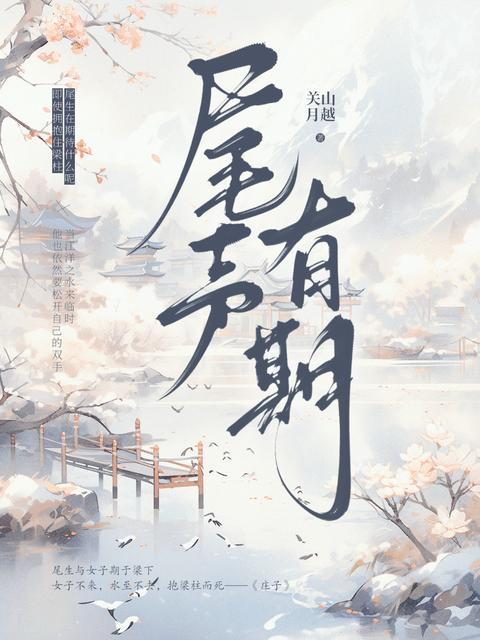

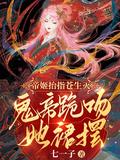
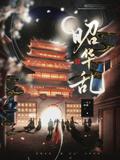
"No joy at the birth of a son, no anger at the birth of a daughter; have you not seen how Wei Zifu ruled the world?" I admire Empress Wei Zifu's character. While in power, she was dignified, virtuous, gentle, and kind. Even on her deathbed, she remained dignified and resolute, displaying the courage befitting a family of generals to rebel. After her failure, she calmly committed suicide. For this passionate spirit alone, she was a very successful woman, not merely an appendage of her era.
There was no deliberate attempt at sentimentality; each person's departure was natural and understated, yet the sorrow was powerless. A few words conveyed a bone-chilling desolation, a despair that seemed like an inescapable fate. Finally, dust returned to dust, and everything vanished into silence, disappearing into the long river of history.
Set against a historical backdrop, this book tells a poignant love story with a captivating plot. The author portrays the characters with great subtlety, allowing me to feel the protagonist's helplessness and sorrow. I believe this is a well-received book that will prompt deeper reflection on history and life.
The writing is indeed very good. My favorite part is the death of Shi Zhitian Jin, which is a death with a touch of pleasure: "I did it for my heart."
The prose, flowing like an essay, tells the story of Wei Zifu's life in a captivating way. Between the lines, one can almost feel the warm breeze of the Han Dynasty on their face. Throughout the book, one sees various expectations: a mother's hopes for her children, the grand ambitions of emperors and generals, and the beautiful emotions of early life.
Sorrowful yet not tragic, leaving one sighing with regret.
It's really beautiful, but watching it left me feeling quite down. It's historically accurate.
It's so awesome it's almost overwhelming.
It's good, but there's too little love between the male and female leads; it's more like they're using each other.
It's a miracle that I stumbled upon this book in Tomato. His writing style and profound knowledge are beyond doubt.