Introduction
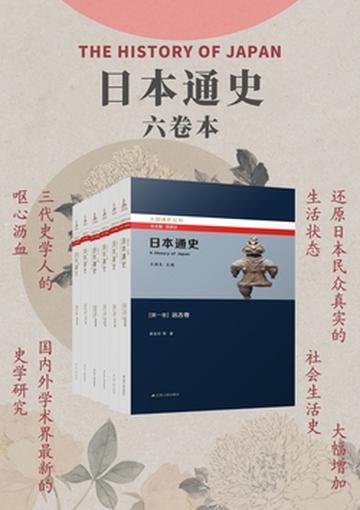
This book is the first volume of the first multi-volume general history of Japan. The General History of Japan has six volumes in total, divided into ancient volumes, ancient volumes, medieval volumes, modern volumes, modern volumes, and postwar volumes. It gathers the main forces of Japanese studies in domestic academic circles to comprehensively study and discuss the history of Japan from ancient times to the early 21st century. It is a phased summary of Japanese studies, a concentrated expression of the achievements of Japanese studies in academic circles, and has outstanding academic value. It is a project funded by the National Publishing Fund.
Reader comments
This book is a phased summary of Japanese studies in China's domestic academic circles. It is a concentrated expression of the results of Japanese studies in academic circles and has outstanding academic value. It comprehensively studies and discusses the history of Japan from ancient times to the early 21st century, and is the first multi-volume general history of Japan. Although it went through many personnel changes during the writing process, it was not easy to finally launch it. Domestic general Japanese history books have been published one after another, and there are many monographs on chronological history. Looking at general history works alone, this book has unique academic value and important historical significance.
I finally finished reading this book. When this book was pushed in front of me, the export of dual-use materials was prohibited. It has been four months now and it took me four months to finish reading this book. Tell me your thoughts.
It is indeed the latest research result in the general history of Japan, and it is very suitable for those who are beginners in Japanese history. However, because each volume is written by a different person, it is inevitable that some things will be recorded again, which makes it seem verbose (what can be done is to see how two people record the same thing differently, and it is interesting to look at the research on the same thing from different angles. Unfortunately, I only came up with this idea at the end. If I had already had it, wouldn't I have discovered more? Haha). And because it is an academic-related task, there will be some text to cope with the nature of the task. However, despite its flaws, it is still very suitable for beginners and enthusiasts to read.
The other thing is to manage your emotions well. Due to some factors in modern times, it is inevitable that we will hate Japan. This is understandable. Even if I set up my emotions, when I read Japan's modern history, I felt angry (for their measures) and sad (for the misfortune of my country at that time, and I felt sorry for it). In the end, I stopped watching it for a while and continued reading when my mood stabilized. After all, you are here to research or learn or understand, and you cannot let your emotions control your brain.
Another thing is that this book only records up to December 2014, and there is no record of the last ten years. It should be said that it is eleven years (from 15 to 26). In just eleven years, so many great things have happened, which is a bit sad.
A very comprehensive historical book about Japanese politics, economy and culture



This book is a phased summary of Japanese studies in China's domestic academic circles. It is a concentrated expression of the results of Japanese studies in academic circles and has outstanding academic value. It comprehensively studies and discusses the history of Japan from ancient times to the early 21st century, and is the first multi-volume general history of Japan. Although it went through many personnel changes during the writing process, it was not easy to finally launch it. Domestic general Japanese history books have been published one after another, and there are many monographs on chronological history. Looking at general history works alone, this book has unique academic value and important historical significance.
I finally finished reading this book. When this book was pushed in front of me, the export of dual-use materials was prohibited. It has been four months now and it took me four months to finish reading this book. Tell me your thoughts. It is indeed the latest research result in the general history of Japan, and it is very suitable for those who are beginners in Japanese history. However, because each volume is written by a different person, it is inevitable that some things will be recorded again, which makes it seem verbose (what can be done is to see how two people record the same thing differently, and it is interesting to look at the research on the same thing from different angles. Unfortunately, I only came up with this idea at the end. If I had already had it, wouldn't I have discovered more? Haha). And because it is an academic-related task, there will be some text to cope with the nature of the task. However, despite its flaws, it is still very suitable for beginners and enthusiasts to read. The other thing is to manage your emotions well. Due to some factors in modern times, it is inevitable that we will hate Japan. This is understandable. Even if I set up my emotions, when I read Japan's modern history, I felt angry (for their measures) and sad (for the misfortune of my country at that time, and I felt sorry for it). In the end, I stopped watching it for a while and continued reading when my mood stabilized. After all, you are here to research or learn or understand, and you cannot let your emotions control your brain. Another thing is that this book only records up to December 2014, and there is no record of the last ten years. It should be said that it is eleven years (from 15 to 26). In just eleven years, so many great things have happened, which is a bit sad.
A very comprehensive historical book about Japanese politics, economy and culture