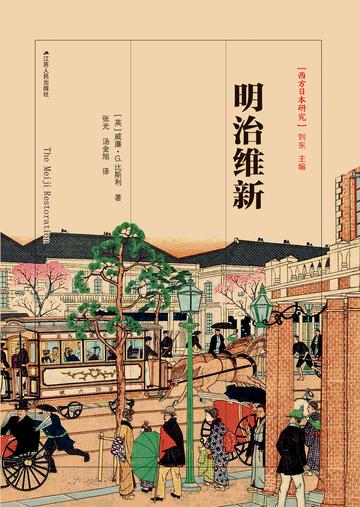
The history of the Meiji Restoration touches on many themes that mattered far beyond Japan. In part, it was Asia's response to Western expansion in the nineteenth century. Studying the Meiji Restoration therefore raises questions about the nature of imperialism and nationalism, and their relationship to the transformations of the modern world. Beasley's The Meiji Restoration is a work of history that combines historical narrative and analysis. Its introduction concisely discusses the major theories and the scholars and books associated with them, covering interpretations and evaluations of the nature, significance, and historical impact of the Meiji Restoration up to 1970.
As a reader, you can see from a new perspective that the real Meiji Restoration was not a whim or an overnight success, but a complicated process. Japanese society and culture are very different from China. The lower feudal lords began to formally and organizedly study Europe in 1820.
This book gave me a deeper understanding of the Meiji Restoration. It not only tells the story of historical events, but also explores the ideas and social changes behind them. The ideas in the book triggered my thinking about modern society and also reminded me of the development process of my own country. I recommend everyone to read it, you will gain a lot.

As a reader, you can see from a new perspective that the real Meiji Restoration was not a whim or an overnight success, but a complicated process. Japanese society and culture are very different from China. The lower feudal lords began to formally and organizedly study Europe in 1820.
This book gave me a deeper understanding of the Meiji Restoration. It not only tells the story of historical events, but also explores the ideas and social changes behind them. The ideas in the book triggered my thinking about modern society and also reminded me of the development process of my own country. I recommend everyone to read it, you will gain a lot.