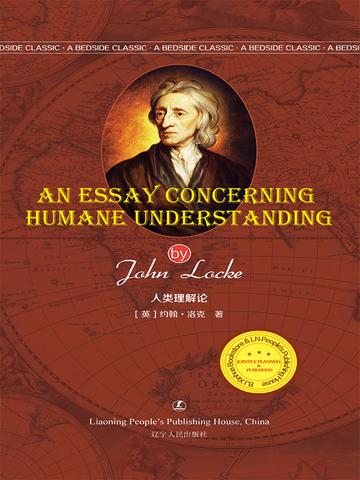
The most important point of "A Theory of Human Understanding" is that Locke proposed for the first time that the human mind has systematic, detailed, rational, and broad philosophical thoughts and cognitions. Everything comes from experience and is not innate. This view is contrary to the popular view at the time that thoughts and cognitions are "innate." This is exactly what Locke deliberately focused on. It also possesses modern ideology in the sense of acquiring knowledge. In fact, Confucius, our ancestor in the Chinese education field, had the idea of "learning from time to time" as early as hundreds of years ago. All knowledge comes from the process of learning and learning, rather than existing innately. This view may be common sense to the Chinese. But for Westerners who have been immersed in religious thought for thousands of years, it is nothing more than a heavy slap on the face of the sleepy people, forcing them to face this most basic common sense. Locke further believed that morals, values, and beliefs must all be acquired through human experience. Therefore, understanding of the world must also be formed through observation and experience.