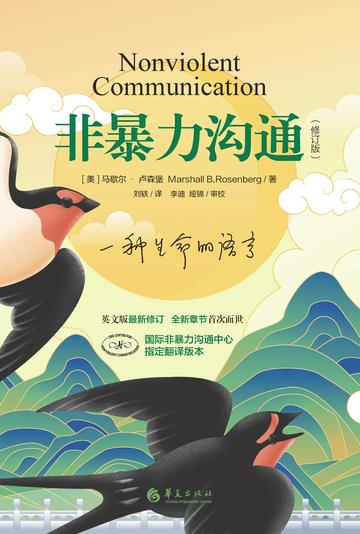
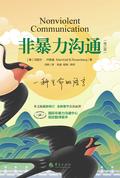
Nonviolent Communication (Revised Edition)
非暴力沟通(修订版)
- Status
- Completed
- Source
- Fanqie
Stats
Tags
Synopsis
Reader comments
In booklists 13





Psychology! ! I Really Like It, Please Read It! Girls Like Psychology
I want to read a book like "Murphy's Law: Learn a little bit of psychology every day". Please recommend some psychological articles. I really like them. I hope to recommend some psychological books. I really like to read them. Please, guys! ! !




A Book That Can Help You Learn and Increase Your Knowledge
Knowledge that can increase (useful, practical), interesting and not boring



Why Not Read Classics?
Recommend some good books that are meaningful, influential and well-written.




Books for Women to Enhance Their Awareness
I would like to read a book similar to "The Choice of Being a Woman". Books that women should read to improve their awareness, change their thinking, and redeem themselves


High Emotional Intelligence Speaking Skills
I want to see content similar to "Be a woman with good eloquence and high emotional intelligence". Is there a book with high emotional intelligence that can be used in various situations?


Books for Learning Eloquence
I would like to read a book similar to "Tricks to Reply and Develop Good Eloquence". Learn eloquence, the needs in life


CCTV Night Reading Recommended Books📚
I want to read a book similar to "The Food of the World". Reason for recommendation: As the title of the book says, reading the entire personal state will make you feel full! Must-remember the golden saying: "What really matters is your gaze, not what you see in front of you."




I Want to Read Rental Literature.
That feeling of decadent and romantic love born in a cramped space☝️🤓, do you have it?





A Book on Self-Discipline and Learning Methods
A book on self-discipline and learning methods



Recommended Introductory Books on Psychology
I want to read a book like "The Genius is on the Left and the Madman on the Right". Don't be super expository! ! !

I Am Looking for Books to Improve Myself, Whether It Is About Knowledge or How to Deal with People.
I want to read a book like "Rich People Think Differently from You".





Do You Have Any Weird Book Recommendations? (Want to See)
I want to read books that are different, like psychology.


Do You Have Any Books to Improve Yourself?
It's just that you can improve yourself or gain knowledge after reading it, and it's not the kind of book that ends after reading and has no benefit.
There are many sentences worth learning in the book! I've marked them all out. If you want to see them, you can go and see them. "Mutual respect is the key to successful conflict resolution" Use clear and positive language when making requests to the other party. "The reason why we don't want to show our inner vulnerability is because we want to be strong and are afraid of losing our authority." On the road to emotional freedom, many people go through three stages: (1) "Emotional Slave" - we believe that we are responsible for the feelings of others; (2) "Hateful" - we refuse to consider other people's feelings or needs; (3) "Emotional Master" - we are completely responsible for our own feelings, and we also realize that we cannot meet our own needs at the expense of the well-being of others.
God, I feel like I've understood it. Although I haven't absorbed it completely, I'm going to continue reading this book a few more times. It's the first time I've read a literary book of this type. I'm really hooked. I've fallen in love with it. It's given me a lot of inspiration in my life. I'm very relaxed now, and I really can't wait to write a review~
In short, focus on the real needs of yourself and the person you are talking to, and express them correctly. The article was too translated, which made me a little bored during the reading process, but I still finished reading it and gained a lot.
I felt the nourishment of non-violent communication from the depths of my soul, and learned practical demonstrations from practical examples. After reading it, I felt physically and mentally happy and enlightened. I want to read it four times, chew it carefully and digest it one by one!
This book really opened the door to how I can communicate with others. Especially when I saw some specific methods, it really made me enlightened and sighed that people can still communicate in this way. Although it sometimes seems clumsy, it is very sincere. Many of the observations mentioned in the book really struck a chord with me. For example, the way we were educated since childhood affects us from being able to express our own needs, so we are unable to clearly know what we want, resulting in an inability to understand ourselves and connect with others.
I feel that this book is very helpful. I can use a different perspective to understand the needs behind different languages. In life, there are many people who are talkative or not good at words. Maybe their intentions are not bad, but the way they speak makes us uncomfortable. If we can see through the needs behind this, maybe our relationship with many people will go further, to tolerate others, understand others, understand ourselves, and know what we need. If so, even if no one understands us, at least we will still have ourselves.
A book that is very instructive to reality. The opinions are very fundamental. Non-judgmental, whether to yourself or others; describe observations (description of behavior) - express feelings (feelings that are not attributed to yourself or others) - feel needs (how you or others feel comes from whether your inner needs are met, not one party's fault) - requests (express requests rather than demands)
It is a very good book. After reading it twice, I have a deeper understanding of the spirit of the book: the underlying logic of non-violent communication, the deep connection between people, the mutual giving and nourishment of life, and the empathy and satisfaction of feelings and needs.
The author pattern of this book is really great... I just had a headache recently because of the estrangement between me and others. I accidentally learned about this book. After carefully reading five chapters, combined with my own past experience and the examples in the book, I really realized that communication is a very important thing... Letting go of the prejudice (hostility) towards yourself and others, and expressing your feelings can make the goodwill link between each other closer. No one is a "natural enemy", including yourself. Learning to better manage relationships, understand each other's feelings, and dissolve barriers are also topics of life growth. Language is one of the most common communication tools around us, and it is often the easiest for us to ignore its negative effects. Fortunately, some wise men pointed the way and wrote down the fragmented feelings of ordinary people into a systematic theory, so that more people can see and understand the brilliance and beauty of human nature. 👍
The characters in the book are all real, and their experiences made me relate to them. Especially in real life, we may inadvertently say some hurtful words, but this book tells us that we can communicate in a non-violent way, which can not only heal the inner pain, but also resolve interpersonal conflicts and make people more harmonious. I think this is especially important for people like me who have been single for many years, because if you learn non-violent communication, you may be able to find love more smoothly! 😄
The article is well written, with many classic old sentences. Generally speaking, this is a book about dialogue skills. The author teaches us how to highlight the dialogue between two parties. He uses metaphors, personification and other techniques to write meticulously. There is a wonderful example after each chapter of the story, which is really rare!
What is the purpose of reading this book? It is to improve my thinking and learning methods. This kind of non-violent thinking and non-violent communication method made me aware of my previous catastrophic thinking and accusatory thinking. I understood that the purpose of my communication was always needs, but it was just covered with violence to satisfy needs. Now that I have read this book, I have given myself an opportunity to improve. Although it is not very good to use now, it is not too late. Just like that sentence, the best time to plant a tree was 10 years ago, and the second best time is now.
The most rewarding part is Chapter 9: Loving Yourself. Use the language of nonviolent communication to see and talk to yourself. Especially when I feel that I have negative emotions, I will ask myself what is causing my mood swings? What are my emotions and feelings? Why does this make me feel this way? What needs of mine are not being met? After I realize this, I will start to enlighten myself and it will be much better, and I will no longer be trapped by negative emotions. Of course, this kind of awareness requires repeated practice. I believe I can develop the habit of using non-violent communication to talk to myself.
Marshall used thorough and soul-searching language to make me realize the most effective way of communication between people - non-violent communication. This book taught me to understand why and how to build a true connection between myself and others, and between myself and myself. It freed me from the fear and resistance to communicating with others, allowed me to listen more fully to my own feelings and needs, and made me more consistent in solving problems. I sincerely recommend this book to everyone and sincerely hope that the world will become a better place because of nonviolent communication.
This book introduces not just a method, but a brand-new life model and state, which allows people to think and do things in a positive environment and mind, get rid of disputes and chaos, sort out solutions from the mess, and ensure the order and stability of life.
I always thought this was a book with a strong didactic flavor. Although I already knew its name, I had not added it to my list. But now, I think it is worth reading from time to time! The reason why I read this is because I feel that speaking well is too difficult in today's fast-paced era! ! ! Emotionally stable people really have a big advantage. When reading this book, it is more like having a conversation with my past self. During the reading process, I always think of what happened to myself (both myself and the other party are using violent communication), and these behaviors will cause us to lose and hurt each other every time. "Nonviolent Communication" revolves around the four general directions of observation, feeling, need, and request. Specifically, it means listening to the event itself without any personal color or judgment, and then expressing one's own feelings and hopes (that is, needs and requests) about the matter rather than a single evaluation, supplemented by empathy with respect. The violence mentioned in the book is actually some common verbal expressions in our daily life, that is, "verbal violence", such as "too much", "too lazy" and other accusatory comments. When you see your child doing things slowly and unhurriedly, you are worried about being late and can't help but urge them. When they are turned into words, they become accusations. Is our purpose really to place blame? No, this is just a habit of language expression. We are preoccupied with analyzing and investigating the problems of ourselves and others, but we never think about the needs of ourselves and others that are not being met. This book makes us see ourselves clearly. When faced with judgment or accusation from others, we usually respond with defense, avoidance or attack. And once we focus on each other's observations, feelings, and needs instead of diagnosing and judging, we can discover the kindness deep within. No matter what we say to another person, we want the other person to respond. Perhaps, (1) we expect the other party to understand, hope that the other party can empathize with us and connect with us. (2) We can also ask the other party to give us some candid responses to understand how the other party reacts to our words. (3) We may also ask others to take certain actions to satisfy needs. The clearer we become about what we want. The fourth element of nonviolent communication is making requests in order to make our lives more abundant. When making requests, we try to avoid vague, abstract, or ambiguous language and state what we want, not what we don't want. Nonviolent communication does not encourage us to ignore, deny, or suppress our anger, but rather to express ourselves fully and sincerely by understanding the core nature of what makes us angry. When faced with words or actions we don't like, we have four options to respond: 1. Blame ourselves; 2. Blame others; 3. Empathize with ourselves; 4. Empathize with others. Blaming others will make you angry; blaming yourself will make you feel guilty; therefore, learn to replace blame with empathy and be aware of your own feelings and needs instead of focusing on right and wrong. When facing the same thing, we have different emotions because we have different needs. We should all live for ourselves, not to meet other people's expectations. A person's desire to be recognized by others is largely related to the environment in which he or she grew up. Perhaps when a child did well in an exam, parents would praise and reward him, but if he failed in the exam, he would be severely criticized or even punished. And so on, slowly developing a pleaser personality. And what each of us should be told most is that we deserve to be loved, not because of anything we have done, not because of these "deals" Most importantly, love yourself. Focusing on your own needs and condemning will only lead to a state of self-punishment. Be kind to yourself and empathically embrace both "selves": the self that is upset about your past behavior and the self that did it in the first place.
This book brought me a lot of inspiration, and I realized that my daily habits of language expression had so many shortcomings that it once hurt others and myself: ① When encountering other people's bad verbal expressions, they always speak out emotionally, which turns into a situation of hurting each other. If you can understand the needs and feelings behind other people's words and empathize with others, a lot of conflicts will be reduced. ②I once doubted my ability because of the evaluation of others, and gradually lost the ability to express myself, and my life became increasingly gloomy. If I could seek my own needs and express my requests clearly, my life and emotions would not be controlled by others. ③I understand that long-term verbal violence will annihilate the originally warm world. Human nature is good, and we all have an innocent heart at first. It is only when we are hurt by other people's words that we slowly lose the sunshine in our hearts. I hope we can all learn non-violent communication, be more aware of our inner needs, give back the warmth of the world, and turn it into positive energy that will be superimposed on ourselves.
I finally finished reading this book and I am really grateful to have met it. After reading this book, I have a few thoughts to share with you: First, it is difficult for people to cross different classes. It takes at least three generations of efforts. So why? It's just poor cognition. Class itself determines what kind of cognition you have and where the upper limit is. Just like the knowledge system in this book, even if you have read it and learned it, you may not be able to make it your own, and some people have already practiced it and educated the next generation. Second, language is a tool used to connect people. But most people probably don't understand or express themselves. Why? Because of the growth environment and human beings themselves, they are very clever manipulators. No need for teaching to get it right. Third, practice loving yourself first, empathize with yourself, and engage in non-violent communication and dialogue with yourself before dealing with relationships. If you have problems in your relationship with others, it is most likely because you have the same problem in your relationship with yourself. Fourth, express feelings and needs, be aware of the present moment, feel the other person's feelings and needs, be grateful, and celebrate life. The most important thing is to celebrate life and be grateful for the bloom of life.
The writing is very good and I can't find any flaws. This book made me realize the kindness and love deep in people's hearts. We can influence the people around us through our own efforts and become a happy person and a person who makes others happy. When applied to communication, life is so simple.
A very practical tool book that is both informative and effective. Thanks to DeepSeek for letting me discover this book. Just a small taste of a small part of the content makes my life full of power. I will practice it and make my life and the lives of those around me full of sunshine.
Read on 2024.12.14 The first time I heard about this book, "Nonviolent Communication", was when Fan Deng was introducing this book at Reading, and I got a rough idea at that time. Recently I had some time and wanted to enrich myself by reading, so I started reading this book seriously. Each of us is under the big network of society and encounters the issue of communication all the time. How to communicate effectively and maximize the value of communication, you might as well read this book. The part that impressed me the most is that you need to be empathetic, connect with your own needs, clearly understand your own needs and the needs of others, and don't be controlled by emotions. On the contrary, you need to be the master of your emotions. Emotions are controllable. They are just a tool used to express needs to others. However, it does not solve the problem, but makes the conflict more and more acute. Therefore, people spend their entire lives learning to be in harmony with themselves. The object of communication in "Nonviolent Communication" is actually yourself whose needs have not been met. Therefore, you must learn to practice being demand-oriented and don't criticize and judge yourself too much. Only when your spiritual world is full can you be able to treat others more rationally! Therefore, this book is highly recommended! Dear children, come on, be a little adult who is consistent with yourself in life! [Blow a kiss][Blow a kiss][Blow a kiss]
2025.8.26 Once again, my solemn thanks to Dr. Marshall There are many interesting words in your book, which really inspired me. For example, we need to observe, express, and communicate with others as needed, listen with empathy, and express gratitude and appreciation. I originally wanted to learn the art of language because I was not very good at communicating with my partner, relatives and friends. Through your book, the guidance of these languages has brought me a broad and bright road. Some of the ideas I learned made me feel happy, at ease, and hoped that I would continue to learn and progress. It reminded me that I should never forget to study, even if I am reading a book. This book gave me a great sense of satisfaction and made me willing to make progress. Thank you very much for your help ~ [Blow kiss] 2026.8.26 Xin
This book is fantastic. I read this book when I was hurt and sad in relationships, and I could really relate to the parts about kindness and understanding. There are also some exercises that are real and concrete, which have been of great help to my changes. But there are still some contents in the article that I cannot interpret. I will leave it to the next time. I want to practice it first.
"Nonviolent Communication" Purpose: Win-win. Establish connections and discuss matters on a case-by-case basis so that the needs of all parties can be fully met. Core: Beyond language, perceive needs, understand needs, express needs, respect each other; do not judge or accuse, only convey the true self. Steps: Listening (observations, feelings, needs, requests of both parties) - Feedback/Retelling (needs for mutual understanding) - Empathy (needs for feeling) - Solve/Request Effective response = focusing on the other person's feelings and needs. Empathize with others first, and then clearly express your own feelings and needs. Just empathize (listen, be present), not take responsibility, be completely present with other people's current feelings and needs When..., I feel..., Because I have a need for..., Therefore I want/hope.... " Gratitude: What he said/did, how I felt, and what needs I had met. Anger is an alarm that alerts us to our need to feel.
What we gain from reading is nonviolent communication, which helps us build connections with others and ourselves, allowing us to express our innate compassion. He guides us in reframing expression by focusing our attention on the four elements of observing felt needs and requests. And ways of listening.
I finished studying non-violent communication today. It took me a week and I learned a communication formula: observation + feeling + need + request. I am very happy because I need help with such communication. I hope I can understand it carefully. The most important thing is to apply it seriously in practice.
Non-violent communication, just 4 words: observation, feeling, need, request. But will it work? After reading this book, I realized that I was not able to clearly express my feelings or needs, so it was easy to cause conflicts in the family, especially regarding children's education. In the past few days, I had an argument with my husband about children's education, almost once a night, because my husband yelled, hit, and threatened when educating my children. I was very opposed to this method, but I could not express my feelings clearly. Putting what you have learned into practice, I still don't quite understand it after reading it once. It is worth further study.
I really benefited a lot from reading "Nonviolent Communication"! I am particularly prone to having random thoughts in interpersonal relationships and falling into severe mental internal friction. I have never known how to get along with others comfortably and express myself well. This book not only taught me a lot of practical interpersonal and communication skills, but also taught me to distinguish between facts and judgments, to see the inner feelings and needs of myself and others, to let go of the hidden violence in language, to reconcile with myself, and to live gently with others. Although it requires long-term practice and repeated polishing to truly put it into practice, it has really helped me greatly reduce my interpersonal anxiety, and my heart has become much more relaxed and transparent. I sincerely recommend it to everyone who is trapped by internal friction and communication problems. It is worth reading carefully👍
I think it is very helpful for personal communication. Observe objectively, without judgment, express needs, and then ask others to adopt strategies to meet the needs. When we empathize with other people's inner feelings and connect with them, we can discover their real needs from the emotional conflicts and contradictions and truly help them solve their problems. Once his problem is solved, our problem will be better solved.
This book helps us learn to distinguish between facts and evaluations, thoughts and feelings, pay attention to the hearts and needs of ourselves and others, reduce verbal violence against ourselves and others, learn to listen and understand others, be kind to ourselves, and recognize our hearts. I believe that non-violent communication is not to achieve a specific purpose, but to enrich the lives of ourselves and others. We must have a kind heart; non-violent communication is not a mechanical repetition of fixed steps, but a choice from the heart. This book explains it in detail, with many examples and small exercises, allowing us to have a deeper understanding of it. Overall, nonviolent communication is not easy to practice, and the author himself admits this, so we need to be constantly vigilant and read this book repeatedly.