Contemporary people are facing such a war: a group of smart people are trying their best to create products that make you addicted and addicted, turning you into an ignorant person driven by dopamine. They gain your attention, but you find that you have not done anything serious, and time has flown by. So you regret it, then indulge again, then regret it again.
There is no doubt that we need to focus on the present more than ever, not only for the results of our work, but also for our happiness. The Pomodoro Technique, a simple and easy time management method, can focus our attention 100% on the present, allowing us to get rid of unnecessary pressure and burden, and achieve our goals with a smile.
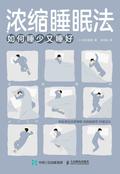
This book uses comic illustrations to explain the Pomodoro Technique in an easy and fun way, making it not tiring to read and fast to learn.
Reader comments
I am learning 🍅 working methods;
I'm 🍅applying 🍅work method.
🍅Pomodoro Technique
Focus on one task within a Pomodoro (25 minutes) and avoid interference from other things in the middle;
When the Pomodoro is up, take a short break (5 minutes), and take a longer break (15-30 minutes) for 3-4 consecutive Pomodoros.
Core concept: time slice + focus + rest.
[Principle Analysis]
Time slice: a limited and urgent time interval to avoid long-term inefficiency and ineffective investment;
Focus: Focus on ensuring efficiency, reducing interference from mobile phones, computers, Feishu and other information, and enjoying the flow;
Rest: combine work and rest, fatigue reduces efficiency, share attention;
In addition, the Pomodoro Technique allows us to clarify the goals of each time period and advance tasks in a more organized manner;
After the task is broken down, as the Pomodoro time accumulates, you will be pleasantly surprised to find that the large task that originally seemed to be difficult has been gradually completed;
Each Pomodoro can be associated with a corresponding sense of accomplishment, motivating us to keep moving forward and reducing procrastination.
Practice
1. When preparing for exam review, students should set 25 minutes to focus on reviewing a knowledge point, take a 5-minute break after 25 minutes, and then start the next 25 minutes of review;
2. When copywriters are producing, they should focus on writing every 25 minutes to avoid mental fatigue caused by long-term continuous work, thereby improving writing efficiency and quality;
3. When programmers are writing code, if they suddenly think of something to do later, or if someone else temporarily interrupts, they can add the event to the todolist, continue writing code first, and then process it after the Pomodoro is over;
My Pomodoro
For me, I use the Pomodoro timer from 10:00 to 11:30 in the morning, 8:00 to 9:30 in the evening, and 8:00 to 11:00 in the morning on weekends, which are relatively fixed time periods;
My Pomodoro timer is about 20-45 minutes, mainly task-driven, reducing the interruption of continuity by time segments;
The main reason is that work requires some continuous thinking, and a continuous work experience will give me a flow experience.
A simple Pomodoro timer (about 20 minutes) mainly solves the problem of sorting out task priorities, dismantling important matters and collecting information, concentrating on consuming news and generating todolist;
Medium and long-term Pomodoro time (about 30-45 minutes), mainly solves the tasks for which the tasks have been clearly defined, and do in-depth thinking, coding and document writing around specific matters;
Ways to rest between Pomodoros: pour tea, go to the bathroom, wash your face, fish in a group, etc. Exercise your body appropriately, change your thinking mode, and regulate your emotions.
Slowly, the Pomodoro Technique has become my work habit.
My feeling is that the Pomodoro Technique is not about making people a ruthless work machine;
More importantly, we should reflect on the inefficient areas of our work and use the Pomodoro Technique to make our time more effective.
After reading it, I tried it according to the method in the book. My life has been improved and I have made a huge change. I am more focused and less impetuous. The pictures and methods in the book are easy to understand and get started faster. My life has become more organized and more interesting. Through the Pomodoro method, time has become more interesting.
★Practicality: It explains the usage and precautions of Pomodoro Clock in a concise and clear way. And during the reading process, people can really fall in love with the core concept of doing one thing at a time. Because I often want to do something and think about other things. Secondly, the author predicts that when everyone has mobile phones and other mobile tools, they will feel that paper is inconvenient, and they will also feel that the handwriting is not good-looking due to perfectionism and cannot insist on it, so they want to use mobile phones and computers to record. The author recommends that we still use pen and paper to take notes, because you don't need a lot of extra thinking and actions. I really feel inspired here, because the purpose of recording is to perceive the present, not to accumulate for recall. You can actually throw it away after recording on the same day [personal opinion], although the author said that it is recommended to use Boni Dongen's method to review, and I advise friends with low mobility to practice it reasonably.
★Reading Guide [Reason for giving only four stars]:
There is some principle in the middle. Personally, I feel that the author wants to explain the necessity of work breaks and the principles of brain operation. If you know something about psychology, you can skip this part, because this part is incoherent and painful to read. If it doesn't match the previous part or the back part, you can choose to jump back to the second chapter and read a little from the back part every day. Because I kept getting stuck on the second chapter, I tried to give up reading many times.
★Overall harvest:
You really have to read the original book to appreciate the beauty of the Pomodoro clock. I have watched videos and Xiaohongshu many times, and I have also used software with related principles. I don't think it's necessary. In the end, I didn't stick to it because I only knew this form. Even if there are principles, it makes sense to just watch it for entertainment, and I don't want to take action at all. But reading books can make people really want to change themselves
Freelancers are really suitable for this method to discipline themselves.
Pomodoro Technique:
1Write down the tasks that need to be completed most every day. Sort by importance
2. Set your own working hours for each stage.
3. Intermittent
4. After a week, review and improve
This actually guarantees the output, and also ensures the balance between work and rest, and the way of doing things that puts first things first.
For example, in self-media and novels, comics authors will not stop updating for a month. . Do this. I can always produce a manuscript in a few days.
This is the first performance-improving book I read after I started working, and I have benefited a lot. I used to read novels that were divorced from reality on the Tomato novel app, but now that I have read this book, I will read more self-improvement books in the future. I will recommend this book to people around me
As the book says, "We need to focus on the present more than ever before." Indeed, we are often lost under various temptations, and the Pomodoro Technique can make us more focused. I think this book is not only suitable for working people, but also for students. I recommend you read it!
The author uses his own use of the Pomodoro Technique as an example to describe the use of the Pomodoro Technique in detail from a practical application perspective.
Whether you are already familiar with the Pomodoro Technique, you are already practicing the Pomodoro Technique, or you are just learning about it for the first time. Everyone can get some inspiration from this book. Overall it's a good book.
Simple, clear and clear at a glance.
Pomodoro training is great
Quick, quick, bumpy
The estimated time part is more useful, right? The rest is useless.
This book is relatively rough so far, I will come and read it next time
Today's to-do list and 25 minutes of focusing on doing one thing are very beneficial.
Self-time management is very effective, the important thing is to start doing it.
The book is very maneuverable and detailed. The book is not long and 40 minutes of study will definitely not be a loss [top post]
I've heard about Tomato Reading for a long time. I recommend you guys to check it out.
I am relatively lazy and find a way to restrain myself. After using it for a few days, I feel it is okay. It is suitable for people who are relatively lazy and have no idea what to do all day long. Hope it helps everyone and myself.
It's helpful. For people like me who don't know how to arrange things, the method is very good and scientific. I'm going to try the Pomodoro Technique.



I am learning 🍅 working methods; I'm 🍅applying 🍅work method. 🍅Pomodoro Technique Focus on one task within a Pomodoro (25 minutes) and avoid interference from other things in the middle; When the Pomodoro is up, take a short break (5 minutes), and take a longer break (15-30 minutes) for 3-4 consecutive Pomodoros. Core concept: time slice + focus + rest. [Principle Analysis] Time slice: a limited and urgent time interval to avoid long-term inefficiency and ineffective investment; Focus: Focus on ensuring efficiency, reducing interference from mobile phones, computers, Feishu and other information, and enjoying the flow; Rest: combine work and rest, fatigue reduces efficiency, share attention; In addition, the Pomodoro Technique allows us to clarify the goals of each time period and advance tasks in a more organized manner; After the task is broken down, as the Pomodoro time accumulates, you will be pleasantly surprised to find that the large task that originally seemed to be difficult has been gradually completed; Each Pomodoro can be associated with a corresponding sense of accomplishment, motivating us to keep moving forward and reducing procrastination. Practice 1. When preparing for exam review, students should set 25 minutes to focus on reviewing a knowledge point, take a 5-minute break after 25 minutes, and then start the next 25 minutes of review; 2. When copywriters are producing, they should focus on writing every 25 minutes to avoid mental fatigue caused by long-term continuous work, thereby improving writing efficiency and quality; 3. When programmers are writing code, if they suddenly think of something to do later, or if someone else temporarily interrupts, they can add the event to the todolist, continue writing code first, and then process it after the Pomodoro is over; My Pomodoro For me, I use the Pomodoro timer from 10:00 to 11:30 in the morning, 8:00 to 9:30 in the evening, and 8:00 to 11:00 in the morning on weekends, which are relatively fixed time periods; My Pomodoro timer is about 20-45 minutes, mainly task-driven, reducing the interruption of continuity by time segments; The main reason is that work requires some continuous thinking, and a continuous work experience will give me a flow experience. A simple Pomodoro timer (about 20 minutes) mainly solves the problem of sorting out task priorities, dismantling important matters and collecting information, concentrating on consuming news and generating todolist; Medium and long-term Pomodoro time (about 30-45 minutes), mainly solves the tasks for which the tasks have been clearly defined, and do in-depth thinking, coding and document writing around specific matters; Ways to rest between Pomodoros: pour tea, go to the bathroom, wash your face, fish in a group, etc. Exercise your body appropriately, change your thinking mode, and regulate your emotions. Slowly, the Pomodoro Technique has become my work habit. My feeling is that the Pomodoro Technique is not about making people a ruthless work machine; More importantly, we should reflect on the inefficient areas of our work and use the Pomodoro Technique to make our time more effective.
After reading it, I tried it according to the method in the book. My life has been improved and I have made a huge change. I am more focused and less impetuous. The pictures and methods in the book are easy to understand and get started faster. My life has become more organized and more interesting. Through the Pomodoro method, time has become more interesting.
★Practicality: It explains the usage and precautions of Pomodoro Clock in a concise and clear way. And during the reading process, people can really fall in love with the core concept of doing one thing at a time. Because I often want to do something and think about other things. Secondly, the author predicts that when everyone has mobile phones and other mobile tools, they will feel that paper is inconvenient, and they will also feel that the handwriting is not good-looking due to perfectionism and cannot insist on it, so they want to use mobile phones and computers to record. The author recommends that we still use pen and paper to take notes, because you don't need a lot of extra thinking and actions. I really feel inspired here, because the purpose of recording is to perceive the present, not to accumulate for recall. You can actually throw it away after recording on the same day [personal opinion], although the author said that it is recommended to use Boni Dongen's method to review, and I advise friends with low mobility to practice it reasonably. ★Reading Guide [Reason for giving only four stars]: There is some principle in the middle. Personally, I feel that the author wants to explain the necessity of work breaks and the principles of brain operation. If you know something about psychology, you can skip this part, because this part is incoherent and painful to read. If it doesn't match the previous part or the back part, you can choose to jump back to the second chapter and read a little from the back part every day. Because I kept getting stuck on the second chapter, I tried to give up reading many times. ★Overall harvest: You really have to read the original book to appreciate the beauty of the Pomodoro clock. I have watched videos and Xiaohongshu many times, and I have also used software with related principles. I don't think it's necessary. In the end, I didn't stick to it because I only knew this form. Even if there are principles, it makes sense to just watch it for entertainment, and I don't want to take action at all. But reading books can make people really want to change themselves
Freelancers are really suitable for this method to discipline themselves. Pomodoro Technique: 1Write down the tasks that need to be completed most every day. Sort by importance 2. Set your own working hours for each stage. 3. Intermittent 4. After a week, review and improve This actually guarantees the output, and also ensures the balance between work and rest, and the way of doing things that puts first things first. For example, in self-media and novels, comics authors will not stop updating for a month. . Do this. I can always produce a manuscript in a few days.
This is the first performance-improving book I read after I started working, and I have benefited a lot. I used to read novels that were divorced from reality on the Tomato novel app, but now that I have read this book, I will read more self-improvement books in the future. I will recommend this book to people around me
As the book says, "We need to focus on the present more than ever before." Indeed, we are often lost under various temptations, and the Pomodoro Technique can make us more focused. I think this book is not only suitable for working people, but also for students. I recommend you read it!
The author uses his own use of the Pomodoro Technique as an example to describe the use of the Pomodoro Technique in detail from a practical application perspective. Whether you are already familiar with the Pomodoro Technique, you are already practicing the Pomodoro Technique, or you are just learning about it for the first time. Everyone can get some inspiration from this book. Overall it's a good book.
Simple, clear and clear at a glance.
Pomodoro training is great
Quick, quick, bumpy
The estimated time part is more useful, right? The rest is useless.
This book is relatively rough so far, I will come and read it next time
Today's to-do list and 25 minutes of focusing on doing one thing are very beneficial.
Self-time management is very effective, the important thing is to start doing it.
The book is very maneuverable and detailed. The book is not long and 40 minutes of study will definitely not be a loss [top post]
I've heard about Tomato Reading for a long time. I recommend you guys to check it out.
I am relatively lazy and find a way to restrain myself. After using it for a few days, I feel it is okay. It is suitable for people who are relatively lazy and have no idea what to do all day long. Hope it helps everyone and myself.
It's helpful. For people like me who don't know how to arrange things, the method is very good and scientific. I'm going to try the Pomodoro Technique.