When the boundaries between good and evil become increasingly blurred,
When all that is solid is gone,
When the lightness of life has become unbearable,
Where can we find the meaning of survival?
Is it to recreate idol worship? Or simply sink into nothingness and entertain yourself until you die?
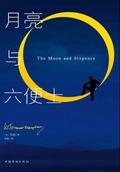
When mankind first entered the modern world, the German philosopher Nietzsche seriously thought about the above questions - and all the answers were gathered in the philosophical novel "Thus Spoke Zarathustra". Through the wanderings and teachings of the protagonist Zarathustra, Nietzsche issued a prophetic declaration: In the era of "God is dead", people should face nothingness, create the meaning of life from themselves, and finally evolve into a superman who can support the burden of life!
Reader comments
I watched this philosophical prose poem as a road movie, where there are villages, a circus, small animals, eagles and snakes, and the beans are steaming. Written through shocking images (the rope of the abyss, the serpent eagle, the ring of eternity) and prophetic monologues, I think it cannot be said that Nietzsche denies that the pursuit of the other side is identification with the present or capitalism, but should be understood as: Nietzsche denies all forms of pursuit of the other side (jealousy teaches morality, socialism), whether it is a religious paradise or a utopia. The "now" he affirms is the power of affirming life and its generation process (full of personality) It is a spiritually strong world where individual creativity and vitality, competition and transcendence coexist, and people in this world are not afraid of eternal reincarnation, but dare to continuously achieve transcendence through repetition), rather than opposing social change itself or the current rigid social reality - then it cannot be said which specific social form Ni agrees with. Rather, it is indifferent. What he affirms or denies is an ethical practice gesture rather than a political appeal. Opposition to the redemption of the other side is indeed the most dangerous enemy of McAsianism, because the latter still lives by denying the old world and is still classified as slave morality.
There are three categories of eternal recurrence:
Eternal reincarnation in the physical sense means that in a closed universe, if the basic elements of matter are limited, then the same thing will definitely happen twice (Poincaré return); secondly, it refers to the metaphysical sense: generation itself as one is constantly reincarnated, generation itself cannot be generated, generation is eternal and cannot exist There is a beginning and an end, so generation is a circle and cycle; the third refers to reincarnation in the ethical/psychological sense. All spiritual events will be repeated continuously without any ultimate meaning or goal. There is no rise and fall. The human spirit can never be at peace, and will only continue to repeat the activities of overcoming resistance and escaping again and again.
Therefore, I think you can ask yourself like Nietzsche's "Question of Destiny": "If your life will continue to reincarnate and repeat, and everything is meaningless, then is what you are doing now something you want to continue to repeat or get rid of? Are you willing to do this in countless reincarnations in the future?"
Go towards dusk until dawn becomes apparent
I have spent four years with this book and read it three or four times. This month I finally had time to compare the translation with Mr. Yu Hongru's translation and read it thoroughly. After going through detours and diverging thinking, after many twists and turns, I discovered that if I want to truly understand Chara, I have to stay away from him first. ——
Therefore, I hereby wish you to stay away from this sage from the East, my friend, and walk on your own path! ——Of course this is also a curse
At this supreme metaphorical moment, let's use this poem as a blessing - from now on, nothing will happen to Bodhi, and the little shrimp jumps out of the green duckweed.
May we meet again at the great noon, my friend.
This book made me think about the meaning of life. Just like Nietzsche said "God is dead", we can no longer rely on traditional beliefs to find answers. Zarathustra's teachings tell us that we must create the meaning of life from ourselves and become a "superman" who transcends ourselves. This is not only a philosophical work, but also a book that can inspire us to think about life.
I read it on and off for a long time before finishing it. I didn't understand it. I felt that this was a very good and highly cognitive book, but I didn't know how to understand the words I saw. I just felt that some of the sentences made sense. The protagonist walks out and back again, as if approaching the crowd, but he is pushing his followers away. Different from the novels and short stories I read before, I can more or less feel what it is expressing, even if sometimes I can't say it. But I just don't understand this text. It's like a river, it just keeps flowing forward. I don't know where its destination is or what's in the river. Are those reasonable sentences also like the beautiful fish swimming in the river? It was still something superficial and superficial that I saw without understanding it. I vaguely felt that there was something deeper that I didn't see now, but I didn't know what it was. I am going to buy a philosophy course and study it.
Early national server Guangxin's latest masterpiece [Like]





I watched this philosophical prose poem as a road movie, where there are villages, a circus, small animals, eagles and snakes, and the beans are steaming. Written through shocking images (the rope of the abyss, the serpent eagle, the ring of eternity) and prophetic monologues, I think it cannot be said that Nietzsche denies that the pursuit of the other side is identification with the present or capitalism, but should be understood as: Nietzsche denies all forms of pursuit of the other side (jealousy teaches morality, socialism), whether it is a religious paradise or a utopia. The "now" he affirms is the power of affirming life and its generation process (full of personality) It is a spiritually strong world where individual creativity and vitality, competition and transcendence coexist, and people in this world are not afraid of eternal reincarnation, but dare to continuously achieve transcendence through repetition), rather than opposing social change itself or the current rigid social reality - then it cannot be said which specific social form Ni agrees with. Rather, it is indifferent. What he affirms or denies is an ethical practice gesture rather than a political appeal. Opposition to the redemption of the other side is indeed the most dangerous enemy of McAsianism, because the latter still lives by denying the old world and is still classified as slave morality. There are three categories of eternal recurrence: Eternal reincarnation in the physical sense means that in a closed universe, if the basic elements of matter are limited, then the same thing will definitely happen twice (Poincaré return); secondly, it refers to the metaphysical sense: generation itself as one is constantly reincarnated, generation itself cannot be generated, generation is eternal and cannot exist There is a beginning and an end, so generation is a circle and cycle; the third refers to reincarnation in the ethical/psychological sense. All spiritual events will be repeated continuously without any ultimate meaning or goal. There is no rise and fall. The human spirit can never be at peace, and will only continue to repeat the activities of overcoming resistance and escaping again and again. Therefore, I think you can ask yourself like Nietzsche's "Question of Destiny": "If your life will continue to reincarnate and repeat, and everything is meaningless, then is what you are doing now something you want to continue to repeat or get rid of? Are you willing to do this in countless reincarnations in the future?"
Go towards dusk until dawn becomes apparent I have spent four years with this book and read it three or four times. This month I finally had time to compare the translation with Mr. Yu Hongru's translation and read it thoroughly. After going through detours and diverging thinking, after many twists and turns, I discovered that if I want to truly understand Chara, I have to stay away from him first. —— Therefore, I hereby wish you to stay away from this sage from the East, my friend, and walk on your own path! ——Of course this is also a curse At this supreme metaphorical moment, let's use this poem as a blessing - from now on, nothing will happen to Bodhi, and the little shrimp jumps out of the green duckweed. May we meet again at the great noon, my friend.
This book made me think about the meaning of life. Just like Nietzsche said "God is dead", we can no longer rely on traditional beliefs to find answers. Zarathustra's teachings tell us that we must create the meaning of life from ourselves and become a "superman" who transcends ourselves. This is not only a philosophical work, but also a book that can inspire us to think about life.
I read it on and off for a long time before finishing it. I didn't understand it. I felt that this was a very good and highly cognitive book, but I didn't know how to understand the words I saw. I just felt that some of the sentences made sense. The protagonist walks out and back again, as if approaching the crowd, but he is pushing his followers away. Different from the novels and short stories I read before, I can more or less feel what it is expressing, even if sometimes I can't say it. But I just don't understand this text. It's like a river, it just keeps flowing forward. I don't know where its destination is or what's in the river. Are those reasonable sentences also like the beautiful fish swimming in the river? It was still something superficial and superficial that I saw without understanding it. I vaguely felt that there was something deeper that I didn't see now, but I didn't know what it was. I am going to buy a philosophy course and study it.
Early national server Guangxin's latest masterpiece [Like]
Why does it look like a machine translation?