Stats
9.3Score
36Chapters
Tags
Synopsis
Reader comments
In booklists 8
Worth Reading Literary Works
Keep it for the record and look at it again when you have time.
48.1MViews651Books6dUpdated
A Book for Late-Night Study
15.2MViews815Books3dUpdated
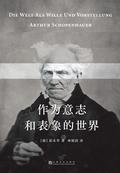
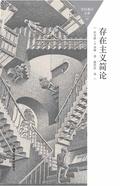
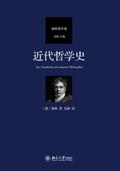
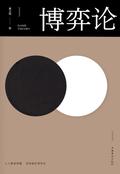
Does Tomato Have Any Philosophy Books?
I have become more interested in philosophy recently. Are there any high-quality introductory books on philosophy? : D
4MViews362Books1dUpdated

Philosophy, the Kind of Masterpiece That Is Enough to Burn Your Brain and Make You Forget About Food and Drink (Regardless of Sects)
Confucianism, Taoism and Buddhism
3.6MViews567Books6dUpdated

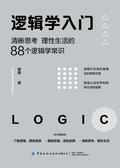
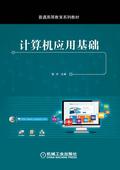

Is There Any Book That Can Make the Brain React Faster? (My Understanding of Mathematics Is Too Poor😔)
3.1MViews609Books2dUpdated





Alicia, I Refuse to Act♪
2.8MViews73Books2moUpdated
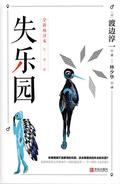



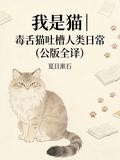
Literature, Philosophy, History, 📖
2.6MViews711Books1dUpdated

If You Want a Book Full of Philosophy, You Need to Be Very, Very Philosophical.
It's a very philosophical book like the Doudou Trilogy, which most people can't understand ๛ก(ー̀ωー́ก)
113.2kViews165Books28dUpdated
Lan Gongwu version is torture
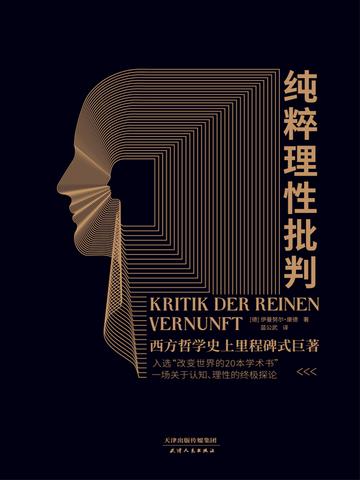
"Pure reason" refers to reason that is independent of all experience, and "criticism" refers to the investigation of pure reason. Explanations found online
Tomato actually has such a philosophical masterpiece!
1. Summary of "The Critique of Pure Reason": §1. On knowledge: Although knowledge comes from experience, we must have a priori knowledge, otherwise we cannot form knowledge, so we have a priori knowledge. §2. On perceptibility: Time and space are not empirical intuitions. On the contrary, experience is possible only through them, so time and space are the inner endowments of our souls. §3. On understanding: Categories are not empirical, because empirical knowledge is possible only through categories, so categories are universally necessary. §4. On rationality: Reason cannot recognize things in themselves and can only recognize phenomena. Therefore, antinomies are inevitable and indissoluble; both proof and disproof are impossible. 2. Delimitation of the Critique of Pure Reason: §5. The cognitive ability about phenomena, that is, the cognitive ability that is a combination of perceptual and intellectual knowledge, is a product of the processing of the object itself by human reason, and therefore has the inevitability of transcending experience. §6. Any understanding of ontology or God does not have any objective reality because it transcends human reason. Therefore, it is logical to affirm or deny the existence of God. §7. The "Critique of Pure Reason" is to draw the boundaries of cognitive rationality. Within phenomena, the faculty of cognition has a universal necessity. Outside of phenomena, knowledge has no objective reality. §8. Kant and Wittgenstein have similarities in philosophical methods. Because Kant believes that phenomena are knowable and noumenon is unknowable, while Wittgenstein believes that what can be said can be expressed clearly, but we can only remain silent about the unspeakable. The content of the old and new editions of "Criticism" combined together is too redundant.
Worth reading again and again
I can't sleep, so I watch this
I like this kind of concise classical Chinese text, with high density and clear structure [shy]
I'll read this next time I read it
It is easy to understand, philosophy is from the shallower to the deeper, and philosophy is closely related to our lives.