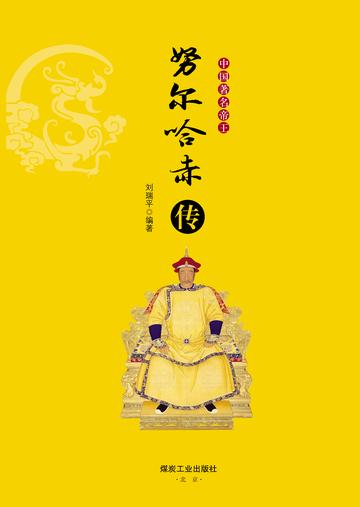
Nurhaci, surnamed Aisin Gioro and nicknamed Shulebeile, was an outstanding politician in the history of our country, an outstanding leader of the Manchu people and the founder of the Qing Dynasty. In the forty-fourth year of Wanli in the Ming Dynasty (AD 1616), Nurhaci established the country and named it Jin, which was called Hou Jin in history.
From then on, his army gradually became stronger and his power increased day by day. In the forty-sixth year of Wanli (AD 1618), he sacrificed the "seven hatreds" to heaven, swore to conquer the Ming Dynasty, and began to embark on the arduous journey to conquer the Central Plains. In the Battle of Sarhu, he defeated the Ming army with a small number and a large number. Then he sent his troops to conquer Shenyang, Liaoyang, and Guangning, and stationed in Liaodong, thus laying the foundation for the unification of Northeast China.
At the same time, he also founded the Eight Banners system and created the Manchu script under his organization. He recruited many talents, treated heroes favorably, made good use of strategies, adapted to the needs of the times, and adopted many policies and measures, which promoted the Manchu people's transition from the late primitive society to a slave society and a rapid transition to a feudal society, making the Jin Kingdom gradually stronger.
Reader comments
The writing style of this book is very vivid, the writing style is also good, and the storyline is very attractive. Through the author's description, I seem to have seen Nurhachi's life, especially his heroic performance on the battlefield. Moreover, the book also mentioned the Eight Banners system and the creation of the Manchu language, which gave me a deeper understanding of the history of the Manchu people. Overall, this is a book well worth reading.
The content is rich and colorful, and the storyline has ups and downs.

The writing style of this book is very vivid, the writing style is also good, and the storyline is very attractive. Through the author's description, I seem to have seen Nurhachi's life, especially his heroic performance on the battlefield. Moreover, the book also mentioned the Eight Banners system and the creation of the Manchu language, which gave me a deeper understanding of the history of the Manchu people. Overall, this is a book well worth reading.
The content is rich and colorful, and the storyline has ups and downs.