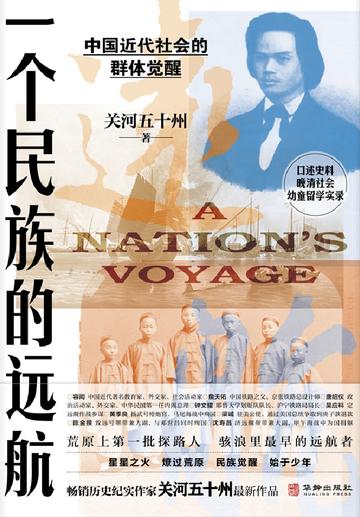
The Opium War sent shock waves through China’s government and society. Under the double pressure of national crisis and poverty at home, Rong Hong, a native of Xiangshan in Guangdong, set out to study in the United States. He excelled in his studies and became the first Chinese person to attend and graduate from Yale University, one of America’s most prestigious universities. After returning to China, Rong Hong was confronted by a devastated country and resolved to change the nation’s present and future by learning from abroad. His ambitious vision won the support of the Self-Strengthening Movement leaders Zeng Guofan and Li Hongzhang. With their backing, the Qing court launched a program to send young students to study in the United States, making them China’s earliest government-sponsored overseas students. As the program’s director, Rong Hong led and took part in every stage of the undertaking. But conservative opponents obstructed the effort, and the students were forced to return to China before they had completed their studies.
When the young students first returned home, they faced severe discrimination and were branded traitors who had been poisoned by foreign ideas. They chose to endure the abuse in silence, while seizing every opportunity to prove their unwavering loyalty to their country. In the Sino-French Battle of Fuzhou, their ship struck the French flagship, and they inflicted the only fatalities suffered by the French Navy. During the First Sino-Japanese War, Shen Shouchang, an assistant commander aboard the Jiyun and one of the former students, was called upon to serve in a moment of crisis. He died in battle, becoming the first of the group to give his life for his country.
The defeat in the First Sino-Japanese War once again brought China to a crossroads. Despite Rong Hong’s repeated efforts, he could not turn the tide, and was ultimately forced to leave his homeland. The students he had so carefully trained did not give up on revitalizing the nation. Some, such as Zhan Tianyou and Zhong Wenyao, sought to strengthen China through industry and technology; others, including Tang Shaoyi and Liang Cheng, became prominent modern politicians and diplomats. As some of the first to venture far out into stormy seas, they lived through major events including late Qing diplomacy, the Xinhai Revolution, Yuan Shikai’s attempt to restore the monarchy, and the Northern Expedition. Though they rose and fell amid the turbulent currents of history and endured immense trials in their personal lives, they never abandoned their original resolve to save the nation and seek a path forward. Each was eager to shoulder, with their own frail strength, one of the many heavy burdens facing the country.
 The Rise and Fall of Shu Han: Liu Bei's Conquest of Shu
 The Xiang Army in Troubled Times
 The Burning of the Old Summer Palace: Platinum Revised Edition
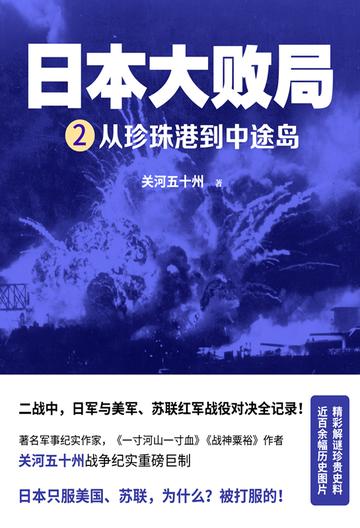 Japan's Greatest Defeat, Volume 2: From Pearl Harbor to Midway
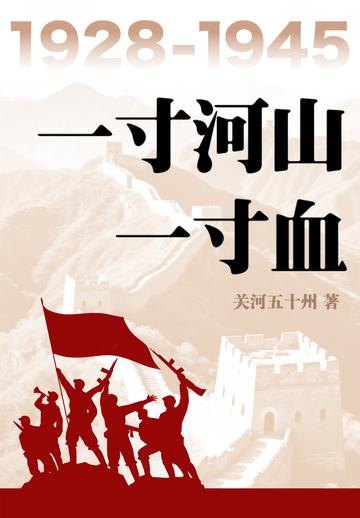 Every Inch of Land, a Drop of Blood (Complete in 5 Volumes)
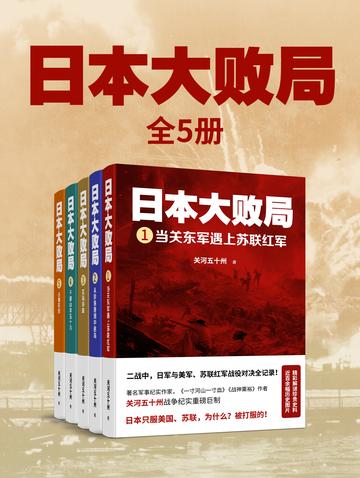 Japan’s Great Defeat (5-Book Set)










This book is very good! It tells the story of Rong Hong and a group of young children, which reminded me of Xiangzi in "Camel Xiangzi". They are all trying to pursue their dreams. Rong Hong and the others persisted in studying in a difficult environment, just like Xiangzi worked hard to buy a car of his own. This book also made me feel the turmoil and changes of that era, and at the same time I understood that only by continuous learning and progress can I change the destiny of myself and the country. I think this book is worth reading, and you can check it out too.
Finish reading this book at 18:00 on Saturday, September 12, 2026. This book is worth reading about the story of the first batch of young children studying in the United States.