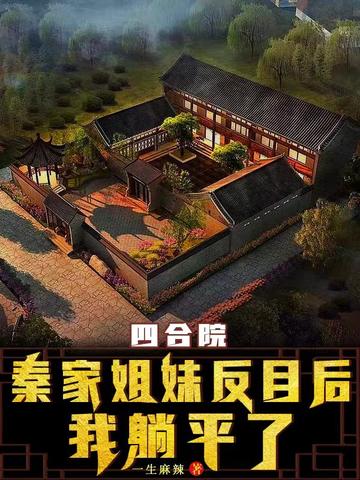
After the Qin Sisters Turned Against Each Other, I Decided to Lie Flat
秦家姐妹反目后,我躺平了
- Status
- Ongoing
- Length
- 101k Words
- Genre
- Unknown
- Subgenre
- Unknown
- Updated
- 3y ago
- Source
- Fanqie
Stats
51Chapters
17Reads
2Listens
28.3kReads · all time
Tags
Synopsis
More by this author
In booklists 8
Looking for a Book Where the Protagonist Marries Qin Jingru
I’m looking for a story where the protagonist is He Yuzhu, goes to the countryside right at the beginning to marry Qin Jingru, and works with her village.
203Books2.1MViews4dUpdated

Any Stories About a Girl Who Ends Up in a Siheyuan? Note: I Mean Female-Oriented Fiction
355Books9.5MViews27dUpdated
New Siheyuan Courtyard Novels Coming in Late July
298Books2MViews2moUpdated

Looking for the Latest Siheyuan Novels. No Foolish Male Lead, and No Sycophancy Toward Granny Long
152Books646.8kViews3moUpdated
New Siheyuan Courtyard Novels
223Books1.5MViews3moUpdated
New Courtyard Novels for July
125Books341.3kViews4moUpdated

New Siheyuan Stories from August
207Books2.3MViews4moUpdated

Looking for the Latest Siheyuan Novels from Late July 2023
Looking for books like Siheyuan: Starting in 1953.
85Books795.1kViews2yUpdated
Reader comments 3
Google Translate
At the beginning, I read some people's professional analysis. Among the Qinhuai Road household registrations, only Qin Huairu and Jia Zhang's household registrations were in urban areas. His three children all had rural household registrations. This meant that there were only two names in the grain book. All three children had to buy high-priced grains from the black market. Qin Widow The woman was originally from a rural area and then changed to an urban household registration after taking over her husband's job. Their situation was also brought about by themselves, because according to the policy at the time, as long as they had a rural household registration, they would be allocated land for their own use. Even if you don't grow, you can rent it out to others for rent, and after giving birth, you can rent it out to others for rent. Children with the mother's household registration can also be allocated private land. In the 1950s, the government issued a policy that rural women married to cities and their children could transfer to urban household registration, but the private land allocated originally would be taken away, but these people in the Jia family certainly did not. According to the policy, the household registration was not changed for the benefit of these private lands. Later, when the bill era came, the state regulations no longer allowed the household registration to be transferred. Those who did not change their household registration had no use regretting it. Later, it happened that all the land originally allocated by the village collective was taken back and the village collective had no private land. After the bill era, there was a polarization between rural and urban areas. Basically, urban people would not marry rural people because they could not transfer their household registration, and the children would have to follow the mother's side. In those days, all the grain was rationed and had to be bought with grain books. Later, they could only go to the black market to buy high-priced grain. There were only a few people who could afford it.
The plot is a bit bland, but as long as it's not bloody, Qin Jingru is worth five stars!
The three views are still very upright, but the writing style is a bit immature.