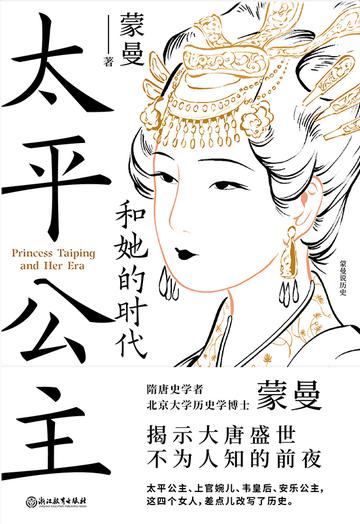
Princess Taiping and Her Era
太平公主和她的时代
- Status
- Completed
- Length
- 160k Words
- Genre
- Historical
- Updated
- 3y ago
- Source
- Fanqie
Synopsis
More by this author
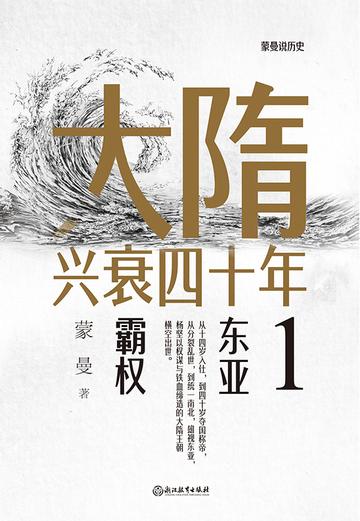 Forty Years of the Sui Dynasty's Rise and Fall, Book 1: East Asian Hegemony
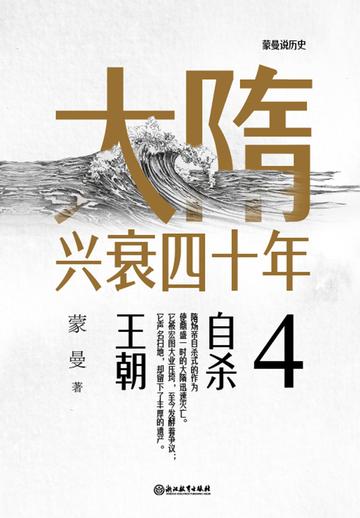 Forty Years of the Sui Dynasty: Rise and Fall, Book 4: The Suicide Dynasty
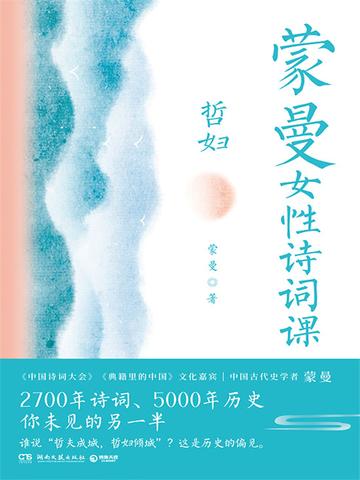 Meng Man's Poetry Lessons for Women: The Virtuous Woman
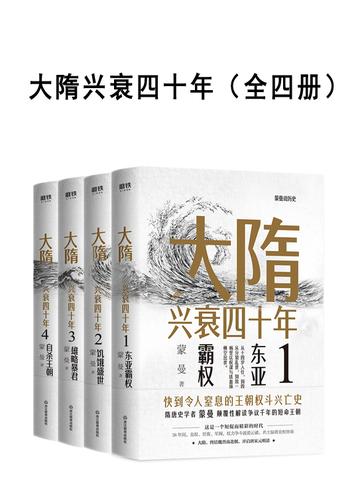 Forty Years of the Sui Dynasty's Rise and Fall (Complete in Four Volumes)
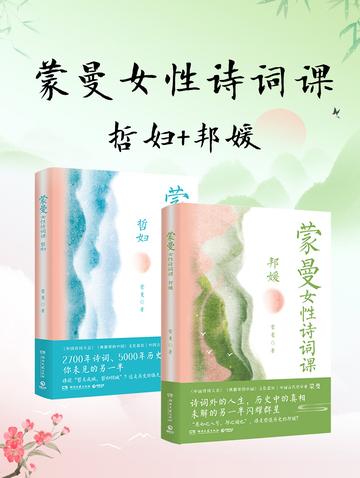 Meng Man's Poetry Lessons for Women: Wise Women and Distinguished Ladies (Two-Book Set)
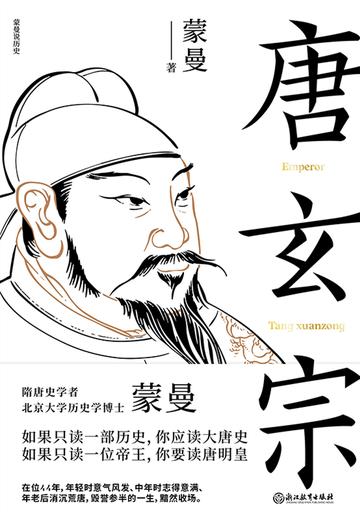 Emperor Xuanzong of Tang
In booklists 20
Top 10 Strong Female Lead Novels, Rated 9.0 and Up
I'll go first: Reborn Ace Female Student. This ranks first in my heart.
Power Is the Best Tonic for Women, Any Stories Like This?
Any Books That Make You Want to Study Like Crazy?
Please help the kids who don't want to study 😭
Any More Books Like This, the Kind of Thing Strong Women Should Read? This One Was So Satisfying
Looking for books similar to My 26 Male Roommates.
Looking for Novels With Gentle Prose and Lots of Memorable Lines
Don't ask. The answer is that I ran out of material for my essay quq
Novels Every Strong Woman Should Read
Looking for books like My 26 Male Roommates. I want a strong female lead, no misogynistic slurs, someone who loves women, and no CP. Female ensemble casts are fine too, like She Was Tired of This.
Comics!!! I Want Comics!!! Good-Looking Comics!!!

I Urgently Need Some Classic Books to Improve My Writing. My Essays Are Terrible.
I'm starting my first year of high school, and my Chinese essay writing is really poor. I didn't read many books before, so I want to spend this summer reading and improving my writing and literary knowledge.
All-Female Ensemble Novels Only, Please Read Carefully
Looking for an all-female ensemble story where every character has her own distinctive traits and gets to shine. Nothing stupid, and no System, reborn, transmigration, or quick transmigration stories. Read the request carefully! If it doesn't fit, don't recommend it.
Share Your Number One Pick, Rated 9.6 or Higher! Any Genre, Just Something God-Tier!
Looking for books similar to The Sickly First Disciple of the Cultivation World (Crossing the Boundless).
Books to Help Me Improve at History and Geography
Looking for books similar to "Half-Hour Comics: Chinese History" (five-volume set). Anything along those lines.
Looking for Inspirational Novels to Snap Me Out of Not Studying 😭
Matriarchal Society, Strong Female Lead and Weak Male Lead
The female lead transmigrates into a matriarchal society, where she spends her whole life with one partner.
Looking for No-CP Stories with a Super Cool, Flirty Female Lead
Looking for a story with an extremely dominant protagonist who also enjoys flirting with women. It must have no romance, no romance, no romance. No matter how good a story with romance is, I don't want it. The female lead must be extremely dominant, not an airhead or a delicate, pampered type
Looking for a Female Lead Who’s a True Aristocratic, Aloof Beloved!!!!
Preferably a no-romance novel with a protagonist adored by everyone.
Looking for Historical Romance, No Fantasy Elements
Looking for books similar to Jade in Hand.
A Cultivation Novel Where the Female Lead Doesn't Take Any Abuse
Strong heroines are the best! Character growth is fine, as long as the plot doesn’t drag or fall flat.
Any Textbooks or Study Guides?
Looking for books like Half-Hour Comics: Chinese History 5. Something like the one above, for example.
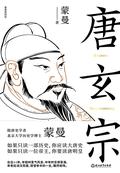
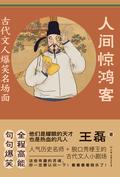
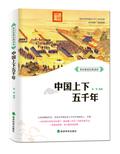
Any Literary or Historical Books Suitable for Female Readers?
#Women #SelfImprovement #LiteratureAndHistory #Valuable
Looking for Published Books
Looking for books similar to The Mercenary World (Complete in Five Volumes).
Reader comments 60
Translated by Google Translate
I like to read stories about women in the long history, especially those about females competing for the throne, and about women's ambitions, strategies, and desires. Thank you, the author.
This is the book we should be chasing! So well written! I couldn't let go after watching it for a long time. It's a pity that if these women were born in today's era, they would definitely have great potential.
I think it is very sad that in that era, surnames belonged to men. Whether it was the Li Tang Dynasty or the Wu Group, it was the men who really benefited and could inherit the benefits through blood. These women fought hard for it, but they could only get a little bit of the rights that men could naturally get. After their deaths, their daughters could not inherit any of them, and they only made wedding dresses for men. Men use women to form alliances such as father-son and son-in-law, but they exclude women. These women who once had power promoted many palace ladies, but rarely promoted women who were related to them in the family. Why? Because the social system that represents male interests does not allow it. Women who share the same blood and should form the closest alliance are divided into different surname families. People like Wu Zetian are really brave, resisting the shackles of the world and occupying a place in a game that only belongs to men. Even if they were swallowed up by the torrent of the times in the end, even if they flashed by like a meteor, they allowed me to see infinite possibilities. In an era that was unfriendly to women, they never lacked the power to resist and fight.
Gender Breakthrough in the Mirror of Power——Reading Meng Man's "Princess Taiping and Her Era" Among the ruins of the Daming Palace in Xi'an, the wind passes through the base of the Hanyuan Hall, raising dust that has not dispersed for thousands of years. Professor Mengman used the writing as a mirror to re-visit this period of time that was deliberately blurred by male historians, allowing Princess Taiping to walk through the folds of history, dragging behind her the brightest and most violent flames of the entire prosperous Tang Dynasty. **1. Multiple mirroring in the power puzzle** Mengman uses scalpel-like precision to dissect the treacherous political situation from Shenlong to Xiantian. Princess Taiping is both the heir to Wu Zhou's legacy and the night watchman for Li Tang's revival. On the path of female political participation opened up by her mother Wu Zetian with blood and fire, she is destined to become the most dangerous balancer in the empire's power center. The description of Jinglong's coup in the book is stunning: when Li Chongjun's rebels pointed their swords at the Xuanwu Gate, Princess Taiping used her political sense to weave a dense network of survival in the deep palace with the flickering candlelight. This is not the stereotyped "Chicken Si Chen" in traditional history books, but the survival art of the top hunter in the jungle of power. **2. Historical deconstruction of gender narrative** The author keenly captures the gender code between the words in "Old Book of Tang". When historians use the words "very motherly" to outline Taiping's political portrait, they actually conceal the dual discipline imposed on female suffragettes by a patriarchal society - they must both inherit Wu Zetian's political talent and bear the moral shackles of "Morning of the Hen". By comparing Dunhuang documents and palace archives, Mengman restored Princess Taiping's cultural ambitions when compiling the "Chronicles of the Clan": she tried to use pen and ink to reconstruct the clan order and embed the legitimacy gene of female governance in the genealogy of the gentry. **3. Modern echoes in the folds of the prosperous Tang Dynasty** The book's decryption of the "Women's Army" phenomenon is refreshing. The group of female officials who followed Princess Taiping into and out of the court were like a broken bronze mirror, reflecting the scene of female political participation that had been deliberately forgotten by official history. When the author sets his sights on the Yeting Palace to the west of the Daming Palace, the female historians in charge of documents and ceremonies are using ink pens to rewrite the power grammar written by men. This discovery of micro power makes history no longer just a one-man show of emperors and generals, but a symphony of multiple voices. Modern people wandering among the antique buildings of Tang Dynasty Furong Garden may have a hard time imagining that women participated in formulating the imperial code on this land 1,300 years ago. Mengman did not make Princess Taiping a perfect icon of feminism, but made her reflect the complex spectrum of human nature in the prism of history with the limitations and breakthroughs given by the times. When we gaze at this princess who rises and falls in the political whirlpool, we are actually gazing at all the breakouts who try to break through the shackles of gender. Their successes and failures, honors and disgrace, have long transcended the scope of individual destiny and become a secret scale for measuring the progress of civilization. After closing the book, the moonlight in Daming Palace is still bright. Behind the male names engraved on the tablets, countless "Princesses of Taiping" are emerging from the dark river of history. The water marks on their clothes will eventually infiltrate the new understanding of gender and power in this era.
Teacher Mengman's writing is easy to understand. Even a person like me who doesn't know much about history can understand it. The story is interspersed with truths. It's interesting and you can learn different knowledge at the same time 😳😳
The book written by the teacher is really impressive, taking into account many factors. The full text narrates the history of Princess Taiping in an orderly manner, and also guides readers to think by raising questions. The author did not take sides, but made a rational evaluation of women in various political circles based on the environment at that time. When Shangguan Wan'er's tomb was discovered, there was a crusade against Tang Xuanzong on Douyin. I was also influenced by this and wanted to know the real story, so I chose to read this book. As the history in the book came to an end, I realized that the crusade against Li Longji was one-sided. It is undeniable that Princess Taiping was politically powerful, that Princess Anle was extravagant, that Shangguan Wan'er's talent and wisdom were undeniable, that Wu Zetian's influence on future generations of women was undeniable, that Li Longji was a born emperor... There is no absolute right or wrong in history.
This book is very interesting! Teacher Mengman told the turbulent history after Wu Zetian very wonderfully, and also showed the grace of many women in the political arena. It reminds me of "The Legend of Mi Yue", which is also about the rise of a woman in troubled times. I think this book can not only help us understand the Tang Dynasty better, but also inspire us to think about the power of women. Have you read "The Legend of Miyue"? It feels a bit like this book.
Because I was reading Tang Dynasty, I opened this book, which allowed me to see the magnificent life of Princess Taiping, and also gave me a clearer understanding of this period of red makeup in the Tang Dynasty. This book is very good and worth recommending!
The first half of the book is consistent with the content of "The Legend of Wu Zetian". It excerpts the parts related to Princess Taiping, and there is a part in between that details Empress Wei. I was confused at one time as to why I spent most of the writing on this part. After reading it, I was shocked that I needed to add this part to make the character's story more complete and more understandable. Thinking about the first three questions, while reading, I found that the life of Princess Taiping was really a success and a failure. Why do you say that? First of all, in terms of power, because she is a daughter, she has reached a certain peak, but because of this, there is a shackle that prevents her from overturning the ceiling.
Sure enough, I'm used to reading online novels, so it's still a bit difficult for my eyes to read the big words in the publication. It is undeniable that this is a book worth reading for both men and women, and the appendix is also very interesting.