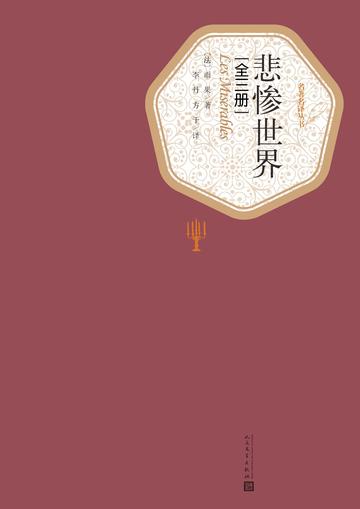
Les Miserables: All 3 Volumes (Famous Translation Series)
悲惨世界:全3册(名著名译丛书)
- Status
- Completed
- Length
- 1.0M Words
- Updated
- 6mo ago
- Source
- Fanqie
Stats
Tags
Synopsis
Reader comments
In booklists 11
Why Not Read Classics?
Recommend some good books that are meaningful, influential and well-written.
Like Literary Classics
I want to read a book similar to "La Traviata". I think this book is well written. I recommend it.
Classic Books 📚
I want to read a book similar to "The Temple of Earth and Me (Illustrated Edition)". Family members, do you have any classic books? I used to like "The Temple of Earth and Me" and Teacher Yu Hua's. Is there any such book? I can't read romance novels recently. I want to read it.
World Famous Books
🍅All the world famous books I can find are thrown at me, I can bear it
A Must-Read for Chinese Language and Literature Majors
Are there any books that can actually help improve your writing and expression skills?
Does Anyone Like Literary Classics as Much as I Do?
I recommend twenty-three literary masterpieces to you
Literature Books, I Want Literature Books! ! !
Family members, I want to read literature books, books that can improve my writing skills or increase my knowledge. Beg on your knees!
Advanced Literary Works
Are there any novels that can be included in compositions or novels about famous people?



Are There Any Novels That Are More Red?
If you want something without CP, it's best to watch something like Xiao Lujiang's "I'm Sorry, My Lover is the Motherland", dedicated to serving the country or revolution.
Looking for Chinese and Foreign Masterpieces
If you can write your thoughts after reading, you don't need to write online articles, they are very story-telling.
Foreign Masterpieces, Preferably Classical and Romantic Ones!
I want to read a book similar to "A Tale of Two Cities (Classic World Masterpiece)".
Readers also read
 Les Miserables (All Three Volumes)
 Les Miserables: All 3 Volumes
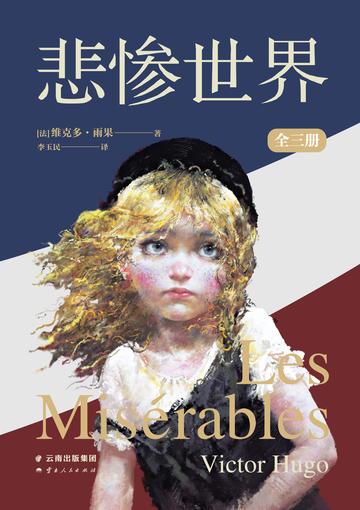 Les Miserables: All Three Volumes
 Les Misérables (Four Volumes in Total)
 Les Misérables
 Les Miserables (Two Volumes)
 Les Misérables: Upper Middle Lower (Foreign Literature Masterpiece Series)
 Les Miserables (Classic Translation)
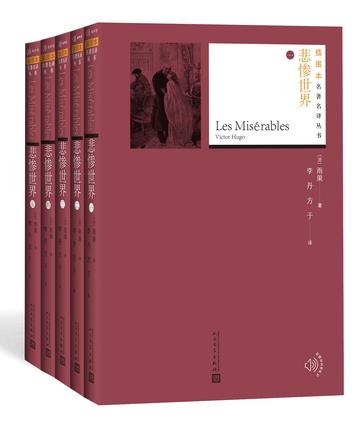 Les Miserables: 5 Volumes in Total (Illustrations from the Famous Translation Series)
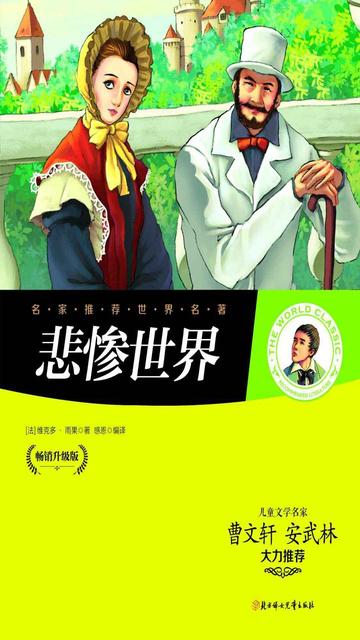 Les Misérables
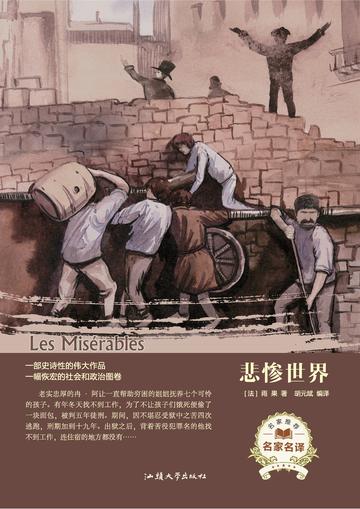 Famous Translation: Les Miserables
 Les Misérables: a Student Edition of a Humanities Classic
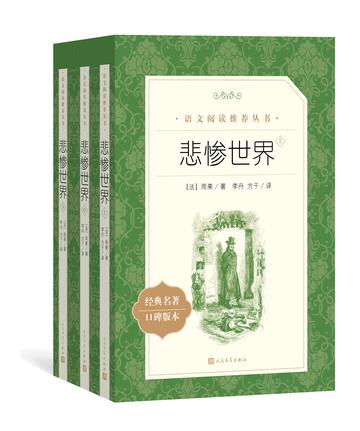 Les Miserables: All 3 Volumes (Recommended Chinese Reading Series)
Today I read "Les Misérables" which I didn't understand at all during my childhood. Victor Hugo: "Today, June 30, 1861, at eight-thirty in the morning, when a red sun hung above my window, I finished writing "Les Misérables."" Poverty makes men miserable, hunger makes women fall, and darkness makes children weak. However, "a gratifying and terrible test, through which weak-willed people can become despicable and shameless, and strong people can become outstanding and extraordinary" "When fate needs a villain, or a hero, it throws a person into this experimental cup." "We often hear someone harshly accuse children of being ungrateful. In fact, this is not as sinful as some people think. The distance generated from this is helpless in the case of young people. The distance may be imperceptible at first, but it is slowly expanding, like the branches of a tree. Although the twigs are still connected to the trunk, they have gradually moved away. This is not the fault of the young people. The young people tend to be happy, like festivals, and pursue dazzling glory and love; A close connection. Life makes young people's feelings indifferent, and the grave buries the old people's feelings. "He finally rested here, despite his unfortunate fate and hardships. He died in depression, but he had no regrets. It was an unstoppable river and it was irreversible."
At least in my mind this book is the best I have ever read. First, Hugo did not choose to expose the darkness of human nature and leave future generations at a loss. He chose to let the light of morality and charity shine on future generations, telling future generations that anyone can do good even as a slave laborer. It depends on your heart. Society convicted him, but his heart judged himself innocent. He did not have to do evil because he was a slave laborer. He could become Madeleine and work for countless people instead of being a low-level scumbag. Secondly, Hugo's various hooks in the previous chapter imply the main plot development of the next chapter. This is really amazing, and it also shows the author's ability to plan the plot. When I first read Fantine, I thought Thenardier was just an ordinary villain, but later I realized that he was an indispensable villain throughout almost the entire story. Third, and most importantly, I think the portrayal of the character of Jean Valjean is unparalleled. Will each of us be confused? When we realize it, we have already been labeled with countless labels. You are a bad person, you are a scoundrel, you are an irritable person. These things are like maggots in the tarsus. Whether you want it or not, you will be defined. Sometimes we are unable to resist. Jean Valjean was defined by society. He was a hard labor prisoner just because he stole a piece of bread. He was a sinner and was made trouble everywhere. Therefore, he learned cruelty and theft. This was given to him by the society rather than what he wanted, so he hated everything. But the appearance of the bishop brought him back to life. Someone regarded him as a human being and was willing to forgive the sin that did not belong to him. Even if he stole the bishop, the bishop was still willing to forgive him. His worldview was reshaped, and he changed from a villain to a kind person. He would not resent others for doing evil. He chose to forgive unconditionally like the bishop, because this was never something anyone could control. He was arrested by society for the second time, this time not because he was a villain but because of his conscience. This time the hard labor did not drag him back into the abyss like last time. He blossomed in the suffering, he escaped, he rescued Cosette, this time his mind came to life, and he became a father. He went through all kinds of things in the middle, but his kindness has never been eradicated. In the end, he was forgiven by Marius. I think this is more like a social recognition. The new generation pardoned the identity of the older generation of hard labor prisoners. Society defines us and others hurt us, which is painful, but we can still choose, choose to be a good person and stick to our heart, or be a bad person and cater to other people's definitions. Then when you die, they will say: "Oh, I knew this was a bad person.", And never go back to discover the kindness, innocence, loneliness and hesitation deep in your heart.
How should I live my life? Mr. Agen needs to give the answer.
Taking the period from Napoleon's defeat to the July Monarchy as the background, Hugo presented a social picture intertwined with personal destiny and the current of the times. Misery is a situation, not an outcome—in a world of suffering, human choices define its nature. The vertical line is Jean Valjean's "road to salvation" from a hard labor prisoner to a saint. After being inspired by Bishop Bian Furu, he responded to oppression with good deeds throughout his life, constantly made choices loyal to his conscience in the dilemma of identity, and completed his spiritual rebirth; the horizontal line unfolds a "map of all living beings", starting from the philanthropic Bian Furu. , To the exploited Fantine, to Javert who is struggling between dogma and conscience, and the extremely evil Thenardier and the angel Cosette... True mercy is not only a personal act of kindness like Bishop Bianfuru, but also a call for reflection and transformation of the social system that has caused widespread "misery". Even in the most desperate situations, people still have the freedom to choose kindness, dignity, and love. The free choice of every soul is like a glimmer of light. When gathered together, it can pierce the darkness and lead to a future that transcends misery and is full of compassion and hope.
When I saw Jean Valjean dying at the end, I couldn't hold back my tears.
I finished reading the first "Fantine" intermittently, and broke down in tears many times in the middle. The girl who sacrificed so much for her children passed away just like that...꒦ິ^꒦ິ, Probably only tissues know how painful it was for me when I read that she sold her teeth and body.
I cried all the time after reading it, and I burst into tears when it was all over. Hugo is indeed a romantic writer. At the end of the story, there are obviously so many regrets and unforgettable tragedies, but the new world and indelible love continue to heal the pain of the tragic world. Even death is so peaceful.
1. Except for the main plot, I can't read the rest of the content (for some reason, when I look at the misery of wars in other countries, I think of the Eight-Power Allied Forces and the Japanese invasion of China, and then I can't feel sympathy or empathy, so I can't watch it), and it's rough. 2. Obviously the only one who has the ability to save people is the bishop. His secular status prevents people from harming him too much, so he will not be tortured to death. His income allows him to save people and not die a horrible death. With a strong spirit, he will still live a life of tenacity even if he saves people and ends up in a miserable situation. 3. The male protagonist was imprisoned for stealing bread. However, he escaped and the punishment was continuously aggravated. However, he still escaped and then got aggravated again. I can only change the word "irrepentance" to one sentence - he is simply a person who rises to difficulties. After being released from prison, Xiang Shan helped others and was imprisoned again. Because the child who saved Fantine was chased by Wei Sha all day long, the world where Wei Sha confessed to him in the end seemed to be imaginary. It was probably only when he died that his spirit truly felt at peace throughout his life. It is said that enriching material and maintaining the body are two important things, but only those with strong spirits can truly save others. If you want to save others, is it a good idea to save your own spirit first? 4. Fantine, who credulously trusts men to become a single mother, credulously trusts strangers she meets once and entrusts her daughter to such an unknown person and harms her own daughter. I believed in the male protagonist before I died. I simply couldn't imagine what would happen to her daughter if the male protagonist was a bad man and was qualified to adopt his daughter. This line is really heart-warming and creepy to watch. 5. Cosette, like her mother, fell in love as young as her mother. The hero saves her man. 6. Remind yourself: You are not planning to buy a physical book to read this a second time.
The protagonist Jean Valjean's ups and downs life, no matter what hardships he suffered, he never forgot to maintain his innocence and kindness. With the help of Bishop Bian Furu, his life was reshaped, and he did not take revenge on the society at that time as he thought when he was just released from prison. After Jean Valjean rescued Cosette, that goodwill continued, not only kindness but also special fatherly love. Haven't finished reading yet, continue reading [Cool][Cool]
He rests in peace. Despite his ill-fated fate, He still lives in vain. Without his angel he perishes; Things happen naturally, Just like night falls and day sets. It may be a bit boring when you first start reading it, but it's really enjoyable to finish reading the whole book.
My favorite masterpiece
Compared with reading these classics in e-books, I still prefer to read physical books. I really enjoyed reading this book many times. Every character in this book has a distinct personality. What impressed me most was the uprising and Javert's suicide, which are described in detail. It depicts that era very well. There is much to read in this book.
Why doesn't Teacher Hugo update anymore? [Crying] I really like your books. Don't leave the circle and come back.
Give people quiet power with high-pitched emotions
The great writer presents us with a shocking story
The significance of famous works far exceeds that of other novels
I used to read paper books, but I didn't expect Tomato to have an electronic version. It's really a world-class book.
Pearl among masterpieces
Really good, worthy of Hugo
Raise a glass with me to the passing years and to the lives that were once alive
A well-deserved world masterpiece worth appreciating
A good book, the ending makes people cry [almost crying] [almost crying] [almost crying]
There are two ways to achieve peace in the world
Classic is classic
Nice to watch, love to watch, love to watch
Very well written, studying hard
After watching it, I felt that my soul had been cleansed.
Awesome. It turns out there are traces of everything.
It can be said that this masterpiece has extremely profound historical significance.
I like this book, as he shows me his criticism of people without reservation, like a bouquet of invisible flowers.