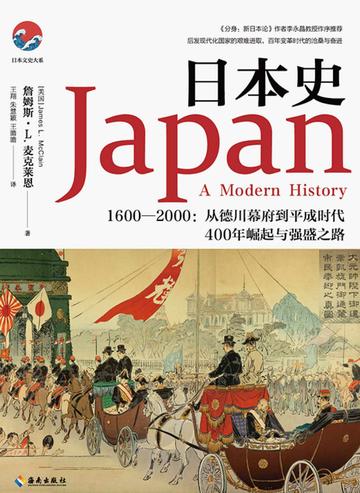
The content of this book spans four hundred years of history from the time when the Tokugawa shogunate was entrusted by the emperor to rule at Fushimi Castle to the Japanese New Year celebrations in 2000. It is divided into five parts: "Japan in the Traditional Era", "Japan in the Revolutionary Era", "Japan in the New Century", "Japan in the War" and "Contemporary Japan". From changes in the political situation to the rise of the business class, from the proletarian labor movement to changes in gender concepts and family marriage customs, from colonization and war to occupation and democratization... The whole book uses a narrative that combines "big events" and "small stories" to provide an informative and informative Based on historical materials, data and charts, using an objective and neutral attitude towards history, and a panoramic line drawing writing technique, it depicts a multi-dimensional, group-portrait historical narrative for us, showing the setbacks and endeavors, failures and rises of Japanese society in the modernization transformation period.
Reader comments
This book is so rich in content! It tells the history of Japan from the Tokugawa Shogunate to the Heisei era, which gave me a deeper understanding of Japan. The book also mentions some characters that I hated, such as those who committed crimes during the war. However, this book also made me understand that the history of each country has its own unique development trajectory, and we should look at it objectively. Moreover, history is always affecting the future. We must learn from past experiences in order to better face the future. I think this book is worth reading. You can also read it!
Reading this book carefully is much more meaningful than making wise anti-Japanese remarks
Chinese people should read this book to understand how Japan became developed today, and how to become truly strong. The people of the country should strengthen themselves and stand tall in the world. This cannot be achieved just by talking about it.
This book is so rich in content! It tells the history of Japan from the Tokugawa Shogunate to the Heisei era, which gave me a deeper understanding of Japan. The book also mentions some characters that I hated, such as those who committed crimes during the war. However, this book also made me understand that the history of each country has its own unique development trajectory, and we should look at it objectively. Moreover, history is always affecting the future. We must learn from past experiences in order to better face the future. I think this book is worth reading. You can also read it!
Reading this book carefully is much more meaningful than making wise anti-Japanese remarks
Chinese people should read this book to understand how Japan became developed today, and how to become truly strong. The people of the country should strengthen themselves and stand tall in the world. This cannot be achieved just by talking about it.