A required course for leaders under their bedside lamp: It is impossible for a good leader to resolve all conflicts satisfactorily. What is needed more often is a balanced knowledge. In all aspects of leadership work, flexibility is required, and it is necessary to adapt to the times and adapt to the situation. Being proficient in personal packaging knowledge can make your influence break through the limitations of your position and establish a more glorious personal image. The leader's ability and skills in recognizing and employing people are the software conditions for the normal operation of an organization. Those who know how to hide power and use their power in silent places are truly the best in leadership knowledge. Leaders' personalities can vary widely, and their leadership styles can also have their own characteristics, but the powerful power given to you by your position must be demonstrated in front of your subordinates. Leadership decision-making is by no means as simple as yes or no. It requires leaders to possess profound professional knowledge, a sharp eye for insight and the courage to make decisions, as well as the decision-making skills to retreat comfortably in the face of complex situations. Being able to speak without leaking information is a major skill that leaders must cultivate, and they must work hard beyond speaking.
Reader comments
This book is very practical! It mentions a lot of hidden knowledge that leaders need to master, such as balancing contradictions, adapting, showing power, etc. The book also says that a leader's personal influence has a lot to do with whether he or she can package himself. However, what I hate most is the kind of leader who only shows off his power and doesn't know how to respect his subordinates. As the book says: "What leaders need more is practical knowledge to solve real-life problems." This book is really a required course for leaders!
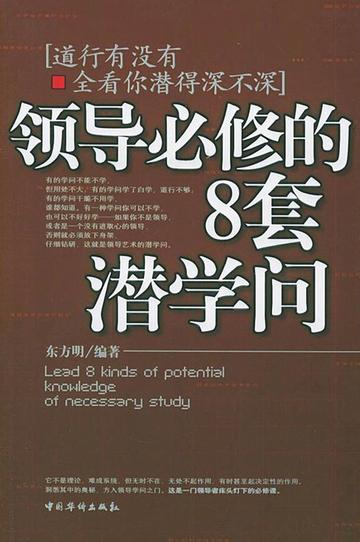




This book is very practical! It mentions a lot of hidden knowledge that leaders need to master, such as balancing contradictions, adapting, showing power, etc. The book also says that a leader's personal influence has a lot to do with whether he or she can package himself. However, what I hate most is the kind of leader who only shows off his power and doesn't know how to respect his subordinates. As the book says: "What leaders need more is practical knowledge to solve real-life problems." This book is really a required course for leaders!