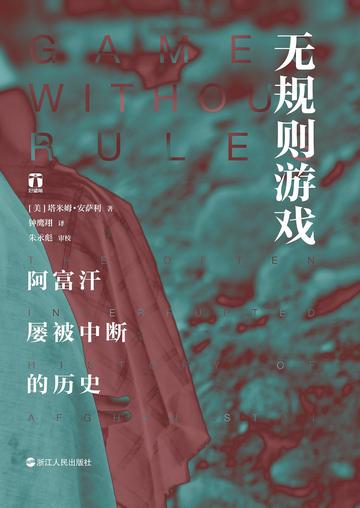
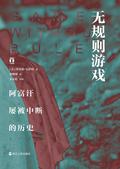
Game Without Rules: Afghanistan's Repeatedly Interrupted History (Behind Her Letter Is a More Complicated Truth)
无规则游戏:阿富汗屡被中断的历史(她来信的背后,是更复杂的真相)
- Status
- Completed
- Length
- 312k Words
- Genre
- Historical
- Updated
- 3y ago
- Source
- Fanqie
Stats
43Reads
9.3Score
51Chapters
6Listens
3.2kReads · all time
Tags
Synopsis
Reader comments
In booklists 2

Do You Have Any Experience as a Big Boss? This Book Is Full of Useful Information.
450Books1.1MViews2dUpdated

It Is Recommended to Read More Books That Apply What You Have Learned
I want to read something similar to "Record of a Change of Destiny". I read "The Eye of the Feng Shui Master", also called "The Record of Changing Fate", and I fell in love with Feng Shui. It is a novel that I couldn't put down, and it is a novel that can be used to change Feng Shui. Recommend friends to take a look.
342Books81.5kViews4dUpdated
Although the author is an Afghan-American, he must have been deeply influenced by the style of American bestsellers when he wrote the book. This book is not a serious history book, it is easy and enjoyable to read, and the text reveals American irony and sarcasm. This book was published not long after bin Laden's death and before the troops had withdrawn from Afghanistan. According to the author's analysis of Afghanistan's history, the withdrawal of US troops will be a matter of time. Looking at it now, for the United States, the withdrawal of US troops is a disgraceful withdrawal, but for Afghanistan, this is the inevitable result after the United States wants to make profits in Afghanistan but cannot find a way.
"Game without Rules: The Interrupted History of Afghanistan", seeing the title of the book makes people want to read more. How can there be such a thing as interrupted history? Even if it happened in Afghanistan, a war-torn country, it wouldn't interrupt history, right? With this question in mind, I started reading this book. It turns out that I thought of war too simply. We grew up in a peaceful era and had no worries about food and clothing. How could we understand what war brings? We can only understand it through images and words, and cannot empathize with it, so I don't understand why there is an interrupted history. Think about it for a moment, is our country's history before liberation also being interrupted? Probably yes, thanks to our ancestors for bringing us such a stable living environment.
When George Washington entered the political arena of North America, an empire was being formed between distant Central Asia and South Asia. The master of the empire, Ahmad Shah, was a tribal leader, and future Afghans would regard him as the "Father of the Nation" (Baba). Because, tracing back to the origin, everyone felt that this man was the first monarch of their country. Ahmed is indeed a big shot. He is quite tall, with a wide-cheeked face; his almond-shaped eyes are tribal, yet somewhat romantic.
The history of modern Afghanistan is like a drama of ups and downs, full of absurdity, horror and sadness. For more than two centuries, almost every 40 years, a major country has forcibly blocked Afghanistan's development and undermined its progress. Only when the powerful forces withdraw can Afghanistan's history begin again. This is a country ravaged by its own demons, a country that has been repeatedly fought over and ruled over. The author interprets the history of the motherland through the perspective of Afghans. He refutes the assertion of the "Graveyard of Empires", tells the story of Afghanistan's internal struggles that the outside world has never fully understood for a long time, and analyzes the fatal reasons why modern invaders have repeatedly failed in battles. Here, foreign intervention and invasion are not the main theme, they only disrupt the development of Afghanistan. Afghans have their own story, which is completely different from all invasions: aloof private power, deep-rooted tribal culture, obsessed extreme thoughts, complicated geopolitics... The author takes us into a "real Afghanistan" and provides us with enlightening insights into Afghanistan, a country that has long been outside the international discourse.
This book interprets the history of Afghanistan from a unique perspective, allowing me to see an Afghanistan that is completely different from what I thought before. The stories told in the book are full of absurdity and sadness, but they also gave me a deeper understanding of this country. I loved that the author told their own story through the eyes of Afghans, which made me sympathize with their plight even more. Highly recommended!
This book not only provides an in-depth understanding of Afghan history and politics, but also provides readers with thoughts and reflections on today's international political situation. This is a book that delves into the history and politics of Afghanistan. Through a review and analysis of Afghanistan's history, the author reveals the causes and effects of multiple wars and political turmoil in the region. The book provides an in-depth analysis of the impact of Afghanistan's tribal culture, religious conflicts, external intervention and other factors on the country's development.
A brief look at the history of modern Afghanistan, well translated.
The history we read in books is different from the history that actually happened. This book provides us with a different perspective to observe this familiar but unfamiliar neighboring country up close!