In "The French Revolution", Hans-Ulrich Tamer reviewed the ins and outs of this major event in European history, introduced the main participants of the French Revolution and their motivations, explained the important structural features of the French Revolution and the special role of the capital Paris, and presented the revolutionaries' struggle over the constitution and the bloody rule of terror.
Reader comments
In this rich book, Professor Hans-Ulrich Tamer introduces all aspects of the French Revolution, including the main players, their motivations, and important structural features. I especially liked the part about the revolutionaries' struggle over the constitution and the bloody reign of terror in the book. The plot was very exciting. This book gave me a deeper understanding of the French Revolution, and I recommend it to friends who are interested in history.
This book mainly tells the process of the French Revolution, from the initial brewing to the outbreak. The initial reason may be the inequality of taxation, to the intersection of three revolutions, to the Girondins taking power, and later to the Jacobin dictatorship represented by Robespierre, until Napoleon launched the Brumaire Coup. Although the Revolution ended when Napoleon launched the Brumaire Coup, its impact was far-reaching, and the concept of republicanism had penetrated deeply into the hearts of the French people. The Revolution also directly promoted the development of the media, which was used to promote political ideas.
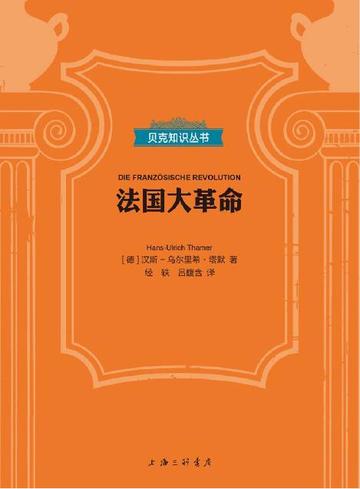





In this rich book, Professor Hans-Ulrich Tamer introduces all aspects of the French Revolution, including the main players, their motivations, and important structural features. I especially liked the part about the revolutionaries' struggle over the constitution and the bloody reign of terror in the book. The plot was very exciting. This book gave me a deeper understanding of the French Revolution, and I recommend it to friends who are interested in history.
This book mainly tells the process of the French Revolution, from the initial brewing to the outbreak. The initial reason may be the inequality of taxation, to the intersection of three revolutions, to the Girondins taking power, and later to the Jacobin dictatorship represented by Robespierre, until Napoleon launched the Brumaire Coup. Although the Revolution ended when Napoleon launched the Brumaire Coup, its impact was far-reaching, and the concept of republicanism had penetrated deeply into the hearts of the French people. The Revolution also directly promoted the development of the media, which was used to promote political ideas.