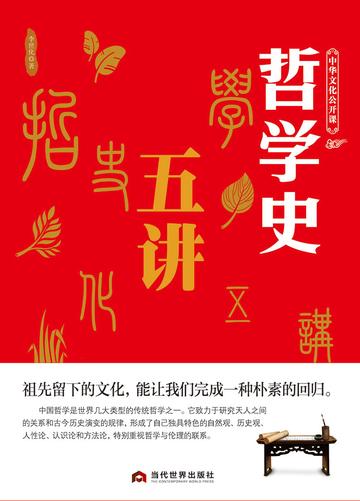
Where did the universe come from, and where did humans come from? What is the nature of the universe, and what kind of relationship does man have with the universe? What is the purpose of man's existence, what is the value and meaning of man's life... Are these questions relevant to you among all living beings? Of course they are! Because as long as you can think, whether you are intentional or unintentional, your thinking about the world and your exploration of life will be reflected in your life. This is philosophy. This book introduces pre-Qin philosophy, Han philosophy, Wei, Jin, Southern and Northern Dynasties philosophy, Song, Yuan, Ming and Qing philosophy to modern philosophy, reflecting the breadth and depth of the history of Chinese philosophy.
Reader comments
Looking back at the history of philosophy, we can see the main significance and content of philosophical thought, as well as its main changes in views and developments in different societies. By reading this book, readers can understand the development and evolution of philosophy, and recognize the core views and ways of thinking of different philosophical schools. This book aims to inspire readers' interest in philosophy, help them understand the importance of philosophical ideas to human thinking and culture, and provide certain guidance and inspiration for personal thinking and exploration.
Chinese philosophy has a long history and unique spiritual core. In chronological order, this book discusses the main schools and thoughts of Chinese philosophy in the five periods of Pre-Qin, Han, Wei, Jin, Sui and Tang, Song, Yuan, Ming and Qing, and modern times. Not only can we see the social, political and economic environment of their times through the spirit of philosophy, but we can also discover the changes and changes in Chinese philosophy over time. While adhering to its own core, Chinese philosophy has always fully absorbed and borrowed from the cultural ideas of other nations in an inclusive manner, which is especially obvious in modern times.
Human beings are very magical creatures. After satisfying their physical needs, they will pursue spiritual satisfaction, and become curious about some things and want to know to satisfy their thirst for knowledge. In the process of exploration, we divided them into two categories: one is science, the other is theology, and then an intermediate thing emerged between the two, which is philosophy. It is used to answer everything. It can bring answers to rational thinking in science, and it can also bring perfect answers to theology. It has a combination of religion and ethics, which is characteristic of philosophy. This book tells the philosophy of each era in an easy-to-understand way, allowing people to better understand the history of China. For those who want to read the history of philosophy but find it difficult to insist on reading, I recommend this book first.
My first thought when I saw the title of the book: The history of philosophy, like modern history and Western philosophy, talks about words that are incomprehensible. With the idea that I have seen everything, I read this book. It turns out that you can't just look at people by their appearance, and the same goes for reading books. For the first time, I felt that the history of philosophy was so interesting, and I could understand it without feeling obscure. The layout of the content starts from the pre-Qin period from the table of contents, but the main text starts from the myth system. In the long history of Chinese culture, mythology is indeed the source, and then starts to be told later. Here we not only talk about events, but also some theories. The author will also follow this theory with an encyclopedia to supplement the previously unknown knowledge, so that people can better understand and understand what this is about. Worth reading.
Where did the universe come from? Where did humans come from? What is the nature of the universe? What kind of relationship does man have with the universe? What is the purpose of human existence? What is the value and meaning of human life? …Are these questions relevant to you among all living beings? Related! Because as long as you can think, whether you are intentional or unintentional, your thinking about the world and your exploration of life will be reflected in your life. This is philosophy. Philosophy is everywhere. This book collects some of the essence of ancient philosophers' thoughts and attempts to outline a road map for the development of Chinese philosophical thought. It aims to tell the essence of traditional Chinese philosophy to readers in simple and approachable language, from which they can feel the power of wisdom. Holding it up after a meal or while taking a nap can appreciate the value of thought, the power of thinking, and the wisdom of speculation.
Looking back at the history of philosophy, we can see the main significance and content of philosophical thought, as well as its main changes in views and developments in different societies. By reading this book, readers can understand the development and evolution of philosophy, and recognize the core views and ways of thinking of different philosophical schools. This book aims to inspire readers' interest in philosophy, help them understand the importance of philosophical ideas to human thinking and culture, and provide certain guidance and inspiration for personal thinking and exploration.
Chinese philosophy has a long history and unique spiritual core. In chronological order, this book discusses the main schools and thoughts of Chinese philosophy in the five periods of Pre-Qin, Han, Wei, Jin, Sui and Tang, Song, Yuan, Ming and Qing, and modern times. Not only can we see the social, political and economic environment of their times through the spirit of philosophy, but we can also discover the changes and changes in Chinese philosophy over time. While adhering to its own core, Chinese philosophy has always fully absorbed and borrowed from the cultural ideas of other nations in an inclusive manner, which is especially obvious in modern times.
Human beings are very magical creatures. After satisfying their physical needs, they will pursue spiritual satisfaction, and become curious about some things and want to know to satisfy their thirst for knowledge. In the process of exploration, we divided them into two categories: one is science, the other is theology, and then an intermediate thing emerged between the two, which is philosophy. It is used to answer everything. It can bring answers to rational thinking in science, and it can also bring perfect answers to theology. It has a combination of religion and ethics, which is characteristic of philosophy. This book tells the philosophy of each era in an easy-to-understand way, allowing people to better understand the history of China. For those who want to read the history of philosophy but find it difficult to insist on reading, I recommend this book first.
My first thought when I saw the title of the book: The history of philosophy, like modern history and Western philosophy, talks about words that are incomprehensible. With the idea that I have seen everything, I read this book. It turns out that you can't just look at people by their appearance, and the same goes for reading books. For the first time, I felt that the history of philosophy was so interesting, and I could understand it without feeling obscure. The layout of the content starts from the pre-Qin period from the table of contents, but the main text starts from the myth system. In the long history of Chinese culture, mythology is indeed the source, and then starts to be told later. Here we not only talk about events, but also some theories. The author will also follow this theory with an encyclopedia to supplement the previously unknown knowledge, so that people can better understand and understand what this is about. Worth reading.
Where did the universe come from? Where did humans come from? What is the nature of the universe? What kind of relationship does man have with the universe? What is the purpose of human existence? What is the value and meaning of human life? …Are these questions relevant to you among all living beings? Related! Because as long as you can think, whether you are intentional or unintentional, your thinking about the world and your exploration of life will be reflected in your life. This is philosophy. Philosophy is everywhere. This book collects some of the essence of ancient philosophers' thoughts and attempts to outline a road map for the development of Chinese philosophical thought. It aims to tell the essence of traditional Chinese philosophy to readers in simple and approachable language, from which they can feel the power of wisdom. Holding it up after a meal or while taking a nap can appreciate the value of thought, the power of thinking, and the wisdom of speculation.