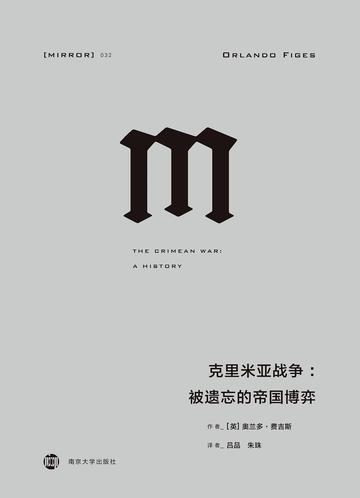
In 1853, Tsar Nicholas I invaded the Danube Principalities that are now Romania due to religious disputes. Subsequently, the crumbling Ottoman Empire struggled to maintain its European power, Britain, which was worried about Russia's expansion, and French Emperor Napoleon III, who wanted to restore its glory, successively declared war on Russia. The Crimean War, which lasted for 18 months, caused huge human losses, completely rewritten the political landscape of Europe, and profoundly affected the modernization processes of Russia and Turkey.
Figgis quotes extensively from Russian, French, British, and Ottoman Empire documents to comprehensively demonstrate how nationalist sentiments, imperial power struggles, and religious conflicts affected countries' involvement in the war. From kings and ministers, reporters and writers reporting on the war, to officers and soldiers on the battlefield, and women and children in the siege, Figes not only restores the panoramic view of the war from multiple perspectives, but also provides a new entrance for today's understanding of the "Eastern Question" in the 19th and 20th centuries, the relationship between Christians and Muslims in the Black Sea region, and the world rift between Russia and the West.
Reader comments
This book takes the Crimean War as the background and shows the game and influence between empires, giving me a deeper understanding of history. As the book says, translation allows us to understand different cultures. When I was looking for a job after graduation, I deeply felt the importance of understanding different cultures and ways of thinking. This book is rich in content. It is like a window that allows me to see a wider world and also makes me understand the importance of keeping an open mind.
The ins and outs of the Crimean War are clearly written and rich in historical materials.
The description is detailed and wonderful, a large number of letters reflect the cruelty of war, and the translation is also very good!

This book takes the Crimean War as the background and shows the game and influence between empires, giving me a deeper understanding of history. As the book says, translation allows us to understand different cultures. When I was looking for a job after graduation, I deeply felt the importance of understanding different cultures and ways of thinking. This book is rich in content. It is like a window that allows me to see a wider world and also makes me understand the importance of keeping an open mind.
The ins and outs of the Crimean War are clearly written and rich in historical materials.
The description is detailed and wonderful, a large number of letters reflect the cruelty of war, and the translation is also very good!