“Two Thousand Years of the Qin System: The Rules of Power for Feudal Emperors”:
This is a major work on the history of political institutions in ancient China. It examines sixteen historical snapshots, focusing on the truth of ordinary people’s lives behind the golden ages of each feudal dynasty.
“The Empire’s Economic Storm: The Last Seventy Years of the Qing Empire”:
This book recounts the Qing government’s reforms in six areas: foreign trade, finance, currency, banking, customs, and chambers of commerce. But finance is the mother of all government affairs. Amid the empire’s economic storm, the reforms proved powerless to turn things around and even triggered a series of complex chain reactions, ultimately leading to the regime’s total collapse.
“The Dark Ages: The Collapse of an Empire and the Birth of Europe”:
This book seeks to dispel misconceptions and restore the truth, helping readers understand the real “Dark Ages.” Divided into six chapters, it covers the decline and fall of the Roman Empire, the rise of barbarian kingdoms, the British Isles’ involvement in European affairs, religion in Europe, seaborne raiders from the north, and the European kingdoms that emerged as the Dark Ages came to an end.
Light emerged from darkness, and order took shape amid chaos: this was a great age!
“The Chrysanthemum Dynasty: Two Thousand Years of Japanese Emperors”:
This book explores seventy questions related to the emperor and the imperial system, divided into ten chapters that explain the many mysteries surrounding them. The first four chapters focus on questions about the emperor’s history, outlining its development and that of the imperial system. The remaining six answer questions about the emperor’s daily life, covering religion and ritual, thought, the performing arts and scholarship, everyday life, public image, and family.
“World History Is the History of Money: Unraveling the Dramatic Currency Wars Behind Empires”:
Beginning with the emergence of money, this book explains how currency has affected humanity and driven or hindered the progress of human society in various ways. From shells, copper coins, silver coins, and gold coins to paper money, electronic currency, and virtual currency, it invites us to take another look at the true history of the world. Perhaps it is completely different from what we have seen and heard!
“Great-Power Hegemony: Five Thousand Years of Global Rivalry on Land, Sea, and Air”:
What do the Roman Empire, the Arab Empire, the Chinese Empire, and the Mongol Empire have in common?
Why was once-weak Britain able to rise suddenly as a maritime power and take the lead in the Age of Exploration and the Industrial Revolution?
After the two world wars, did American hegemony dominate land, sea, and air, with air power at its core?
How likely is a transition in the 5G era to unfold between China and the United States?
Since the dawn of humanity, we have experienced two shifts in hegemony: from one-dimensional land empires to two-dimensional maritime empires, and from two-dimensional maritime empires to three-dimensional aerial empires. Today, we stand at the threshold of a shift from three dimensions to four. Who will emerge victorious?
“Great-Power Strategy: How the World Is Governed”:
From the perspective of geopolitics, this book describes the secret strategies major powers use to expand their influence around the world.
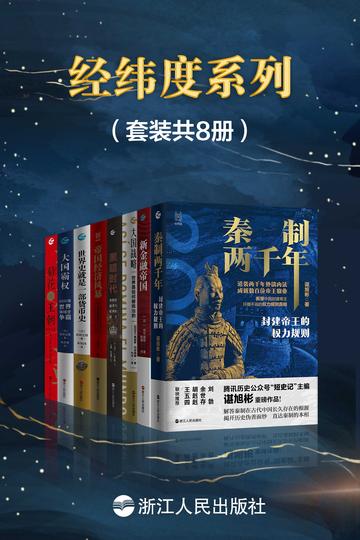
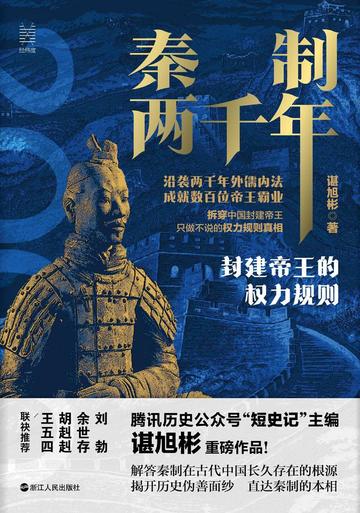















For example, in "Two Thousand Years of the Qin Dynasty", it turns out that behind the prosperity of every feudal dynasty is the hardship of people's lives. There is also "World History is a History of Currency". The development of currency has such a great impact on world history! I think this set of books is very rich in content and interesting to read, and it also gave me a deeper understanding of history. Come and take a look too!