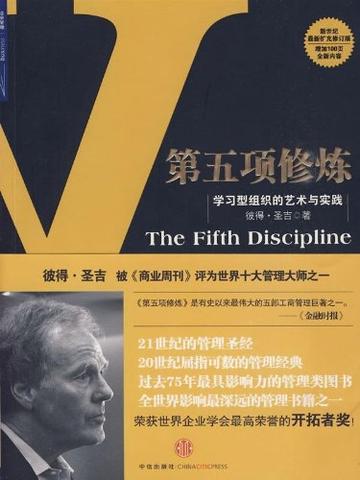
Introduction to "The Fifth Discipline: The Art and Practice of the Learning Organization": Peter Senge's revision of this best-selling classic is based on 15 years of experience and cases in putting the ideas of the original book into practice. Senge clearly points out that in the long run, your organization's sustainable competitive advantage is its ability to learn better and faster than its competitors. Fifteen years ago, many of The Fifth Discipline's core ideas seemed radical. But many applications of these ideas have since become integrated into the way people see the world and into their management practices; the leadership case stories in this new edition reveal these experiences. The Fifth Discipline describes how companies can eliminate "learning barriers" that threaten organizational effectiveness and career success by adopting the strategies and actions of a learning organization. In a learning organization, new and scalable thinking patterns are fostered, collective aspirations are unleashed, and everyone is constantly learning how to create the achievements they truly desire. This updated and expanded edition of a business administration classic contains more than 100 pages of new content based on interviews with practitioners at dozens of companies, including BP, Unilever, Intel, Ford, Hewlett-Packard, and Saudi Aramco, as well as other types of organizations such as Boston Community Organization Roca, Oxford Oxfam, and the World Bank. The new content includes a special new preface describing Senge's achievements in learning organization research since the publication of the original book, and new chapters on "Driving Forces" (Getting Started), "Strategy and Tactics", "The New Work of Leadership", "Systematic Citizenship" and "Future Frontiers".
Reader comments
As a father of two children, I know the importance of learning. This book made me understand that not only should I study, but I should also lead the children to study together. The leadership examples it mentioned also reminded me of some real-life situations. I think this book is similar to "Deliberate Practice" in that they both emphasize the importance of continuous learning and continuous improvement. Moreover, the ideas and methods in the book are not only applicable to business management, but also to our daily life. In short, this is a very valuable book and I will recommend it to my friends.
After reading it, I am more sure that I am right. The system provided is very practical. We cannot simply be executors, we must consider the upper and lower processes. As product managers, we must consider a more comprehensive and systematic approach, so that our products can demonstrate competitiveness and improve our own competitiveness.




As a father of two children, I know the importance of learning. This book made me understand that not only should I study, but I should also lead the children to study together. The leadership examples it mentioned also reminded me of some real-life situations. I think this book is similar to "Deliberate Practice" in that they both emphasize the importance of continuous learning and continuous improvement. Moreover, the ideas and methods in the book are not only applicable to business management, but also to our daily life. In short, this is a very valuable book and I will recommend it to my friends.
After reading it, I am more sure that I am right. The system provided is very practical. We cannot simply be executors, we must consider the upper and lower processes. As product managers, we must consider a more comprehensive and systematic approach, so that our products can demonstrate competitiveness and improve our own competitiveness.