The Qin appointed Fan Ju as chancellor and adopted a strategy of allying with distant states while attacking nearby ones. Under the command of Bai Qi, it won a decisive victory at the Battle of Changping.
The Six States began to decline, and Qin established its position as the hegemon.
As the Qin army advanced east, the Son of Heaven of Zhou and his court in Luoyang greeted them in panic.
At the Battle of Yiyang, the centurion Bai Qi first made a name for himself.
King Wu of Qin marched on Luoyang, where he died suddenly after attempting to lift a bronze cauldron. Bai Qi led a small force on a perilous journey into Yan to bring back Prince Ying Ji, who had been held hostage there. He also forged an alliance with generals such as Gan Mao and Wei Ran, and together they crushed Prince Ying Li’s coup attempt. Ying Ji was installed as king, later known as King Zhao of Qin.
Ying Ji’s mother, Queen Dowager Xuan, restored order and cleared away the political turmoil. She appointed her kinsman Wei Ran as chancellor and personally took charge of the regency to stabilize Qin.
King Min of Qi sought to dominate the realm and urged the Six States east of the mountains to destroy Qin.
At this moment of crisis, Queen Dowager Xuan appointed Bai Qi as general. He fought across the Central Plains and routed the allied armies of the Six States.
He then fought successive campaigns against Wei and Han and launched a surprise attack on Chu, making Qin the most powerful state of the Warring States period.
At this time, Yan secretly formed an alliance with five other states and launched a massive attack on Qi.
Tian Dan held out against Yan at Jimo for six years, then routed the Yan army with his fire-cattle formation.
Both Qi and Yan declined.
Meanwhile, King Wuling of Zhao adopted the dress and mounted archery of the northern peoples, greatly strengthening his state. Qin and Zhao entered a prolonged standoff of power.
The renowned Fan Ju, persecuted by treacherous officials, came to Qin and helped King Zhao take personal control of the state. He proposed the grand strategy of allying with distant states while attacking nearby ones, forging a new unity within Qin.
Zhao conspired with Han and Wei, seeking to gain the high ground and contain Qin.
The three-year-long Battle of Changping unfolded in stages, ending with the annihilation of more than 500,000 of Zhao’s elite troops in a single campaign.
After the battle, King Zhao of Qin entered his final years. Bai Qi was forced to take his own life, and Fan Ju lived in fear and anxiety.
An even greater crisis loomed: the crown prince was frail and sickly and had no legitimate sons, while all the other princes were mediocre and incapable. The chances of selecting a suitable heir were slim, and the Qin royal house repeatedly faced the danger of having no successor.
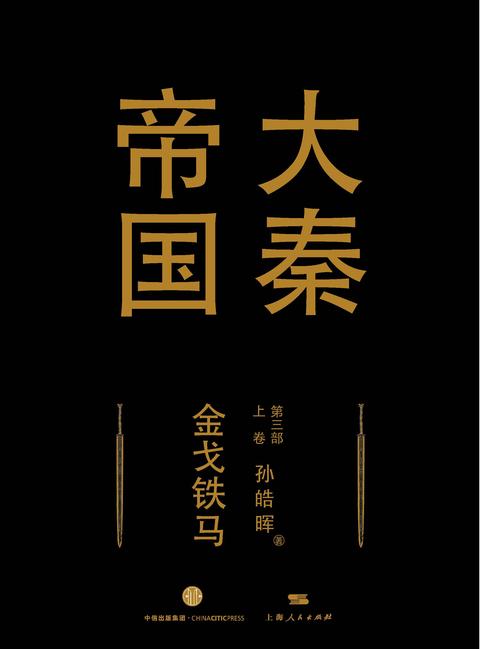

 The Great Qin Empire Part Three: The Middle Volume of Swords and Warhorses
 The Great Qin Empire, Book One: The Black Schism, Volume One
 The Qin Empire, Book Six: Imperial Flames, Volume One
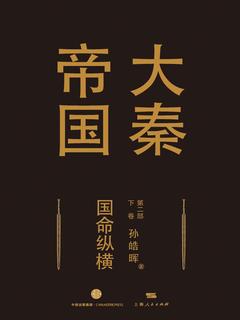 The Qin Empire, Part Two: The Vertical and Horizontal Strategies, Volume Two
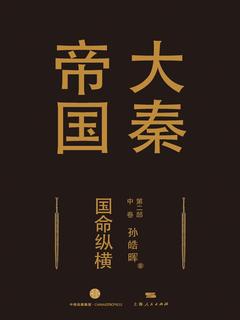 The Qin Empire, Volume Two: The Nation's Destiny and the Art of Power, Part Two
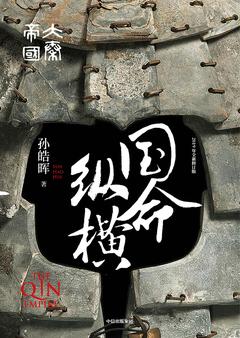 The Qin Empire 2: The Qin Empire: A Nation's Fate Across the Land
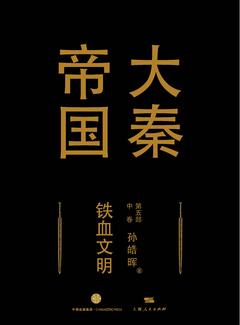 The Qin Empire, Book Five: Iron and Blood Civilization, Volume Two
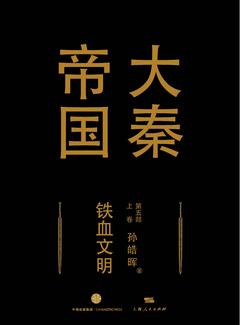 The Great Qin Empire, Book Five: Ironblood Civilization, Volume One
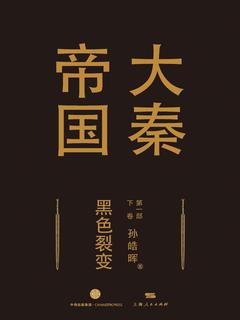 The Great Qin Empire, Part One: The Black Crack, Volume Two
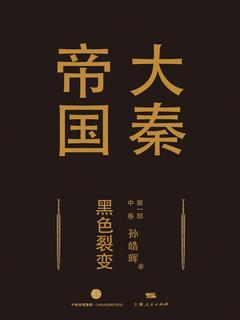 The Great Qin Empire, Book One: Black Tornado, Part Two
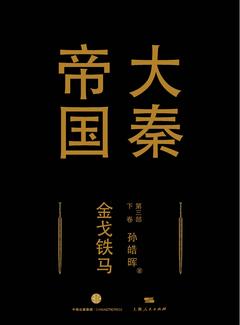 The Qin Empire, Book Three: Golden Spears and Iron Horses, Part Two
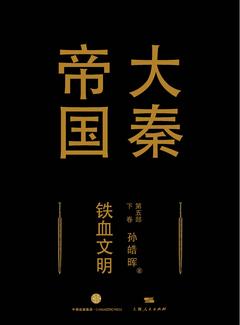 The Great Qin Empire, Volume Five: Iron and Blood Civilization, Part Two
A very good novel, worth reading.
This book is fantastic! It reminded me of the chaos and confusion I felt when I first gave birth, and the composure of the King of Qin in the face of crisis was truly admirable. At the same time, I can understand the helplessness of the Zhou royal family; just like how we encounter various difficulties in life, but as long as we have firm beliefs, we can always find a solution. I feel this book is not only about history, but also about how to face life's challenges. I highly recommend it!
The content is substantial, sincere, and quite good.
It's good, I recommend everyone to watch it.
Classic history, vivid character portrayals, the words seem to come alive right before my eyes! 👍👍👍
Not bad, not bad
This book is good; I'd like to reread it. Thank you!
Okay, okay, I understand.
A good book is one you can read a hundred times without getting tired of it; emperors and generals each have their own merits.
Okay, thank you teacher! ♪(^∇^*)