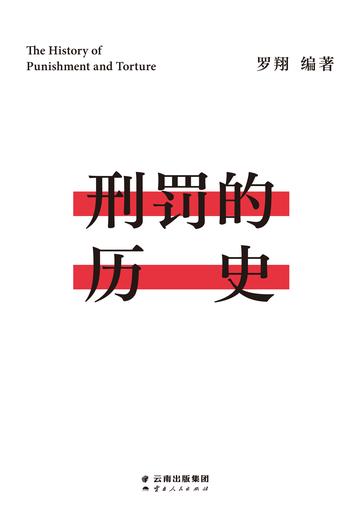
A History of Punishment
刑罚的历史
- Status
- Completed
- Length
- 120k Words
- Genre
- Historical
- Subgenre
- Unknown
- Updated
- 4y ago
- Source
- Fanqie
Stats
Tags
Synopsis
In booklists 86
Explore more →


Any Recommendations for Strange and Quirky Books? I Want to Read Something Like That
I’d like to read something a little different, like psychology books or something.



Which Books Have Made You Rethink Your Values?
Everyone’s welcome to join the discussion.

Are There Any Books With Zero Words?
I'm pretty curious.



Please Recommend Stories With a Little Girl as the Female Lead
Any genre is fine.



Nothing But Angst!!! Knives Flying Everywhere!!!
No sweetness. Don't leave me any way out! Please!

What Are the Cruelest Torture Scenes in Fiction?
Looking for books similar to The Embroidery Workshop's Turmoil. It should focus on different methods of execution, killing the body and breaking the spirit.


Books That Teach You Real Skills
Anything goes.



The Protagonist Gets Stuck in a Monster Suit and Turns into a Monster


I've Fallen for a Boy Forced to Cross-Dress: What Say You, My Ministers?
I want to read books similar to Green Pitch Beauty.




Books with a Loli Protagonist
The protagonist must be a little girl, not a wife. Baby and child protagonists don't count. Read the requirements carefully.


I Accidentally Verified My Account as an Author. How Do I Undo It? Urgent!




Genshin Impact Protagonist Who's Really Young, Even Younger Than Klee


Any Cute White-Haired Little Boys? I’ve Been in a Reading Slump Lately





A Male Lead With Long Hair Who Looks Like a Girl but Doesn’t Cross-Dress


Ye Luoli + Two Male Leads + the Dharma King (Someone Else Is Fine Too)
Looking for books like Ye Luoli: The Moon Shines Brightly, and My Heart Beats Quietly.



Cute, Petite, Frail Little Boys





Genshin Impact + Fatui Harbinger + Female + Young + Loli, Get It?


Lolis! I Want Lolis! I’ve Already Fallen Under Their Spell




A Collection of Shota Stories
This list is mainly a roundup of related books. I've made it a question so others can easily add relevant titles. Please don't repeat recommendations; if you have anything to add, try to do so in the comments. Ideally, recommend just one book per reply and add a description. If you want to recommend several books, give each one its own reply.




With So Many Tomato Novels, Are There Really No GTS Stories?





Willingly Falling into the Embrace of a Female Yandere
I’ve Read Too Many Stories With Female Leads as Caged Birds. Are There Any With a Male Lead as the Caged Bird?





Shy Lolis! Tsundere Lolis! Cute Lolis! I Want Them All!
Looking for books like Strange Things Descend: I Got a Cute Little Loli for Free from the Start.




Lolis! Lolis! Lolis! The Protagonist Is a Loli!
Reader comments 8
Google Translate
This book tells the story that the written criminal law has been trying to restrict the power of punishment since its birth. However, the tradition of the rule of man has determined that it is impossible to truly realize the criminal thought of "limited law but infinite love", which has led to the proliferation of torture and all kinds of extra-legal punishment. It was not until the emergence of the principle of statutory punishment at the beginning of the 20th century that the once unlimited expansion of the power of punishment was restrained within the orbit of the law. The history of punishment is not simply a narration of old anecdotes. From the five punishments of slavery to the five punishments of feudalism, and then to the five punishments of modern times, the development of Chinese law has been long and difficult, and everyone can see it in the author's writing.
Criminal law and punishment complement each other and are indispensable. Understanding punishment is not to treat criminals more cruelly, but to treat laws and judgments more fairly. When Teacher Luo Xiang explains the evolution of punishment in Chinese dynasties, he is actually talking about the choice between law and love. Humanitarianism cannot be just warmth and charity, and law cannot be just a cold weapon. Throughout history, behind various extreme criminal laws is actually the lack of law, which is a tool for the rule of terror under a high degree of centralization. However, we can also see the lack of excessive punishment, otherwise the law will lose its fairness and deterrence. Just as Teacher Luo Xiang advocates that the death penalty cannot be abolished, it is precisely because justice under the law needs to be defended.
Just because the development of Chinese law is difficult, it also reflects the process of human evolution from barbarism to civilization, and makes the value of freedom in the context of the rule of law particularly precious. The first chapter of this book starts with the origin and development of punishment. The book also lists many ancient and modern books on punishment at home and abroad. The book also states that in the evolution of punishment, corporal punishment is an issue that must be discussed. The rise and fall of corporal punishment almost runs through the entire development of punishment. In a sense, a history of punishment is the process from the rise to the abolition of corporal punishment. The whole article is not long, the author writes it well, and it gave me a deep understanding of punishment.
This book introduces the history of Chinese punishment. We can clearly find the change of punishment from barbaric sensibility to humane rationality. This law is not unique to China. This law is also clearly visible in the history of punishment in other countries.
A great book to learn about punishment in legal history. Luo Xiang used chronological order as a clue to sort out the evolution of punishment and how it moved from cruelty to humanity. The language of this popular science book is vivid and vivid, and the content is not out of the bag. The examples given are simple and easy to understand, allowing people to quickly understand the development of punishment while reading. The author quotes from other sources, which broadens the breadth of the book. However, for e-reading books, it is a bit boring. This may be related to the nature of the subject. If you want to fully understand it, you need to study it in depth.
In addition to the five ancient punishments, there is a kind of punishment called atonement. The prisoner can pay a certain amount of money or serve a certain period of hard labor to reduce his crime. The history of atonement is very long. As early as the Yao and Shun period, there was a saying of "gold as atonement". The preface of "Shangshu Lu Xing" contains "Lü ordered King Mu to train Xia to redeem punishments." This can be inferred that there was redemption in the Xia Dynasty. "Shang Shu Da Zhuan" also said: "The Xia Hou family will not be punished without killing, and the penalty of death is two thousand meals." One meal is equivalent to six taels of copper, and roughly 375 pounds of copper can be used to offset the death penalty. Later generations lamented: "Yu's rulers and people were not as sinful as they were powerful, but the world was governed."
This book tells the history of punishment in an easy-to-understand way, giving us a deeper understanding of ancient torture. Professor Luo Xiang's writing style is vivid and the characters are vivid. Through the description of the evolution of punishment in different historical periods, he shows the process of human society from barbarism to civilization. This is not only a work about law, but also a reflection on human nature and social development. Worth reading!
It was an eye-opener, not only broadening the history of ancient punishment, but also broadening my view of ancient imperial power.