For China, Japan is a country that is both familiar and unfamiliar. Historically, Japan has regarded China as its political, religious, cultural and commercial teacher. However, in modern times, Japan began to rise rapidly since the Meiji Restoration and began crazy external expansion. Especially after World War II, with the in-depth support of American technical experts, Japan's economy quickly recovered from the war and developed at an incredible speed. Even before encountering the economic crisis in the early 1990s, Japan had successfully completed the preparation, take-off, and maturity of industrialization, and the phased transition from the mass consumption era to the post-mass consumption era.
Compared with Japan, China once stood on the same starting line with them, and they were all representatives of latecomers. However, it is obvious that Japan's development speed is much faster than that of China. Especially judging from Japan's development in the past 10 years, Japan has gradually begun to break away from the "lost 20 years". Abenomics has achieved remarkable results, and people have begun to regain confidence in economic recovery.
Unlike China, which is at the forefront of the development of the mobile Internet industry, although Japan has already started mobile Internet-related layouts very early and has a deep commercial foundation on the supply side of infrastructure, weak demand, high labor costs, and extremely developed traditional businesses make it difficult for new technologies to iterate themselves through purely local applications. Of course, technology is only one of the driving factors for business changes. Changes in population structure, industrial structure, macroeconomic environment and other aspects will also play a crucial role. Especially when the dividends of change brought about by technology gradually weaken, the dominant position of the above factors in business development will gradually become more prominent. Especially for a country like Japan, which does not have an obvious urban-rural dual structure and has a low degree of social class differentiation, driving factors other than technology are changing very rapidly, such as aging related to changes in population structure, and other derived trends such as low birthrate and single population. Japan is accelerating its evolution in an irreversible trend, and its speed has exceeded that of most developed countries in the world.
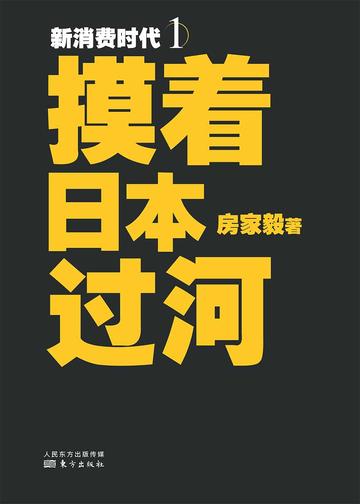
Especially for the consumer industry, which is an industry driven by industry in the early stage and driven by people in the middle and later stages, rather than an industry dominated by technology, how people's level of consumption needs changes is closely linked to the social environment, economic cycle, civilization and culture of each person at different ages. For industries dominated by the above factors, Japan's reference effect as a time machine will be very prominent. This is one of the important reasons why many founders of consumer industries in China are very keen to go to Japan to find entrepreneurial inspiration. It is precisely for this reason that the author Fang Jiayi, a research scholar who grew up in China and studied, lived and worked in Japan for many years, has a transnational and cross-cultural perspective, and has long been concerned about and engaged in the retail industry, is extremely insightful and convincing when talking about the relationship between these factors other than technology and changes in people's consumption characteristics, as well as the universality behind this corresponding logic.
Reader comments
This book is very enlightening, especially for those studying consumer industries. The author uses a unique perspective to analyze the changes in Japan's consumer era and the implications of these changes for China. The ideas in the book are very insightful and reminded me of the book "The Fourth Age of Consumption". They both explore the relationship between consumer behavior and social changes. In addition, the author's experience also reminds me of Ieyasu in "Tokugawa Ieyasu". They all have experience of living and working in different cultures. This cross-cultural perspective is very valuable.





This book is very enlightening, especially for those studying consumer industries. The author uses a unique perspective to analyze the changes in Japan's consumer era and the implications of these changes for China. The ideas in the book are very insightful and reminded me of the book "The Fourth Age of Consumption". They both explore the relationship between consumer behavior and social changes. In addition, the author's experience also reminds me of Ieyasu in "Tokugawa Ieyasu". They all have experience of living and working in different cultures. This cross-cultural perspective is very valuable.
Full of useful information, very good
We can learn from many solutions to problems