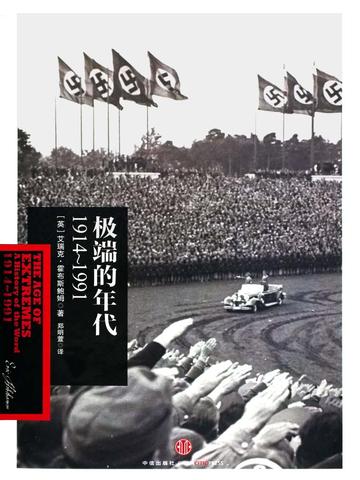
"The Age of Extremes: 1914-1991" is the fourth part of Hobsbawm's "Era Tetralogy". The era of extremes, the "short 20th century" as defined by Hobsbawm, is like a triptych, or, in other words, like a historical sandwich. From the outbreak of World War I in 1914 to the end of World War II, it was a period of great disaster. What followed was a period of 25 to 30 years during which the economy grew extremely prosperously and society underwent major changes. The changes brought about by the light in these short decades on human society were probably far greater than any historical period of similar length. Looking back now, it can indeed be regarded as a golden age of sorts. The last part of the 20th century was an era of disintegration, uncertainty, and crises. In fact, for most of the world, such as Africa, the former Soviet Union, and the former socialist regions of Europe, it was simply another period of disaster. Standing at the commanding heights of the 1990s, while reflecting on the past and the uncertainty of the future, the prevailing atmosphere is one of pessimism at the end of the century. Historians may often like to use "the end of history" to remind talkers, but the future will still continue. Regarding history, there is only one general rule that *can* be true, and that is that history will continue as long as there are humans.
Reader comments
With its grand historical vision and profound insights, this book gave me a more comprehensive understanding of the history of the 20th century. The author presents that extreme era as clearly as a sandwich, with catastrophe and golden age intertwined, disintegration and hesitation coexisting. This reminds me of a friend of mine whose entrepreneurial journey was as turbulent as that era. At the same time, this book also reminds me of "General History of the World". Both of them interpret history from a unique perspective and in a simple and easy-to-understand way, which benefit readers a lot.
Powerful and profound.
Great book! The author uses the standpoint of a classic Marxist and has the perspective of a Western scholar to objectively and profoundly analyze and present the world of the last century.








With its grand historical vision and profound insights, this book gave me a more comprehensive understanding of the history of the 20th century. The author presents that extreme era as clearly as a sandwich, with catastrophe and golden age intertwined, disintegration and hesitation coexisting. This reminds me of a friend of mine whose entrepreneurial journey was as turbulent as that era. At the same time, this book also reminds me of "General History of the World". Both of them interpret history from a unique perspective and in a simple and easy-to-understand way, which benefit readers a lot.
Powerful and profound.
Great book! The author uses the standpoint of a classic Marxist and has the perspective of a Western scholar to objectively and profoundly analyze and present the world of the last century.