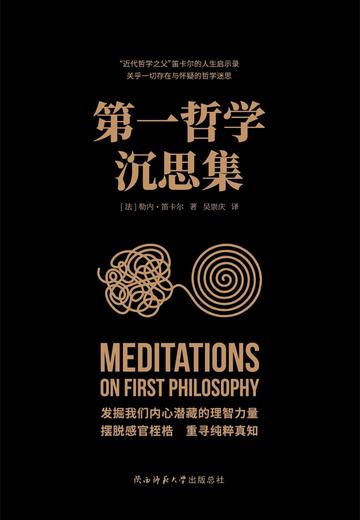
"Meditations on First Philosophy" is an important philosophical work by Descartes. In this work, Descartes tried to free the mind from the shackles of the senses through the method of universal doubt and obtain correct knowledge through pure reason. He explores questions such as whether God exists, whether the senses are reliable, and how to seek truth and avoid errors. Starting from the proposition "I think, therefore I am", he deduced the existence of God and the existence of external objects, and re-established the reliability of the concepts of mind, God and objects. "Meditations on First Philosophy" is regarded as the foundation work of modern Western philosophy. It directly triggered the trend of rationalism in the European continent and had a profound influence on later generations.
Reader comments
The depth of thinking is difficult for future generations like me to achieve. In today's impetuous society, there is no way to think like this and think about the many aspects mentioned in this book.
The beginning of rationalism
The founder of modern philosophy, a smart scientist, mathematician, and philosopher.



The depth of thinking is difficult for future generations like me to achieve. In today's impetuous society, there is no way to think like this and think about the many aspects mentioned in this book.
The beginning of rationalism
The founder of modern philosophy, a smart scientist, mathematician, and philosopher.