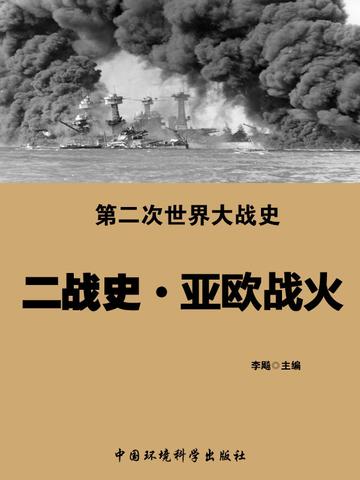
The contents of this book include the formation of fascist totalitarian rule, the establishment of the Nazi German regime, the establishment of the Japanese fascist regime, the formation and establishment of Spanish fascism, the international pattern on the eve of World War II, the British appeasement diplomacy, the isolationism of the United States, the passive defense of France, the socialist Soviet Union in the 1930s, the second cooperation between the Kuomintang and the Communist Party, the International Disarmament Conference, the signing of the Montreux Convention, and the first start of Japanese fascism. The beginning of the war, the Japanese invasion of Northeast China, Japan's concocted puppet Manchukuo, the resolution of the League of Nations, the launch and unfolding of Japan's all-out war of aggression against China, the war between Germany and Italy in Europe and Africa, Italy's invasion of Ethiopia, Italy's occupation of Albania, Italy's threat to France, the German army's advance into the Rhineland, Nazi Germany's annexation of Austria, the bloodless conquest of the Czech Republic, Germany's occupation of Memel, Germany's creation of the Danzig crisis, Germany's creation of international crises, etc.
Reader comments
This book is very rich in content and introduces in detail the international pattern on the eve of World War II and the political and diplomatic situations of various countries. I loved the analysis of the characters' actions in the book, which gave me a deeper understanding of the history of that era. In particular, the British foreign policy of appeasement is very interesting. However, I am still a little confused about some of the contents in the book. For example, why does Britain implement appeasement diplomacy? It would be better if it could be discussed in more depth. Overall, this is a book worth reading.





This book is very rich in content and introduces in detail the international pattern on the eve of World War II and the political and diplomatic situations of various countries. I loved the analysis of the characters' actions in the book, which gave me a deeper understanding of the history of that era. In particular, the British foreign policy of appeasement is very interesting. However, I am still a little confused about some of the contents in the book. For example, why does Britain implement appeasement diplomacy? It would be better if it could be discussed in more depth. Overall, this is a book worth reading.