Lu Buwei was a businessman, politician, and thinker of the Wei Dynasty at the end of the Warring States Period. He played an important role in the historical stage of Qin's unification of the six countries. He presided over the compilation of "Lu's Spring and Autumn Annals", which integrated the theories of various schools of pre-Qin scholars, "including Confucianism and Mohism, combined with law", and was known as "Miscellaneous School" in history. He is also a typical representative of the long-standing merchant culture in Chinese civilization. This book mainly tells the legendary life of Lu Buwei, as a businessman, with his extraordinary vision and lobbying ability, he helped Proton Yiren return to the Qin Kingdom and ascend to the throne, and thus became a prince and prime minister, gaining power over the world, but in the end he drank poison and committed suicide. This biography is both historical restoration and readability, and has very positive significance for discovering and promoting Chinese business culture.
Reader comments
Lu Buwei was an important figure in the late Warring States Period, and stories about him are still spread by word of mouth to this day. Lu Buwei's decisions throughout his life clearly demonstrated the investment strategy of a shrewd businessman. He fell in love with the foreigner who was acting as a hostage, and he did not hesitate to sacrifice his concubine, and went through many troubles for the foreigner to return to the Qin Kingdom. After supporting Ying Zheng to ascend the throne, Lu Buwei sized up the situation and was cautious. It can be considered that commercial success is just a stepping stone for Lu Buwei to reach the top of his life. Money is not important to him. He is a very big-minded person. What he cares about is whether he can use money to gain power and fame, and he did.
Lu Buwei was a businessman, politician, and thinker of the Wei Kingdom in the late Warring States period. He did business in Yangzhai in his early years. He brought Qin's protégés back to Qin and supported her to become Queen Zhuangxiang of Qin. She was worshiped as the Prime Minister of the country, granted the title of Wenxinhou, and settled in Luoyang, Henan, for 100,000 households. He led troops to capture the lands of Zhou, Zhao, and Wei, and established Sanchuan County, Taiyuan County, and Dong County respectively, making a major contribution to King Qin Yingzheng's cause of annexing the six countries. In addition to reading Lu Buwei's life, this book can also see the birth of legendary business talents.
Lu Buwei was a politician, a thinker, and a businessman during the Warring States Period. In the middle of the 3rd century BC, he was described in the book as - "He was rich, suave, and ambitious and entered the Warring States Period." Lu Buwei, a big businessman in the upper political circle, is a very legendary person. He is not from Zhao. His hometown is hundreds of miles south of Handan. In this war-torn year, he hurried to Handan.
Lu Buwei was a politician, a thinker, and a businessman during the Warring States Period. In the middle of the 3rd century BC, he was described in the book as - "He was rich, suave, and ambitious and entered the Warring States Period." Lu Buwei, a big businessman in the upper political circle, is a very legendary person. He is not from Zhao. His hometown is hundreds of miles south of Handan. In this war-torn year, he hurried to Handan.
Lu Buwei was an important figure in the late Warring States Period, and stories about him are still spread by word of mouth to this day. Lu Buwei's decisions throughout his life clearly demonstrated the investment strategy of a shrewd businessman. He fell in love with the foreigner who was acting as a hostage, and he did not hesitate to sacrifice his concubine, and went through many troubles for the foreigner to return to the Qin Kingdom. After supporting Ying Zheng to ascend the throne, Lu Buwei sized up the situation and was cautious. It can be considered that commercial success is just a stepping stone for Lu Buwei to reach the top of his life. Money is not important to him. He is a very big-minded person. What he cares about is whether he can use money to gain power and fame, and he did.
During the Spring and Autumn Period and the Warring States Period when hundreds of schools of thought contended, Lu Buwei, who lived at the end of the Warring States Period, had a tendency to demand unity of thought. He was knowledgeable and knowledgeable, absorbed the essence of hundreds of schools of thought, and talked freely about the ancient and modern affairs of heaven and earth, and finally wrote "Lü's Spring and Autumn Annals". He was inclined to Confucianism and Taoism. He was not only a thinker and politician, but also a businessman who promoted the development of commercial culture. The author uses vivid language and depicts a vivid image of Lu Buwei based on rich historical materials.
This book reminded me of Lu Buwei in "The Qin Empire". His story is really legendary. From a businessman to a prime minister, his wisdom and courage are admirable. Just like I work hard to make money for my dream, Lu Buwei is also working hard for his goal. Moreover, this book has both historical facts and readability. It allowed me to understand ancient business culture, which was very rewarding!
If you don't understand history, you can read some biographies. You can also interpret the current historical background and social development from different perspectives.
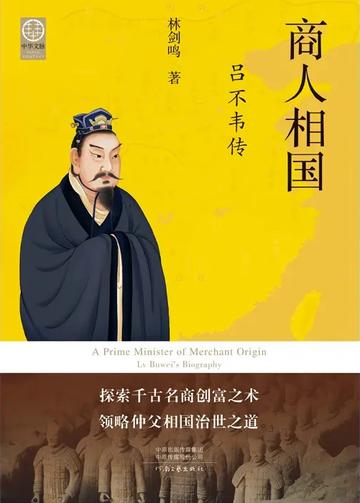


Lu Buwei was an important figure in the late Warring States Period, and stories about him are still spread by word of mouth to this day. Lu Buwei's decisions throughout his life clearly demonstrated the investment strategy of a shrewd businessman. He fell in love with the foreigner who was acting as a hostage, and he did not hesitate to sacrifice his concubine, and went through many troubles for the foreigner to return to the Qin Kingdom. After supporting Ying Zheng to ascend the throne, Lu Buwei sized up the situation and was cautious. It can be considered that commercial success is just a stepping stone for Lu Buwei to reach the top of his life. Money is not important to him. He is a very big-minded person. What he cares about is whether he can use money to gain power and fame, and he did.
Lu Buwei was a businessman, politician, and thinker of the Wei Kingdom in the late Warring States period. He did business in Yangzhai in his early years. He brought Qin's protégés back to Qin and supported her to become Queen Zhuangxiang of Qin. She was worshiped as the Prime Minister of the country, granted the title of Wenxinhou, and settled in Luoyang, Henan, for 100,000 households. He led troops to capture the lands of Zhou, Zhao, and Wei, and established Sanchuan County, Taiyuan County, and Dong County respectively, making a major contribution to King Qin Yingzheng's cause of annexing the six countries. In addition to reading Lu Buwei's life, this book can also see the birth of legendary business talents.
Lu Buwei was a politician, a thinker, and a businessman during the Warring States Period. In the middle of the 3rd century BC, he was described in the book as - "He was rich, suave, and ambitious and entered the Warring States Period." Lu Buwei, a big businessman in the upper political circle, is a very legendary person. He is not from Zhao. His hometown is hundreds of miles south of Handan. In this war-torn year, he hurried to Handan.
Lu Buwei was a politician, a thinker, and a businessman during the Warring States Period. In the middle of the 3rd century BC, he was described in the book as - "He was rich, suave, and ambitious and entered the Warring States Period." Lu Buwei, a big businessman in the upper political circle, is a very legendary person. He is not from Zhao. His hometown is hundreds of miles south of Handan. In this war-torn year, he hurried to Handan.
Lu Buwei was an important figure in the late Warring States Period, and stories about him are still spread by word of mouth to this day. Lu Buwei's decisions throughout his life clearly demonstrated the investment strategy of a shrewd businessman. He fell in love with the foreigner who was acting as a hostage, and he did not hesitate to sacrifice his concubine, and went through many troubles for the foreigner to return to the Qin Kingdom. After supporting Ying Zheng to ascend the throne, Lu Buwei sized up the situation and was cautious. It can be considered that commercial success is just a stepping stone for Lu Buwei to reach the top of his life. Money is not important to him. He is a very big-minded person. What he cares about is whether he can use money to gain power and fame, and he did.
During the Spring and Autumn Period and the Warring States Period when hundreds of schools of thought contended, Lu Buwei, who lived at the end of the Warring States Period, had a tendency to demand unity of thought. He was knowledgeable and knowledgeable, absorbed the essence of hundreds of schools of thought, and talked freely about the ancient and modern affairs of heaven and earth, and finally wrote "Lü's Spring and Autumn Annals". He was inclined to Confucianism and Taoism. He was not only a thinker and politician, but also a businessman who promoted the development of commercial culture. The author uses vivid language and depicts a vivid image of Lu Buwei based on rich historical materials.
This book reminded me of Lu Buwei in "The Qin Empire". His story is really legendary. From a businessman to a prime minister, his wisdom and courage are admirable. Just like I work hard to make money for my dream, Lu Buwei is also working hard for his goal. Moreover, this book has both historical facts and readability. It allowed me to understand ancient business culture, which was very rewarding!
If you don't understand history, you can read some biographies. You can also interpret the current historical background and social development from different perspectives.