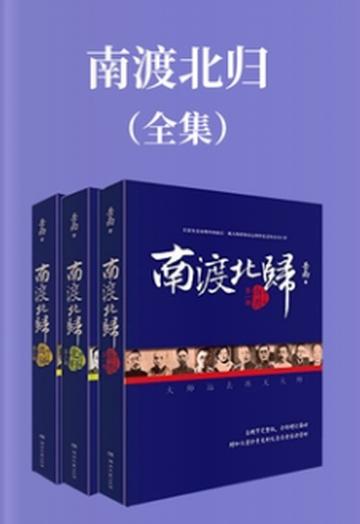
Southward Migration and Return (Classic Three-Volume Edition) consists of three books: Southward Migration, Return, and Farewell. It tells the story of the great migration of intellectuals from the Central Plains to the southwest amid the flames of war in the last century, and their eventual return to the Central Plains. Spanning nearly a century, the work features most of the great masters in the humanities and sciences of the twentieth century, including Cai Yuanpei, Wang Guowei, Liang Qichao, Mei Yiqi, Chen Yinke, and Qian Zhongshu. It painstakingly examines the fortunes of these intellectuals as a group, offering well-supported interpretations of the twists of fate, loves, and hatreds that shaped their lives. Readers will find their minds opened, yet cannot help feeling sorrow and regret.
★ Southward Migration, the first book in Southward Migration and Return, describes the lives of Chinese intellectuals and national elites around the outbreak of the War of Resistance against Japan, as well as their flight from occupied territories to the southwest. Beginning with the July 7 Incident at Lugou Bridge in 1937, it follows the fall of Beiping and Tianjin and the southward relocation of Peking University, Tsinghua University, Nankai University, and other institutions. It recounts the years when they first operated in Changsha, then in Kunming and Mengzi, while also chronicling the Central Research Institute's Institute of History and Philology, Tongji University, and the Society for the Study of Chinese Architecture as they struggled through the ravages of war. The book vividly portrays the lives, scholarship, convictions, and integrity of such leading intellectuals as Cai Yuanpei, Hu Shi, Chen Yinke, Fu Sinian, Liang Sicheng, Li Ji, Lin Huiyin, Jin Yuelin, Mei Yiqi, and Feng Youlan. Rich in research, vast in scope, and far-reaching in purpose, it stands as a group portrait of Chinese intellectuals during the War of Resistance.
★ Return, the second book in Southward Migration and Return, focuses on the scholarly pursuits, changing ideas, and widely differing fates of intellectuals who had fled to the southwest, around the time of the war's victory. Spanning roughly the middle and later years of the war through the end of 1948, it covers the Nationalist government's efforts to transport national treasures to safety and its campaign to “rescue scholars,” up to the election of the first members of Academia Sinica. It vividly recreates the indomitable spirit of Chinese and foreign intellectuals such as Dong Zuobin, Joseph Needham, Tong Dizhou, Tao Menghe, Shen Xingren, Liang Siyong, Jiang Menglin, Wen Yiduo, Liu Wendian, Luo Yong, Zheng Tianting, and Wu Han, who endured displacement and hardship during the nation's perilous years. From multiple perspectives, it reconstructs the student movement at Southwest Associated University and the truth behind Wen Yiduo's assassination, while closely examining the divisions and transformations within the intellectual community amid the great currents of the age.
★ Farewell, the third book in Southward Migration and Return, describes how intellectuals who had fled to the southwest returned to their long-missed homes, only to be forced by the outbreak of war to part from them once more, gazing across distant skies. It follows the dramatic changes in their fortunes amid the different social conditions and lives on either side of the Taiwan Strait. Alongside several masters who moved to Taiwan, including Zhu Jiahua, Hu Shi, Mei Yiqi, Fu Sinian, Li Ji, Dong Zuobin, Shi Zhangru, Jiang Menglin, and Ye Gongchao, the book focuses on intellectuals who remained on the mainland, including Liang Sicheng, Liang Siyong, Lin Huiyin, Chen Yinke, Wu Jinding, Zeng Zhaolun, Zeng Zhaoyu, Chen Mengjia, Mu Dan, Xiang Da, Ye Qisun, Rao Yutai, Wu Mi, and Qian Zhongshu, exploring their differing ideals, loves, and hatreds. The book will leave readers full of sorrow and regret, while also helping them “seek historical insight through history” and learn from the past.
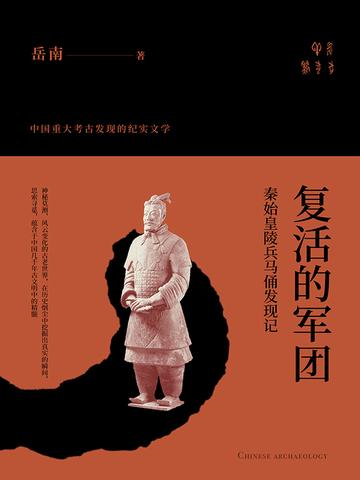 The Resurrected Legion: Unearthing the Terracotta Army in Qin Shi Huang’s Mausoleum
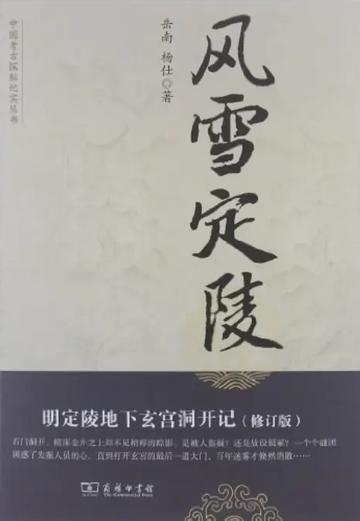 Blizzard at Dingling: The Opening of the Underground Palace of the Ming Dingling Tomb
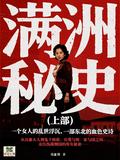
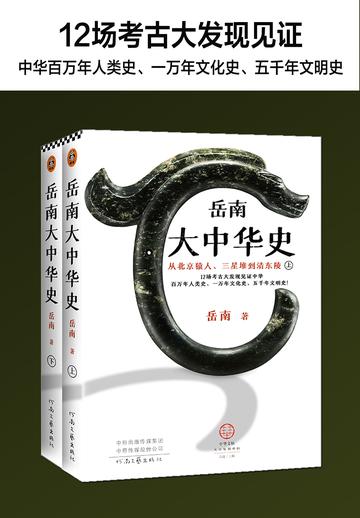 Yue Nan's History of Greater China (Two-Volume Set)
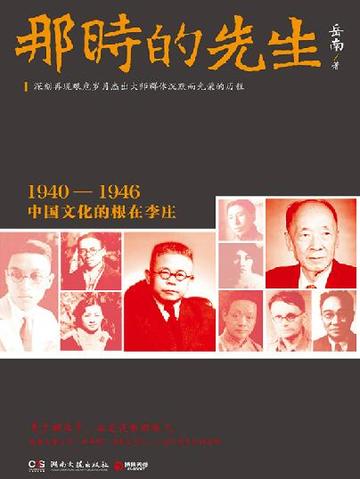 The Gentleman of Those Days
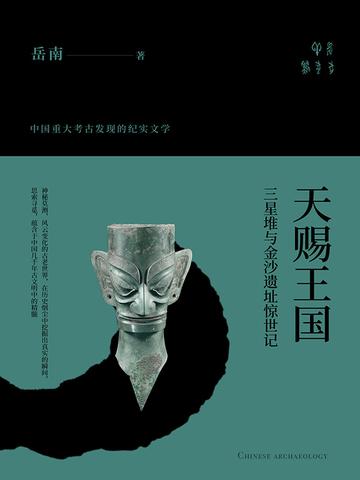 A Kingdom Bestowed by Heaven: The Astonishing Tale of Sanxingdui and the Jinsha Ruins
 A Century of Turmoil in Modern Society: Great Historical Figures (22-Volume Set)
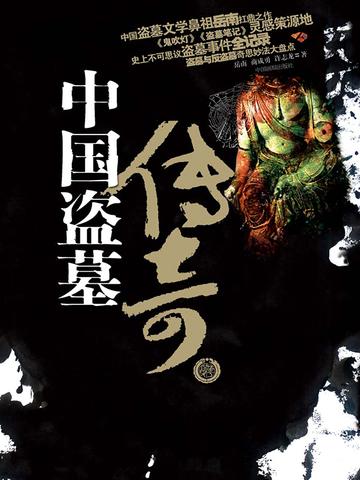 Legends of Chinese Tomb Raiding
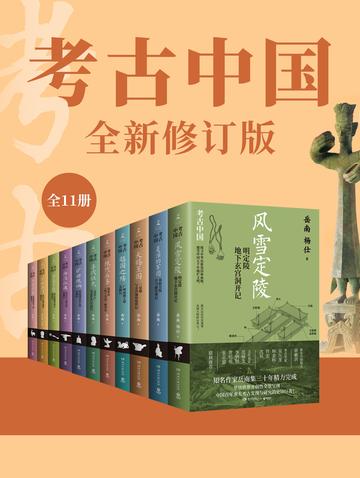 Archaeology of China: 11-Volume Set
Recommended reading! An era that cannot be replicated, a difficult choice for a generation of intellectuals! The author uses documentary writing to show that everyone's life is closely related to social changes. In the main theme of grand narrative, I like to read works like this...
There are many famous people in history, and the most famous ones only left one page of biography. There are not many details about this person. Only modern history, which is not long enough, is possible for a more comprehensive narrative. After reading this book, you will understand the true meaning of the saying that history is created by the masses. Those people who have become famous in history are actually just mortals with the same emotions and desires.
The author tells us in detail the life details of the two Southern Union teachers and students who persisted in their unyielding faith while being displaced during the national crisis, as well as the outstanding and colorful talents of the masters, which is deeply memorable.
All the consequences have been planted at the beginning. After reading it, I just feel distressed. Late justice is not justice at all. As long as you comfort yourself, time will always tolerate everything. Sadly, it is still the past. There is indeed no master after the master. Just like the three-body sophons, human physics has been sealed. Can there be a breakthrough in the future?
I have gained a lot from reading history and culture. The masters' thoughts of yearning for freedom are the driving force for us to move forward. 👍
The literary leaders since the May 4th Movement have moved south and north and returned to history, which is breathtaking. They are all great men, but they had ill-fated fates and were burdened by the turmoil and uncertainty of the country. What a pity! Good book, worth pondering!
Many historical facts were revealed, and we learned more about the masters and the special era.
Before I retired, I taught at Yunnan Normal University. I admire the history of Southwest Associated University. I have seen the lives of those passionate, patriotic and knowledgeable senior masters of the Southwest Associated University many times at the Southwest Associated University. I was moved to tears with admiration, so I carefully read Mr. Yue Nan's masterpiece "Southern Crossing and Returning to the North". The scenes written in the book are very familiar to me. Scenes, history, the author has paid a huge price and effort to truly reproduce the history of China in the late Qing Dynasty and the early Republic of China and the Anti-Japanese War period. Scholars and masters from China's higher education institutions such as Tsinghua University and Peking University have wonderful lives. Their lives have been ups and downs with the fate of the country, but the masters still have the mission of cultivating future generations to rejuvenate the country. It is admirable! Many masters work hard to teach and educate people despite being hungry. What makes me even more sad is that many of them met extremely tragic ends in special times. I have cried so many times that I can't stand it anymore... I am grateful to the author for collecting so much information and writing such a masterpiece so that people can understand the real history! I strongly recommend that people read this book, thank you!
After reading the entire book, I felt heavy. The knowledgeable professor insists on his own independent thinking, and his style is admirable. It is a pity that in the catastrophe, lives and true talents and learning were lost. Our life today has become affluent, but in the modern affluence, we have lost a lot... There are no what-ifs in the world, and modern culture does not represent modern civilization.
Every era has its own sufferings, and every era has its own mission. No matter whether we are masters or all living beings, we cannot escape the torrent of the times. It can drown you or carry you forward.