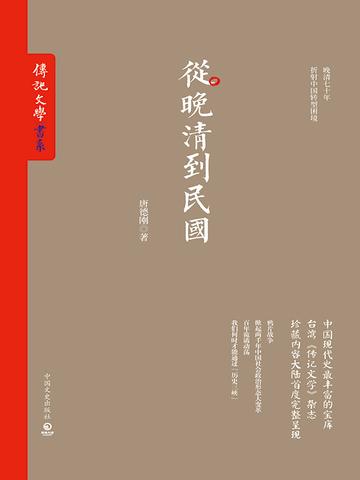
From the Late Qing to the Republic
从晚清到民国
- Status
- Completed
- Length
- 290k Words
- Genre
- Historical
- Subgenre
- Unknown
- Updated
- 4y ago
- Source
- Fanqie
Stats
Tags
Synopsis
More by this author
In booklists 10
Recommend Stories Set in the Republican Era With an Overpowered Protagonist!!!
A satisfying story set during the Republican era, with a protagonist who is highly skilled in combat and also has money and status.
Stories About the Qing Dynasty, Preferably the Late Qing, for Male Readers 🌝
Urban Body-Swapping Stories
Looking for books similar to *The Exchange Club of the City*. Urban body-swapping, taking you on an exciting urban fantasy adventure! In this bustling city, a mysterious organization is hiding in plain sight. Its members have a magical ability: they can swap bodies with other people.
A Ghost-Hunting, Demon-Slaying Story Set from the Late Qing Dynasty to After the Founding of the Nation
Historical Novels Set at the End of the Han, Sui, Tang, Northern Song, Ming, or Qing Dynasties
Looking for Viewing-Reaction Books About Modern Times or the Post-2000 Generation
Looking for books about films from the modern era or the post-2000s. Anything set in or close to modern times is fine.
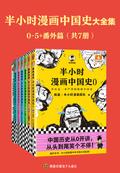
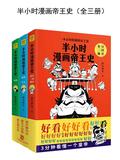
Any Textbooks or Study Guides?
Looking for books like Half-Hour Comics: Chinese History 5. Something like the one above, for example.
Any Novels Like Modern-Day Livestreams in Ancient Times, Told Through Short Videos?
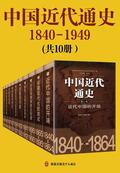
I'm Studying Modern Chinese Politics for My Top-up Degree and Can't Memorize Anything. Any Books About Modern History?
Looking for books like *A Roundup: Li Shimin, Governor of Asia, Shocks Every Dynasty*. Li Shimin as governor of Asia, ancient history explained.
Republican-Era Tragedies With a Bad Ending, Not Too Long, Around 100–200 Chapters. Please! Please! Please!
The female lead is the male lead’s salvation, but she forgets him. They meet again years later, with their positions reversed, and fall in love over time. She remembers him, but he’s already dead.
Reader comments 13
Google Translate
I have always wanted to understand the customs and customs of the late Qing Dynasty and the Republic of China. This book takes the history from the late Qing Dynasty to the Republic of China as its theme. It has clear logic and rich content. It provides an in-depth analysis of the social, political, economic and other changes at that time. The book covers important events such as the famous reform movement, the Reform Movement of 1898, and the Revolution of 1911 in the late Qing Dynasty, as well as complex situations such as political reconstruction and warlord melee in the early years of the Republic of China. Through in-depth research and description of this period, the author helps readers better understand the development context of modern Chinese history and the role of important historical figures.
As the title suggests, this book chronicles the humiliating modern history of China: from the Opium War in 1838 to the Hongxian Farce in 1916, a long but short history of nearly seventy years. The author focuses on the Opium War, the Westernization Movement, the defeat of the Sino-Japanese War of 1898, the Reform Movement of 1898, the Boxer Rebellion to support the Qing Dynasty and destroy the foreign countries, the Eight-Power Allied Forces entering Beijing, the Revolution of 1911, the founding of the Republic of China, and Yuan Shikai's proclaimed emperor as the main lines, and describes it from his own perspective. This book has a certain subjective color, but it has extremely high historical value.
Mr. Tang Degang's writing is like a person who has experienced it talking to you, full of golden sentences and sharp insights. He uses overseas vision and first-hand historical materials to restore the high-level game and the hearts of the times, giving the cold institutional changes the joys and sorrows of the characters and the weight of their fate. Recently, I was reading the novel "Republic of China", which reproduced that special era and the Chinese people of that generation trudging on the road of ideological enlightenment, political reform, commercial self-improvement, and technological salvation. The light of their thoughts and unfinished aspirations are still shining on and calling on today's people.
I feel that it is somewhat similar to the "Modern History of China" I read before, both discussing the history of modern China. Moreover, Yang Tianshi mentioned in the book is really powerful. It is really admirable that one person can achieve such great results. I think of a friend of mine who is also working hard alone in the city. Although it is very hard, he has always worked hard. I think he is also great! This book gave me a deeper understanding of history and made me appreciate my current life more.
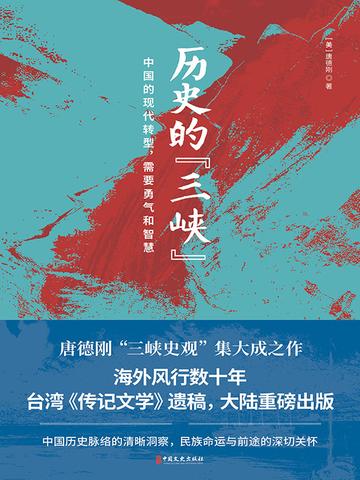
The twists and turns of the Three Gorges of the Yangtze River are the pride of the Chinese people and a trendy area in China's natural history. In the wise eyes of historian Tang Degang, the "humanities view of history" is just like the "natural history view." A war in 1840 not only set off a major change in China's social and political form, but also caused the long river of history to enter the magnificent Pacific Ocean through the Three Gorges. It can be said that Tang Degang integrated the Three Gorges historical view and humanistic exploration in this book, creating an objective and in-depth history of modern China.
It talks about China's modern history objectively and in easy-to-understand language, which is of great reference value for learning about China's modern history. In the more than 100 years from the Opium War in 1840 to Japan's surrender in 1945, China has experienced great changes unseen in a thousand years. This is a history of humiliation for the Chinese nation, but from another perspective, it is also a history of the Chinese people's unyielding struggle and re-emergence! ! !
I listen to it intermittently while doing housework, and I like listening to it to fill in the gaps in my history.
The book "From the Late Qing Dynasty to the Republic of China" takes the history from the late Qing Dynasty to the Republic of China as its theme. It has clear logic and rich content. It provides an in-depth analysis of the social, political, economic and other changes at that time. The book covers important events such as the famous reform movement, the Reform Movement of 1898, and the Revolution of 1911 in the late Qing Dynasty, as well as complex situations such as political reconstruction and warlord melee in the early years of the Republic of China. Through in-depth research and description of this period, the author helps readers better understand the development context of modern Chinese history and the role of important historical figures.
It is a pity that the current political thoughts in the author's original work "Seventy Years of the Late Qing Dynasty" cannot be known to readers due to many factors. It is only because it criticizes reality. It is sad.
The old gentleman talks happily and curses at the same time, which is very cute!