Stats
9.4Score
51Chapters
Tags
Synopsis
Reader comments
In booklists 9

Sign in to Your Cultivation Level at the Beginning, and Sign in to Your Subordinates
29.6MViews437Books10dUpdated
Are There Any Teaching Aid Books?
I want to read a book similar to "Half-hour Comic History of China 5". For example, the above
19.3MViews1.2kBooks3dUpdated
The Book That Saved History and Geography
I want to read a book similar to "A Half-Hour Comic History of China (Five Volumes)". Similar to this
5.2MViews585Books3dUpdated




Is There Any Book That Can Make the Brain React Faster? (My Understanding of Mathematics Is Too Poor😔)
3.1MViews609Books3dUpdated
Nice Historical Novel
2.1MViews438Books1dUpdated



European Background
Looking for a bibliography on European background
1.6MViews92Books1moUpdated
A Must-Have Book for In-Volume Studies on Any Subject
Looking for books that can help me learn knowledge. When school starts, I want to trick my classmates to death.
46.8kViews150Books20dUpdated

I Want to Read a History Book, so Historical! ! ! No Wild Histories or Novels! !
I want to read a book similar to "Starting from the Qin Dynasty to the End of the Qing Dynasty (four volumes)". I don't want novels, for example, if someone travels to the past, I don't want it. I want real history! ! ! Please (●'◡'●)
45.9kViews177Books4dUpdated



It's Terrible. I've Been Reading for Almost Half a Month. Someone Can Help Me.
7.9kViews354Books1yUpdated
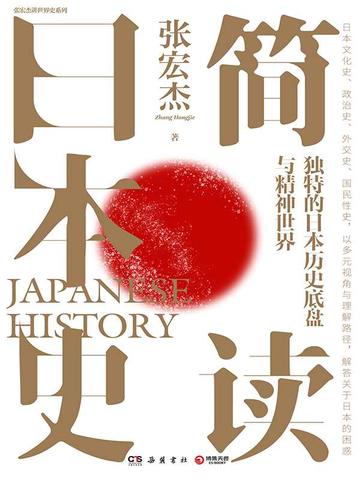
For more than a thousand years, Japan has been China's most important maritime neighbor. Currently, the two countries not only have close economic exchanges as each other's most important trade and investment partners, but also have many cultural exchanges. Although historical issues still profoundly affect the relations between the two countries. No matter which angle you look at it, understanding Japan and its national character is extremely important for Chinese people. This history of Japan written by Mr. Zhang Hongjie has concise text, clear logic, and thorough analysis. It is a rare book for understanding Japan.
I personally like history, especially modern world history and ancient Chinese history, and I am more sensitive to Japan, but this book also allowed me to see a different Japan. I always thought that Japan... Well... So I didn't know much about it. The only thing I liked about them was that they were mentioned in this book as having a tendency to turn, but I only knew this. [Cover face]
It's clear in depth and easy to understand at a glance! Look at the strengths and weaknesses of other countries in the world, learn experiences and lessons, and discover the advantages and disadvantages through development. It is beneficial to yourself and harmless to the country. I wish the motherland is prosperous and the people are healthy!
Japan's national character cannot be easily summed up. There are superficial expressions of nodding and bending at 90 degrees, and there is also a deep-seated concept of contempt for the other party that is not easily expressed. No matter what views this book brings to you or me, being inclusive is the attitude that Chinese people should adopt!
I have read a lot of Zhang Hongjie's books, and the Chinese history books have a lot of repetitive ideas. This one is very fresh. China and Japan have been entangled in history for too long. It was often said in the past that the Japanese understand China better than the Chinese, but few people reflect on it: Why does no one in China understand Japan better than the Japanese? Brainwashed by the anti-Japanese drama, they only care about hatred, but how many people understand Japan? The most famous book introducing Japan is undoubtedly "The Chrysanthemum and the Sword", but it was not written by a Chinese. This brief history can be said to be quite concise. The brief history should not only be concise but also concise, and the key points should be explained in place. This book answers many of our questions about Japan. It is interesting but not boring, and very readable. I hope more and more people will read this book. To put it another way, even if you hate Japan, don't you still need to understand your enemy? You can't know nothing about your enemy, right? Come on, read this "A Brief History of Japan" written by a layman. Experts will know the ropes, while laymen will watch the fun.
Japanese people become complacent and arrogant when they achieve something, and then feel deeply inferior when they encounter setbacks. The Japanese are still too extreme and absolute.
When I was studying Japanese history in my early years, some classmates ridiculed Japanese history as just a collection of village histories. Although it was very rude, we did take it as a joke at the time. One advantage of Zhang Hongjie's "A Brief Reading of Japanese History" is that the entire writing is not cumbersome and boring, and you can still have a general understanding of Japanese history. The general context of Japanese history. In addition, it has to be said that Japan's historical changes can be seen as the profound impact of ideas and ideologies on individuals and even countries and nations. There were two major reforms in Japan's history that absorbed foreign culture. The first comprehensive "Sinicization" failed and the Meiji Restoration, which was forced to open the country by the "Black Ship Incident", turned around successfully. The reason is the inevitable result of core internal factors such as political system, social system and ideology.
It opened a window for us to understand Japan. It is a very good book.
The author himself admits that there are very few primary sources, so it cannot be read entirely as a history book. But the author's interpretation of Japanese history and culture can inspire the Chinese people, which is enough. Although each interpretation is based on so-and-so talking about such-and-such a book, there is a lack of statistical data.
It is a relatively good book that has solved many of my doubts about Japan, such as class and the reasons for the success of the Meiji Restoration. Moreover, the analysis of Japan in the whole book is not only comprehensive but also relatively objective. It is of great help to people who want to truly understand Japanese history. I am very grateful to the author for taking the time to write such a popular science book.
It is a very good brief history of Japan. It comprehensively explains Japan's Jingtang and Jingtang Dynasties from the perspective of history, culture, economy and psychology. It can learn from the Tang Dynasty and leap from primitive society to feudal society, and learn from Europe and the United States from feudal society to modern society. But it has always retained its core culture and traditions, such as hierarchy, collectivism, bushido spirit, etc. Look at China through Japanese history to better understand the development of Chinese history.
The author really put in the effort and showed his interest and writing style. The development of the Japanese nation has wandered between the East and the West, repeatedly playing with or boasting about Eastern culture and Western civilization. In the end, it was difficult to achieve great things due to the lack of land and resources. This gave China, with its vast land and abundant resources, an excellent opportunity to dominate the East.
This is a good introductory book for readers who are interested in Japanese history, or who need a general understanding of Japanese history. "A Brief Reading of Japanese History" organizes and introduces Japanese history in chronological order. Starting from the ancient primitive society, it gradually introduces Japan's ancient dynasties, the Warring States Period, the Tokugawa Period, the Meiji Restoration, World War II, and the development of modern Japan. In each historical period, it will involve important political, economic, cultural and social events, while also exploring the lifestyle, values and social systems of the Japanese people.
It was written in great detail and corrected my misunderstandings about Japan that I had had for many years. Very nice thank you
The most intuitive feeling after reading this book is: Looking at the past and even the future, countries like Japan are like vines, clinging to the winding trees. The achievement cap depends on how tall the tree is. But it will never become a big tree.
This is the most objective evaluation of the Japanese that I have seen so far. History novices can understand
It is not without reason that Japanese culture has attracted the attention of many young people in the West, especially the United States. Although they are good at learning from various advanced civilizations, the Japanese have shown unique national characteristics, such as strong unity and good at change. Of course, this is also closely related to the late civilization of Japanese folk customs, the widespread adoption of eldest son inheritance in families, and the implicit and euphemistic language; through the comparison of Chinese and Japanese cultures, and through the investigation of the original concepts of the Japanese. This book restores a vivid history of Japan for us.
Japan is full of astringency and aboveboard bathing ()
You will gain something new from reading, which is also the joy of reading.
Only by understanding Japanese history, taking history as a warning, and knowing ourselves and our enemies can we move towards the right path. There is still a little bit of writing about the situation in modern Japan. I look forward to improving it in the future. It puts forward thoughts, analyzes questions, and gives answers. Overall, it is very good.
This book should be called "Aspects of Japan" or "On Japan" rather than "History of Japan". Because Japanese history is used only as a tool in this book, it contains far more discussion than narrative. However, the issues he is thinking about are worthy of further study. For example, the "wildness" in Japanese nature, Japan's groupism, and the Japanese's pendulum-like inferiority and arrogance... Each is a topic that can open a separate thesis collection. In "Historical Research", which is as famous as Professor Stavrianos' "General History of the World", the author Toynbee treats Japan as an independent civilization, and it is very special. He regards it as a civilization that is very good at imitating without losing its essence. This is somewhat consistent with the author's point of view. It triggered some thoughts in me.
It was super exciting and gave me a deep understanding of Japan.
It is incisive, accurate and profound. It clarifies the development context of the island country and is worth reading.
It really explains the human history and development of Japan🇯🇵 in detail.
Very impressive, worth reading carefully and recommending Thank you very much for the author's detailed analysis. The comparison of characteristics between countries and the characteristics of nationals makes people feel like they know themselves and their enemies. The analysis is very thorough [Like]
The introduction is very detailed and can be downloaded and read offline, which is very convenient.
Teacher Zhang's history is easy to understand. I guess the book that Teacher Zhang wants to write the most or the history that he wants to record the most is the history of recent years. However, I think he dare not publish it and cannot publish it. He can only have the opportunity to secretly read Teacher Zhang's recent history draft and analyze it carefully.
The perspective of this book is very unique, starting from the Japanese people's sexual concepts and analyzing their history and culture. The author also compares the history of China and Japan to give people a deeper understanding of Japan's national character. Moreover, the content of the book is very rich and answers many confusions about Japan. It is worth reading!
A relatively fair point of view and good at clearing up confusion.
Under the cover of history, many of us have forgotten our previous humanity. But the personality engraved in the bones by history will never change. After reading this book, I can better understand the personality of Japanese people.